The Shiv Sena today said that while smaller countries in the neighbourhood are offering help to India to tackle COVID-19, the Modi government is not even ready to stop the work of the multi-crore Central Vista project in Delhi.
The party also said that the system created in the past 70 years by previous Prime Ministers, including Pandit Jawaharlal Nehru, Indira Gandhi and Manmohan Singh, has helped the country live through the tough times that it is facing today.
“The UNICEF has expressed fear that there is a threat to the world from India due to the pace at which coronavirus is spreading in the country. It has also made an appeal that maximum number of countries should help India in the fight against COVID-19. Bangladesh has sent 10,000 Remdesivir vials, while Bhutan has sent medical oxygen. Nepal, Myanmar and Sri Lanka have also offered help to ‘aatmanirbhar’ India,” the Sena said in an editorial in its mouthpiece ‘Saamana’.
“In clear terms, India is surviving on the system created by Nehru-Gandhi. Many poor countries are offering help to India. Earlier, countries like Pakistan, Rwanda and Congo used to get help from others. But due to the wrong policies of today’s rulers, India is going through that situation now,” it said.
But while poor countries are helping India in their own way, Prime Minister Narendra Modi is not ready to stop the ambitious project of Central Vista worth ₹ 20,000 crore in Delhi, the Sena added.
The party expressed surprise that nobody feels regret that on the one hand, India accepts aid from countries like Bangladesh, Sri Lanka and Bhutan, while on the other, PM Modi is not ready to stop work on the multi-crore Central Vista project for construction of a new Parliament building and the house of the Prime Minister.
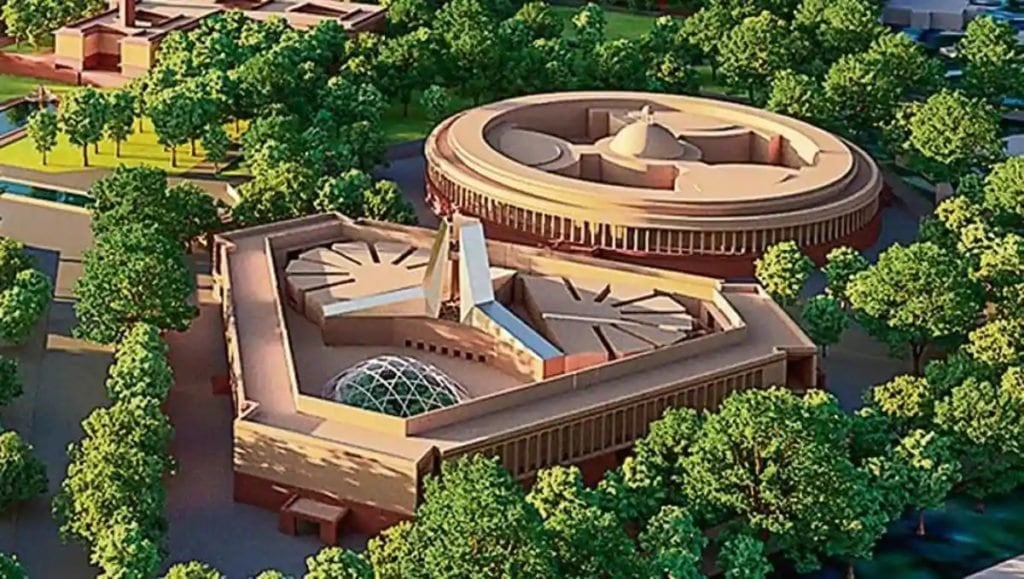
The redevelopment project of the Central Vista – the power corridor of the country – envisages a new triangular Parliament building, a common Central Secretariat and the revamping of the three-km-long Rajpath from the Rashtrapati Bhavan to India Gate and new residences for the prime minister and the vice president.
The Sena said that even as the world is battling a second wave of COVID-19, experts have predicted that the third wave will be more severe. But the ruling BJP is doing all it can to corner Mamata Banerjee in West Bengal even today.
“A sensitive and a nationalist government would not have thought about the political pros and cons and set up a national panel of all main political parties to discuss ways to defeat the pandemic,” the Uddhav Thackeray-led party said.
“BJP MP Subramanian Swamy has demanded that Union minister Nitin Gadkari be given the charge of the health ministry and this is a proof that the current union health ministry has been a complete failure,” it added.
India has reported the highest number of COVID-19 deaths in the last 10 days. Globally, one out of the five active patients is in India. In the last ten days, 36,110 deaths have occurred. Every hour, there are 150 COVID-19 deaths in the country. We have left USA and Brazil behind in terms of deaths due to virus. The world fears India now, the Shiv Sena said.
According to it, several countries have stopped their citizens from travelling to India and our country is bearing the economic brunt of the pandemic.
“The country is presently surviving thanks to the development works, projects set up by and the confidence given by the previous governments of Pandit Nehru, (Lal Bahadur) Shastri, Indira Gandhi, Rajiv Gandhi, PV Narasimha Rao, Manmohan Singh,” it said.
The Prime Minister will have to do a lot of hard work and think of non-political nationalism to help the country come out of the pandemic, it said.
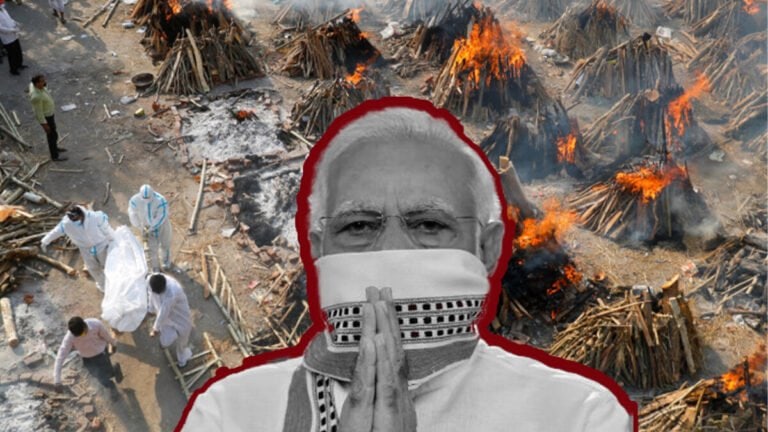
The second wave of covid-19 pandemic has unleashed yet another dark face of our country. We are witnessing people gasping for breath, running from one hospital to another in search of beds, people rushing back and forth with their loved ones fighting for lives, crematories getting piled up by the dead bodies and outside long queue forms waiting for another last ritual. India has reported the highest number of covid cases for the past few days, and that is more than three lakhs per day and an estimated number of deaths per day is above four thousand.
Not only a health emergency, but also the anxieties of an economic emergency too floats in the air. Unplanned lockdowns and improper decision making geared unemployment rate into its peak point. While the rich are fighting against one pandemic, the common man is forced to fight two pandemics; of covid and of poverty.
Welcome to India, where in the midst of this cacophony of helplessness and despair, the Modi government is busy planning and working out its 20,000 crore Central Vista project. This not only unveils the pointlessness of the venture but also it’s inhuman intentions. When the country faces an acute shortage of vaccines and not even 2% of its population has been vaccinated, the government plans to finish the construction of the new PM residence by December 2022.
While the contract for Rs.20,000 crore was awarded in september 2020, the only allocation to fight covid pandemic in the budget 2021 has been Rs.35000 crore which was assigned for vaccination drive but later put the duty on states and households. And it is disheartening that the budget did not contain any allocations for essential things like oxygen, concentrators, ventilators etc even when a second wave was expected and no further add ons when a third wave is expected by the end of this year.
Patients suffering from the coronavirus disease (COVID-19) get treatment at the casualty ward in Lok Nayak Jai Prakash (LNJP) hospital, amidst the spread of the disease in New Delhi, India April 15, 2021. REUTERS/Danish Siddiqui
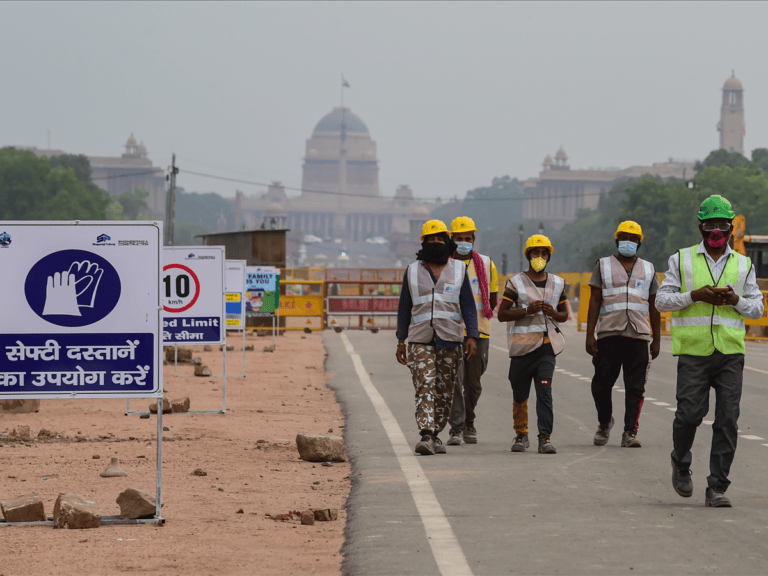
At a time where resources need to be allocated and used judiciously, what we see is a completely contradicting act which grants permission for its construction and even giving it an essential services tag. Declaring the project as essential service despite the lockdown restrictions in New Delhi, puts the health of labourers, engineers, contractors and other personnel at risk. As workers continue working without any proper protection, it can easily turn into a super spreader activity.
Choosing vanity over people’s lives has major financial, environmental as well as ethical issues. The initial construction worth of Rs. 13540 crore has been approved. If this have been appropriated for covid treatment nearly 45 crore people could’ve been vaccinated, about 14 lakhs ventilators, one crore oxygen cylinders and even 12 new AIIMS could’ve been set up.
Talking about the environmental impacts, as more than 3000 trees which helped in regulating temperature, reducing pollution and removing dust have now been uprooted, which raises a major challenge.
Lack of opportunity for public discourse on the project and SC’s continued refusal to hear plea clearly establishes the malafide rush behind the scheme. Decision making backed by personal interests and individual gains in such a pathetic state makes us completely incapable to get out of the loop of this pandemic.
When the country is fighting hard against its economic and health emergency, why is the government busy in increasing its luxury? Could its funds be used for the bare minimum of sustaining lives?
In campaigning for Arts support, the Colorado Business Committee for the Arts stated, “The values we support today will determine what we have when this is over.” We often say, ‘existence is resistance’. Accepting and resisting the new normalcy created by the pandemic became the need of the hour. To ensure their existence within the unhackneyed personal and social space, people started knocking at the doors they never approached before. Gradually, both practicing artists and individuals with little engagement with art, started to explore the realms of art and a surge of creativity flooded the canvas of life. The soul idea of perspective in which we approach art has been shifted to another paradigm in this period to help people to keep up the spirits and go on with the wave.
The diversity and expanse of the people following the #1 Boy Band BTS gained momentum during this time. Despite the fact that other celebrities and musical acts failed to gather limelight after they were removed from the public eye, BTS contrived to remain in the hearts of millions. RM, Jin, Suga, J-Hope, Jimin, V and Jungkook redefined the relationship between art and music by composing songs in various genres. Becoming the first ever Korean Act to be Nominated and performed at the Grammys, BTS is breaking records (mostly their own) and scripting history day by day. It is the heart of BTS’ artistry that they are no strangers to what has ignited their work, which influenced the way they perceive their place in the world eventually serving as a provenance of comfort to all who listen to their words.
BTS’s Grammy performance 2021
They dance, sing, write their songs, produce, direct and the list goes on. One of the important reasons why people would relate to their songs, is the way they use semantics to portray those feelings that anyone could relate to. The unfailing lyricism of BTS has always been appreciated by artists across the globe; in fact the main songwriter and the leader of the group RM ( Kim Namjoon) is called ‘Philosopher who raps’. The Korean Music Copyrights Association has awarded RM 167 songwriting credits, making him the youngest Korean artist to do so. Their lyrics, which range from incredible wordplay to beautiful metaphors to a perfect and raw encapsulation, adorns their creative painting of ‘what it means to be human’.
Martin Heidegger once stated that ‘artworks are revealers or disclosures of truth of existence’. To be more precise, it is a dimension of existence which could transcend the self of the individual and by keeping himself under the purview of artistic space; he seeks the true nature of art which is inextricably linked with the existence of the individual himself. By grounding on the motif of Martha Graham’s famous quote, “A dancer dies twice — once when they stop dancing and this first death is the more painful”, in ‘Black Swan’, they speak about their fear of losing their love and passion for being an artist who would perform and create art in front of others. Black Swan stands for ‘unpredictable events with unpleasant consequences’. “ ‘I Hear a different voice inside of me, ‘I’ confront the Black Swan inside me”, and, ironically, they realized that music is the only thing they have. BTS hence, communicates its confession as an artist who has experienced what music means to them through contemplative and self-ruminating lyrics. In the lines, ‘With my eyes open, into my forest, jump jump jump’, they are referring to forest as a kind of labyrinth, relating to one’s own self, taking reference from Murakami’s book, ‘Kafka On the Shore (2002). Black Swan was then performed by M N Dance Company by six dancers clad in black costumes, representing wings, despair, chains and also as an inner self of the main dancer. At the end, the dancer becomes a Black Swan, with wings developed from his shadows, which represents the artist’s love for their art. Going back to Heidegger’s words, “The art work opens up in its own way the being of beings, the truth of what it has established itself.”
Black Swan
In their song ‘Sea’, they draw images of sea and desert, sea stands for hope and desert for despair/trials. This is a bit complex imagery as the sea can be a symbol of hope but drinking sea water is not good for health, reflecting the fact that we should not blindly rely on hope in our life. In the line,“We all know this was once a desert”, Suga is shown underwater, gasping for breath, hearing nothing but flowing water. This is precisely how the state of depression feels. At a distance, there is the sound of a whale which is a reference to RM’s songs ‘Reflection‘ and ‘Whalien 52’ where BTS once felt like being alone in the sea filled with criticism and judgment.
With foolish hope that tomorrow will be different before we fell asleep
We saw the mirage in the desert but we couldn’t grasp it.
They show the fear of meeting expectations of people around them and to satisfy those eyes. They ask “is this really the pinnacle of glory,fame and fortune?Or is it another hurdle that we must struggle through”? Sea can be hence read as their own hidden story. Climbing out of the deepest abysses in your life is an uphill task that makes you feel unbearably tiring. When you actually get to the point where you can feel better, self-doubt is always lurking in the mind. What if I return to that bleak place? What if my present happiness is just a figment of my fantasy? This song perfectly captures the nagging suspicion and swirling thoughts that accompany it.
When the main songwriters in the group collaborated, a masterpiece was born called “Strange”. Agust D ( alter ego of Suga) and RM serve two categories in society in this record. There are those who find our world ‘Strange’ and those who do not. By representing two kinds of cognizance of the popular culture, they criticise capitalism, consumerism and polarisation. They ask “How humans are all slaves to the same system without even noticing that they are chained in chicken hoops brainwashed by society ?”
In an endless zero-sum game, the very end is worth seeing
Polarization is the ugliest flower in the world
In these lines, The word 양극화 (yang-geug-hwa, ‘polarization’ in English) and 화 (hwa, which can contextually means both ‘flower’ and ‘anger’) are homonyms. When he says, Polarization (양극화 – yang-geug-hwa) is the ugliest flower (화 – hwa), there is a juxtaposition by comparing something ugly to something that’s typically beautiful. Agust D provides a vivid contrast to alert us of how nasty and unfair the world can be. “With dreams as its collateral, capitalism injects the morphine called ‘hope’”. Humans become addicted to morphine ( here, Hope), and Agust D states that capitalism as a system, is selling the citizens this addictive drug under the pretext of “hope.”
Pied Piper, BTS
A similar context is drawn in the song ‘Pied Piper’ in which they talk about the capitalist society which motivates the youth to lead a materialistic life. Such society blames the pop culture which is itself created by human beings. In the initial lines, they call out people who accuse them and other artists for being the ‘pipers’ who keep luring the youth. Structured in a kind of conversation between the artists and their audience, BTS is portraying themselves as villains who are now despised for their work.
There’s a lot more to say about Kim Taehyung’s Blue & Grey, as it elicits and causes a plethora of responses and interpretations to varying levels. The Acoustic Pop Ballad is exceptional with its portrayal of void and genuine feelings which is let out to the listeners. Lower range tones imply melancholy, grief, and calmness, while higher range tones indicate climaxes, zeal, and power, as in the falsetto rendition of “Oh this ground feels so heavier”. On the surface, the verses are easily comprehensible and empathic, but they are also densely packed with meanings by the use of figures of speech and imagery. Blue & Grey is littered with hidden semantic precision and simplicity along the sublime nature of the song. He used the colors Blue and Grey to address the gloominess or desperation in his tone. The ‘shadow’ imagery has been used to represent the ‘grey’ or darkness that pervades our lives. ‘Blue & Grey’ also serves as a warning about the mental health issues that arise as a result of the pandemic and subsequent lockdown. ‘Blue & Grey’ demonstrates his versatility as a songwriter by resonating with transcendence and sublimity.
BTS
BTS debuted with their first single on June 12, 2013, and have since released a series of singles and albums. Through their music, the members have really become open books, sharing subjects such as growing up, pressures they’ve endured, mental health issues, love and loss, coping with those who want to tear them down, and learning to love themselves despite it all. BTS partnered with UNICEF to stage campaigns targeting abuse against children and teenagers all over the world, aiming to make the world a better place through their artistry. Jungkook in his speech at the United Nations said that “If there’s something I can do, if our voices can give strength to people, then that’s what we want and that’s what we’ll keep on doing”. When all seems to be falling apart, BTS chooses not to be didactic in their message, instead leads people to see another path. This helps us to recognise the pain and distress they are feeling without mitigating it, but still turning the emphasis to what is still within our reach. They say that sometimes just coping is enough. It’s possible that balancing is the only thing that gets you through a given day. Besides emphasizing the continuum of survival, they put ample stress on the fact of our existence, which is something that we could always be proud of. BTS insists on this force of survival and everyday miracles through their lyrics, the silent heroes without capes or special powers, propelled by nothing but the inner voice asking, “Who’s going to do it if it isn’t me?”
“For this week, Covid 19 deaths have increased. Today (Friday) we have nine cases” says Govindankutty, the supervisor of an Electrical Crematorium in Chandranagar, Palakkad. This Crematorium in Chandranagar is run by Grama Panchayat. As new cases and casualties increase day by day in Kerala, the state might be going to witness a miserable situation in crematoriums.
“This Panchayat charges 1,700 for a cremation. It is comparatively cheaper. Panchayat runs this on the basis of charity”, Govindankutty points out. He also says that several private facilities are charging more and they run on business.
Gas crematoriums are feasible than Electrical Crematoriums. And Electric Cremations are cheaper than ordinary cremation. In October 2019, Kerala Government had planned to establish more than hundred Electric and Gas crematoriums throughout the state. Many of them are under facilitation. Yet it will not be enough if the situation goes like happened many of the northern parts of the country.
In Thiruvananthapuram, the Kerala Human Rights Commission on Thursday had sought an urgent report from the district administration on the need to make temporary arrangements at crematoriums here for the timely cremation of bodies, including the COVID-19 victims.
“One of two furnaces in this crematorium is under maintenance works. In Kerala, we do not have repair facilities of Electric furnaces. We are waiting for people from Bengaluru to come.” Govindankutty is hopeful that the furnace will be repaired in a week.
It takes forty minutes for cremating a body. With just one furnace, “we will not be able to manage if the situation worsens ahead.” Govindankutty is of the opinion that people should be aware of these situations.
Tilak a 17 years old son of Gangadharan (53) who died of Covid 19 performs last rituals for his father with the guidances of Covid 19 volunteers. Photo: Sreekanth SivadasanThe volunteers carry the dead body for the cremation. Photo: Sreekanth SivadasanTilak watching his father’s dead body is been taken to the furnace for cremation. Photo: Sreekanth Sivadasan
In Ivor Madam cremation ground, one of the busiest in Kerala, the managers say that wood supply became a critical problem. Facilitating adequate firewood is a challenging issue as the cases are increasing, Mint reports Korappath Ramesh, the supervisor in Ivor Madham crematorium. “It takes around half a tonne of firewood for cremation. Three logs in a row can make the length of the pyre and another three the width. The selection of the logs is crucial.” Ramesh says.
As monsoon on the way in the state the availability of firewood would be decreasing.
volunteers are waiting for relatives of a dead body in Ivor Madham crematorium, Thrissur. Photo: Sreekanth SivadasanWhen relatives reached, volunteers move out the body to facilitate the final rituals. Photo: Sreekanth SivadasanThe dead body is taken to the pyre for the cremation by volunteers and family members. Photo: Sreekanth Sivadasan
More than 180 Palestinian worshippers have been injured in the crackdown of Israeli police at the Al-Aqsa Mosque and elsewhere in occupied East Jerusalem, as weeks-long tensions between Israel and the Palestinians over Jerusalem soared again.
Earlier in the day, tens of thousands of Palestinian worshippers packed into the mosque on the final Friday of Ramadan and many stayed on to protest in support of Palestinians facing eviction from their homes on Israeli-occupied land claimed by Jewish settlers.
During the past week, residents of Sheikh Jarrah, as well as Palestinian and international solidarity activists, have attended nightly vigils to support the Palestinian families under threat of forced displacement.
Israeli border police and forces have attacked the sit-ins using skunk water, tear gas, rubber-coated bullets and shock grenades over the past few days. Dozens of Palestinians have been arrested.
The current discussions over the dire oxygen shortage reflect the disastrous and glib attitude of the central government towards the Covid 19 pandemic in India. It was one year before when India was in a so-called safe zone, and the Prime Minister Narendra Modi declared the Aatmanirbhar project, which makes India self-reliable in many ways. From the deep-rooted infrastructure needs to corporate dealings, it was desperately saying about some mere theories without marking its practical possibilities. Now the nation is at its peak of reliance, as the demand for Oxygen surpasses the supply chain. Being funded nearly to 2000 crore in just four days after PM-CARE fund announcement, who was responsible for making the necessary medical infrastructure in India?
On March 14, 2020, India officially declared Covid 19 as a ‘disaster’ in the country. Soon after the pandemic uprising in April 2020, many studies were conducted inside the nation itself about the precautions India needs to take, for fighting against the pandemic. Medical reports stated that Covid patients will severely face Hypoxaemia, a state where the oxygen level in blood plummets, and there should have the necessary infrastructure inside the nation to treat most of them with Oxygen therapy and similar treatments in district level hospitals. But it took 8 months for the central government to think about it. In October 2020, the Central Medical Service Authority called for bids from states to have 162 Pressure Swing Adsorption (PSA) oxygen plants in 14 states. Remember, it was seven months before, the same government itself declared Aatmanirbhar economic project without having any self-reliant check on medical infrastructure. He himself said in the Independence speech that Made in India Vaccines are a symbol of Aatmanirbhar. Sarcastically, now we are relying on international vaccines to meet the demand of rampant rising in Covid cases.
The only responsibility of the state was to ensure the completion of civil and electrical works. The district hospitals need to have the site readiness certificate. The Central Medical Service Authority was responsible for checking the bid and further proceedings. But, as the Health ministry tweeted two weeks before, only 33 out of 162 PSA Plants were installed in our country. As per agreements, only 4 to 6 weeks were enough for the completion of a plant. Why did such a delay happen?
The financial budget for the Aatmanirbhar project was 29.87 lakh. As mentioned before, the PM care fund is receiving nearly 400 crores per day. Where are these funds allocated? The only financial need for an oxygen plant is 1.25 crore. As per reports, 162 plants need 201 crore. What were the priorities of the central government while allocating funds to pandemic survival projects like Aatmanirbhar?
Patients suffering from the coronavirus disease (COVID-19) get treatment at the casualty ward in Lok Nayak Jai Prakash (LNJP) hospital, amidst the spread of the disease in New Delhi, India April 15, 2021. REUTERS/Danish Siddiqui
Before Covid, the oxygen production unit in India was 7000 tonnes per day. Only 15 percent was needed for medical purposes. Since the onset of Covid 19, the demand for medical oxygen is exponentially rising. The current demand for medical oxygen is 8000 tonnes per day which may reach 9000 in upcoming weeks. Unfortunately, it takes the government to wait till April 12 for changing the allocation criteria of oxygen. From April 12 onwards, 3842 tonnes, which accounts for 54 per cent of total production will be converted to medical oxygen. On 18th April, it again changed to 4600. Amid the rising covid cases, why has the country had such a delay to convert industrial oxygen to medical oxygen? Nothing resulted in oxygen shortage other than the relentless approach of central ministry which was always corporate motive and crony capitalist.
There is also some dire analysis over the PM-CARES fund. Transparency, accountability, use of money, and clarity over control are critical questions so far. The law student from Bangalore recently filed RTI on the PM-CARES fund. In response, the Prime minister said that it is not a public authority and doesn’t belong to RTI. Then what does the name implies and how can people trust it? Moreover, Corporate Social Responsibility (CSR) is also a matter of controversy. Nearly half of the amount has now transferred to PM-CARES. Historically, the prime concern of CSR was education and rural development. Dangerously, the so-called sector will face a great financial shortage as the CSR fund accounts for 15000 crores for a year. Indeed, now it is justifiable to have more contribution to the health sector. But when did people lose faith in its allocation?
Central Vista
Here, the philosophical concern on trust needs to be discussed. As per Stanford encyclopedia of philosophy, trust is both a loving and disastrous concept. Trust is important because it allows us to depend on others-for love, for advice, for help-especially when we know that no outside force compels them to give us these things. If it is a guaranteed one, the importance may have some increments. The trust in government enhances such a guaranteed trust and the nation is completely missing it now. Why the southern state of Kerala had a second wave in election result was the result of such a guaranteed trust. During the pandemic, people of Kerala were treated with food kits and high pensions, which make them more trustworthy in the government.
Trust is also a disastrous concept as it may result in self-suicide. So what the state government can do, is to ensure what maximum they can have to develop the medical infrastructure as oxygen plants just need 1.25 crores. What people can do, is just to keep the Covid protocols, wear masks, keep social distancing, always sanitized and get vaccinated if possible. Let’s survive ourselves.
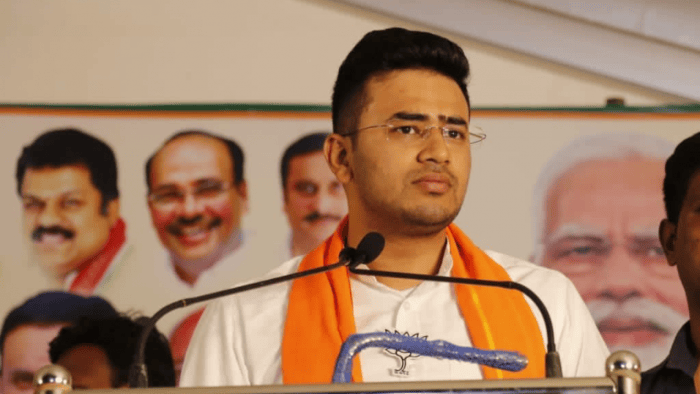
After BJP MP Tejasvi Surya’s big reveal on what he called a “bed-blocking scandal” in Bengaluru, blaming his own party-controlled civic body, a video has exposed shocking communal comments made in his presence against 17 Muslim employees at a Covid war room.
A video shows Tejasvi Surya, the Bangalore South MP, in the municipal Covid war room with three BJP MLAs, grilling officials. One of the MLAs with him is his uncle.
Mr Surya is seen reading out a list of names of people posted in the Covid facility – all the names are Muslim. After rattling off 16 of the names he looks up and questions: “Who are all these people? First shift, second shift, night shift. 17 people in the list in three shifts. I will read the list. What was the process of hiring? 17 people. Who are these people?”
These 17 names were singled out from 205 employees in the BBMP (Bruhat Bengaluru Mahanagara Palik) Covid war room.
Mr Surya stops there – but his uncle and MLA Ravi Subramanya is heard shouting, “Have you appointed them for the madrassa or for the Corporation?”
Later, there is more offensive profiling from an MLA who says to a woman official, “Who is this person, Madam? How can he appoint 17 members like a Haj committee?”
Mr Surya says, “How did you choose them?” Then he adds that he is questioning only the qualifications of the man who made the selection.
“My only question is this. Instead of MBBS – why is BDS (dental doctor) in charge?”
Throughout the exchange, which lasts several minutes, Mr Surya does not stop the communal comments made by the MLAs.
After Tuesday’s press conference, the list of 16 names started circulating on WhatsApp and from BJP-linked accounts with the caption: “List of people working in the BBMP War Room killing thousands of Bengalurians”.
Bengaluru civic body commissioner Sarfaraz Khan was also targeted on social media, with posts saying he “should be made accountable”. He has written to the Bengaluru police chief Kamal Pant and filed a complaint.
Mr Khan told NDTV he had nothing to do with the bed allotment process and that the allegations had caused him deep pain. He shared that Mr Surya had called him to clarify that he was not targeting him and that he stood by him.
“I admire political whistleblowers but feel saddened by the communal turn that the events have taken,” Mr Khan said, adding that he had been busy helping with burials of Covid victims “of all communities”.
The opposition Congress on Thursday stepped up the attack on the ruling BJP in Karnataka and demanded the arrest of party MP Tejasvi Surya and a party MLA, alleging they were behind the scam involving blocking of hospital beds meant for Covid patients in the city.
The Congress mounted the attack citing reports in a section of the media alleging Reddy’s involvement. “It’s like pot calling the kettle black. The truth has come out now that the BJP leaders are behind the bed blocking scam,” the Congress tweeted.
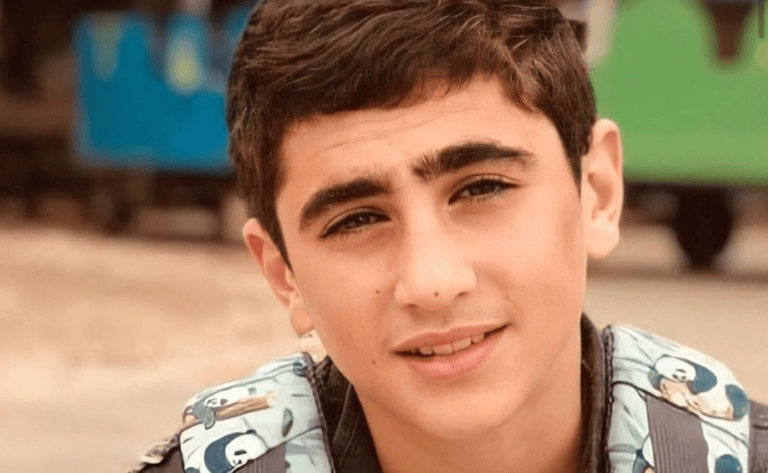
Israeli troops have shot and killed a 16-year-old Palestinian boy during a raid on a village south of the occupied West Bank city of Nablus, Palestinian officials said.
According to Defense for Children International Palestine (DCIP), Israeli forces situated in an olive tree grove at the entrance of the village of Odala shot Said Odeh twice in the back. An ambulance was prevented from accessing Odeh for 15 minutes, and he was pronounced dead upon arrival after he was transferred to Rafidia hospital in Nablus, it said.
“Israeli forces routinely unlawfully kill Palestinian children with impunity, using intentional lethal force against Palestinian children when they pose no threat,” said Ayed Abu Eqtaish, Accountability Program director at DCIP. “Systemic impunity has fostered a context where Israeli forces know no bounds.”
A second Palestinian was shot in the back during the clashes on Wednesday and was being treated in hospital, the Palestinian health ministry said in a statement announcing the 16-year-old’s death.
The Israeli military said troops fired towards Palestinians hurling Molotov cocktails at them late on Wednesday near the Palestinian village of Beita, south of Nablus.
“The troops operated to stop the suspects by firing towards them,” an Israeli military spokeswoman said, adding that the incident would be investigated.
Residents of Beita and Odala say there have been protests against the raids by the Israeli forces – who fired tear gas and live ammunition – near the entrances to the villages for the past few nights.
The raids were conducted as part of the Israeli military’s searches in several villages in the area for an alleged Palestinian gunman who opened fire on Sunday at the Za’tara checkpoint in the occupied West Bank, seriously wounding two Israelis and lightly injuring another.
One of the Israelis, a 19-year-old male, died of his injuries on Wednesday night, Israeli defence minister Benny Gantz said on Twitter.
The Israel Security Agency, also known as Shin Bet, said it had arrested a Palestinian suspect over the shooting, identifying him as Muntaser Shalabi, a 44-year-old resident of the Palestinian village of Turmus Ayya.
Shin Bet said Shalabi, who was found in an abandoned building in the village of Silwad, was not affiliated with any armed groups.
Sheikh Jarrah vigil raided
In occupied East Jerusalem, Israeli border police once again raided the nightly Sheikh Jarrah vigil, set up by residents facing forced displacement from their homes and solidarity activists.
Dozens of people were injured and, according to local Palestinian news agency Maan, at least 10 Palestinians were arrested, including a medic.
Israeli forces also fired tear gas and chemically enhanced sewage water into the home of the al-Kurds, one of the families threatened with losing their homes in favour of Israeli settlers, as sanctioned by the Israeli District Court in Jerusalem.
Israel’s Supreme Court will rule on Thursday on whether the Palestinian families have the right to appeal the District Court’s order to evict them.
Human rights campaigners say if the Palestinians lose the court battle, it could set a precedent for dozens of other homes in the area.
“They would have to kill us… that’s the only way we would leave,” Abdelfatteh Iskafi told Reuters.
Nuha Attieh, 58, said she fears her family will be next if the ruling is upheld. “I’m scared for my home, for my kids, I’m scared about everything.”
Speaking to Al Jazeera on Wednesday, head of the Palestinian National Initiative party Mustafa Barghouti said what is happening in Sheikh Jarrah is a “process of ethnic cleansing”.
Residents of Beita and Odala say there have been protests against the raids by the Israeli forces – who fired tear gas and live ammunition – near the entrances to the villages for the past few nights.
The raids were conducted as part of the Israeli military’s searches in several villages in the area for an alleged Palestinian gunman who opened fire on Sunday at the Za’tara checkpoint in the occupied West Bank, seriously wounding two Israelis and lightly injuring another.
Actor Kangana Ranaut’s Twitter account has been permanently suspended after a controversial tweet related to the post-election result violence in Bengal. The account repeatedly violated Twitter policy on “hateful conduct and abusive behavior”, the social media site said today.
The 34-year-old actor, unfazed, accused Twitter of race bias. “I have many platforms I can use to raise my voice, including my own art in the form of cinema,” she told news agency ANI.
In the tweet that appears to have spurred this action, the actor seems to urge Prime Minister Narendra Modi to “tame” Mamata Banerjee using his “Virat Roop” from “early 2000s” in Bengal. She was reacting to a tweet by journalist-BJP leader Swapan Dasgupta on the violence in Bengal since election results were announced on Sunday; Mamata Banerjee’s Trinamool Congress – which won a landslide victory – and the BJP have blamed each other for the clashes and arson.
Kangana Ranaut’s tweet sparked outrage and calls for action against the strident actor, whose timeline is filled with vitriolic posts.
“We’ve been clear that we will take strong enforcement action on behavior that has the potential to lead to offline harm. The referenced account has been permanently suspended for repeated violations of Twitter Rules specifically our Hateful Conduct policy and Abusive Behaviour policy,” a Twitter spokesperson said, adding that the rules were applied judiciously and impartially to all.
“As explained in our abusive behaviour policy, you may not engage in the targeted harassment of someone, or incite other people to do so. We consider abusive behavior an attempt to harass, intimidate, or silence someone else’s voice.”
Kangana Ranaut is notorious for her outrageous, no-filter posts on social media, many of which are provocative calls to action.
The actor also posted a rant on her Instagram account earlier today.
In the teary-eyed harangue, she talks about “disturbing news, videos and photos from Bengal of people being murdered, gang-raped and their houses being burnt”. She also calls for President’s Rule in the state, criticising a “government that I support” for not doing more than dharnas in response to the clashes.
The Bharatiya Janata Party (BJP)-led National Democratic Alliance (NDA) or “Mitrajot” (Alliance of Friends) is set to form the government in Assam for the second consecutive time, as the ruling alliance according to the latest trends is likely to win 74 seats in the 126-member Assembly. The Congress-led “Mahajot” (Grand Alliance) is expected to win 50 seats.
The Election Commission (EC) is yet to declare the final result on any of the 126 seats as the counting of votes is still in progress in 34 districts across the northeastern state.
All important candidates of the BJP, including Chief Minister Sarbananda Sonowal, who was seeking re-election from Majuli Assembly constituency in eastern Assam, state Finance Minister Himanta Biswa Sarma from Jalukbari Assembly constituency and state BJP President Ranjeet Kumar Dass from Patacharkuchi Assembly constituency, won from their respective seats.
The Congress is leading in 29 seats while its partners All India United Democratic Front (AIUDF) is leading in 14 seats, Bodoland Peoples’ Front (BPF) and the CPI-M in one seat each. Raijor Dal (RD) President and jailed leader, Akhil Gogoi, who is contesting from Sibasagar constituency as an independent candidate, is also leading.
Although there was no doubt that the ruling BJP-led alliance in Assam will form the government, there was little clarity about the next chief minister in the state, with Finance Minister Himanta Biswa Sarma adding to the mystery by declaring only that the next CM would be from the BJP, without naming Sarbananda Sonowal, the CM of the outgoing government. The party, which fought in alliance with the Asom Gana Parishad (AGP) and the United People’s Party Liberal, had originally claimed it would win 100 seats. But the BJP chief in the state, Ranjeet Das, claimed hours before the result that the BJP would win 83 seats. The party could fall short of this figure as it is currently well ahead in 78 of the state’s 126 Assembly constituencies.