Home Blog Page 17

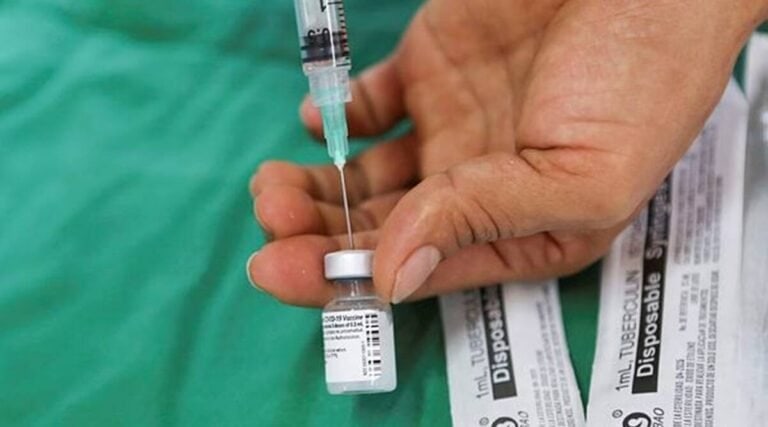
Covid vaccination for all above 18 starts from May 1

Vaccinations will be opened to all above 18 from May 1, the government announced today after Prime Minister Narendra Modi held a series of meetings over India’s response to record daily surges in Covid cases.

All adults will be vaccinated and states can buy vaccines directly from makers in the “liberalised and accelerated Phase 3 strategy of COVID-19 vaccination”, the government said on a day the country reported a new high of 2.73 lakh cases in a day.

India began inoculating people in January using two Covid vaccines – Serum Institute of India’s Covishield developed by Oxford-AstraZeneca and Bharat Biotech’s made-in-India Covaxin. So far, the government had allowed vaccinations only for health workers, frontline workers and those above 45 in a centrally controlled process.

In recent weeks, states like Maharashtra, Delhi and Punjab had called for opening up vaccinations and had also complained about running out of vaccine stocks.

In a comment that became controversial in the state versus centre tussle, a senior official said: “The aim is never to vaccinate whoever wants it, but always whoever needs it.”

While vaccinations have been slow compared to the centre’s target, the country has clocked over two lakh cases daily in the past few days.

Recently, the government fast-tracked approvals for foreign vaccines cleared in other countries.

In his meetings today, PM Modi stressed that vaccination was “the biggest weapon” in the fight against the coronavirus and urged doctors to encourage more and more patients to get vaccinated.

“The government has been working hard for over a year to ensure that maximum numbers of Indians are able to get the vaccine in the shortest possible of time,” said the PM.

Pricing, procurement, eligibility and administering of vaccines will be flexible in the latest round of the world’s largest vaccination drive.

Vaccine manufacturers have been incentivized to scale up their production and release up to 50 per cent of their supply to states and in the open market at a declared price.

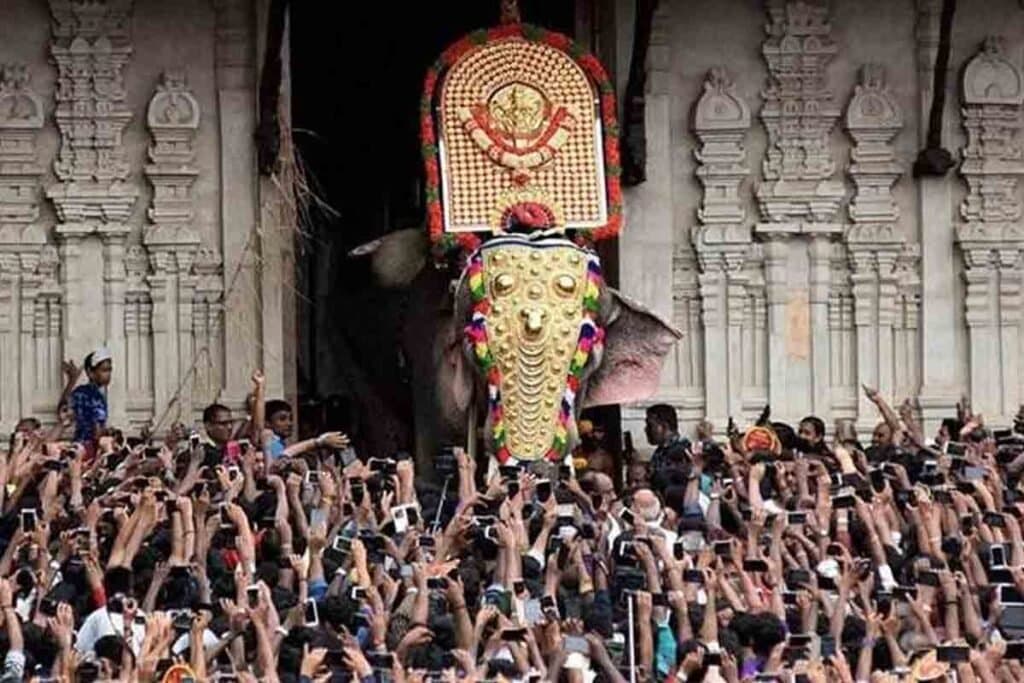
Thrissur Pooram will be limited with rituals only as state fights Covid surge

Kerala has decided to prohibit the public from attending the Thrissur Pooram – the famous temple festival held on the grounds of Vadakkunathan temple in Thrissur – 24 hours after state Health Minister KK Shailaja told media that the festival will be held as planned.

The state government had earlier given permission for the Pooram to be held this year on April 23 with public gathering, saying Covid negative certificates will be mandatory for those attending.

However, this year Thrissur Pooram will be held as a ritual with only organisers and affiliated key people in attendance and they will be screened online.

Even in 2020, the public was not allowed to attend the festival due to the nationwide lockdown to contain the spread of the virus. Usually, lakhs of devotees attend this temple festival in Thrissur.

Kerala has been reporting a steep rise in coronavirus cases over the past few weeks. On Monday, the state recorded 13,644 new cases from 87,375 samples. The test positivity rate is at 15.63 per cent.

Kerala’s ICU occupancy currently is 56.9%, with Thrissur and Idukki recording more than 70% occupancy. In terms of ventilator usages, 17.8% of ventilators are occupied with 31.5& patients on ventilator in Thiruvananthapuram.

Former PM Dr. Manmohan Singh tests Covid positive, admitted to AIIMS

Former Prime Minister Manmohan Singh, 88, has tested positive for COVID-19 and been admitted to the Trauma Centre of Delhi’s AIIMS, according to news agency ANI. The veteran Congress leader, who was administered a Covid test after registering a fever, was admitted at around 5 pm.

Dr Singh has received his two vaccine doses (of Covaxin) – the first on March 4 and the second on April 3. Sources said he was shifted to hospital as “a matter of precaution”.

AIIMS is expected to issue a more detailed statement soon.

Minutes after news of his admission broke, ‘get well’ messages began pouring in.

“Dear Dr Manmohan Singhji, Wishing you a speedy recovery. India needs your guidance and advice in this difficult time,” Rahul Gandhi tweeted.

“My prayers are with Manmohan Singh ji and his family today, and my deepest respect. May he fight this scourge with all his might and get well soon,” Priyanka Gandhi Vadra said.

On Saturday Dr Singh participated in a meeting with top Congress leaders, including Sonia Gandhi, Rahul Gandhi and Priyanka Gandhi Vadra, on the coronavirus situation in the country.

Following this he wrote to Prime Minister Narendra Modi on Sunday, to offer some advice on handling a pandemic that has infected over 1.5 crore Indians and killed nearly 1.8 lakh.

He urged Prime Minister Modi to allow states to define categories of frontline workers that need to be vaccinated against Covid on priority “even if they are below 45 years of age”.

Dr Singh also urged the centre to place “enough” vaccine orders in advance, and that the distribution of jabs among states should be based on a “transparent formula”.

A shortage of Covid vaccines – India has two – Covaxin and Covishield – with doses Russia’s Sputnik V expected soon as well – has made headlines, setting up a back-and-forth between the centre and states that say they have shut down some vaccination centres due to a lack of doses.

In his letter Dr Singh stressed on ramping up the vaccination drive to defeat the virus and said the centre had to proactively support vaccine producers in expanding manufacturing facilities.

Dr Singh’s letter provoked a sharp and unflattering response from Union health minister Dr Harsh Vardhan, who attacked his party and blamed it for fueling the second wave of the virus. India has reported a deeply frightening surge of Covid cases over the past few weeks.

This morning over 2.7 lakh were reported from the preceding 24 hours – the fifth straight day with over two lakh new cases – and over one lakh per day every day since April 7.

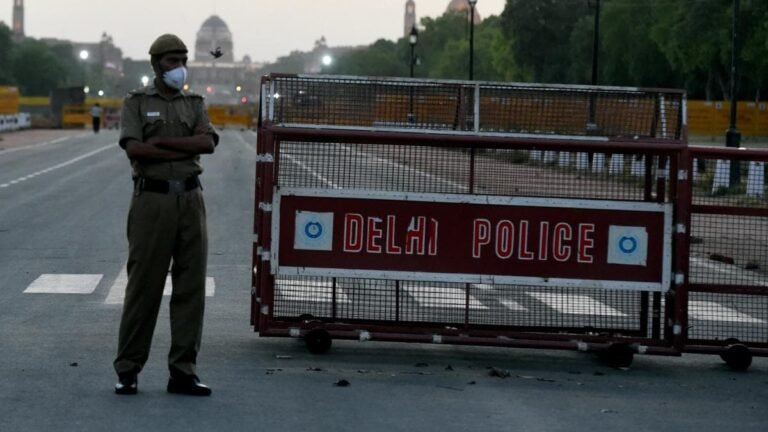
Delhi goes under lockdown from 10 PM till next Monday, Covid situation “Critical”

Announcing a six-day lockdown in Delhi from 10 pm tonight to 5 am next Monday, Chief Minister Arvind Kejriwal said the move was necessary as rising Covid cases had severely strained the city’s resources and its health system was at a tipping point.

Delhi is the worst-hit city in India with 25,500 fresh cases on Sunday and almost one-third of those tested returning positive. In the last 24 hours, the number of cases remain high despite a dip — 23,500.

“Delhi’s health system is at a breaking point. I will not say it has collapsed but the Covid situation is pretty critical,” Arvind Kejriwal said in a televised address, asserting that the lockdown decision was not an easy one.

“I have always been against a lockdown. I believe the lockdown will not finish the virus, but it will reduce the transmission rate. It will give us time to boost our infrastructure. We will use this week-long lockdown to improve our healthcare,” he added.

Delhi is facing acute shortages of hospital beds, medical oxygen supplies and key medicines such as the anti-viral Remdesivir, said Mr Kejriwal.

“If we don’t enforce a lockdown now, Delhi could be staring at a “bigger disaster,” he explained.

All shops and businesses will be shut and movement will be limited to essential services.

There have been similar measures in other parts of India, including in Maharashtra.

On Sunday, Delhi recorded the biggest jump in its daily Covid tally with 25,462 fresh cases and a positivity rate of nearly 30 per cent, which means almost every third sample being tested in the city is turning out positive.

Thrissur Pooram can’t be cancelled, will cause problems: KK Shailaja

The Thrissur Pooram cannot be cancelled, Kerala Health Minister KK Shailaja said on Saturday. She said there was a downward trend earlier during election time, and permission to conduct the Thrissur Pooram was also given considering the dip in cases.

Only those who bring certificates of having tested negative for the novel coronavirus or having taken both doses of the vaccination will be allowed to attend the festival, she said. 

“Many preparations have been made for the festival, so it is not possible to cancel it entirely. It will cause many problems. Clear instructions have been given to conduct it with caution which the Devaswom committee has been agreed to. Even those who test negative should still wear masks, apply sanitisers and keep as much distance as possible from each other,” the minister said.

Thrissur Pooram is an annual temple festival held in the state every summer. It is the single largest Hindu festival in Kerala in terms of the scale of people attending the festivities.  The Pooram is a competition of sorts between two sides, with five temples on either side. They are led by the Parmekkavu Bhagavathi temple and the Thiruvambadi Sri Krishna temples. Every year since it’s inception, the festival is celebrated on the premises of the Vadakkunathan temple at the centre of Thrissur town and normally around 2 million people attend the festival.

The Kerala government has been facing stiff opposition from temple committees and other opposition parties like the Congress and BJP who have said that the pooram cannot be cancelled. The Paramekkavu Devaswom responded to the restrictions, taking on a communal angle. The government is trying to sabotage the Thrissur Pooram with all the protocol, which are not followed for any festival, said Paramekkavu Devaswom secretary G Rajesh. In an interview to the media on Sunday, Rajesh claimed that the government “was tricking people with false TPR ratings”. The government either “reduced or increased” the TPR the way it suited their interests, he claimed. Saying that they might even decide to close the whole Thrissur district down citing COVID-19, Rajesh took on a communal angle, asking devotees to not allow this. The pooram can happen even if the organisers do not go, all it needs is for the gods to have their procession. 

He also spoke against the government’s changing protocol – at first it was only required that the devotees coming to the festival take one dose of vaccination, now they’d need two.

Rahul Gandhi cancels election rallies in Bengal amid Covid surge

Congress leader Rahul Gandhi on Sunday decided to suspend all  his public rallies scheduled for Bengal polls amid an alarming rise in Covid-19 cases.

Gandhi also advised all other politicians to think about the consequences of holding large public rallies. 

“In view of the Covid situation, I am suspending all my public rallies in West Bengal.I would advise all political leaders to think deeply about the consequences of holding large public rallies under the current circumstances,” he said on Twitter. 

The Congress has been critical of Prime Minister Narendra Modi and Home Minister Amit Shah for holding political rallies amid the rise in coronavirus cases in the country. Senior Congress leader P Chidambaram has accused the prime minister of shocking callousness for holding big political rallies in poll-bound Bengal amid the rise in COVID-19 cases.

He said the prime minister should be at his job, sitting at his desk and coordinating with chief ministers in handling the COVID pandemic.

Prime Minister Modi has been addressing public rallies in West Bengal for the eight-phase assembly elections in the state.

India has been witnessing a massive surge in coronavirus cases.

A record single-day rise of 2,61,500 coronavirus infections has taken the country’s total tally of COVID-19 cases to 1,47,88,109, while active cases surpassed the 18-lakh mark, according to the Union Health Ministry data updated on Sunday.

Kumbh Mela is Ram Mandir Deja Vu.

Why should one be surprised thrice by the same thing? There’s no logical reason to be, yet that’s what is exactly happening with the Kumbh Mela and the English-speaking centre-left of polity. The past few days have been rife with rants against Kumbh Mela, and on the same note, sympathy for Tablighi Jamaat.

Tablighi Jamaat came in for harsh attack last year for being negligent about Corona spread. The campaign was led by a caucus of media houses who tried a novel method of easing the guilt of their viewers with respect to the spread of Corona, at the expense of a community with whom they shared no exchange relationship. The issue lived out its on-screen course in a couple of weeks, but the success of the method meant that it would be repeated sooner or later. India Today tried it with Hyderabad’s Mecca Masjid, but it wasn’t picked up the same way as before.

But onto our issue at hand. In August, there was widespread fear, glee and accusation that the ceremony for laying the foundation stone of Ram Mandir would cause a huge covid spike, spiraling into a health crisis, piling up of dead bodies, and finally, apocalypse.

Nothing happened.

Naga Sadhus, or Hindu holy men participate in the procession for taking a dip in the Ganges River during Shahi Snan at “Kumbh Mela”, or the Pitcher Festival, amidst the spread of the coronavirus disease (COVID-19), in Haridwar, India, April 14, 2021. REUTERS/Anushree Fadnavis

Before that, there was the huge Corona exorcism, when a massive number of people took to the streets with no masks, across states, and banged on metals to rid India of Corona. It was not expected to work like magic by anyone other than Anti-Fascists, nor did it. It was like all ritual performances, expected to give fruit sometime in the future. But more interestingly, it was expected that there would be a surge in Corona cases in those areas. The expectation went unrealized, and there ought to be some explanation for it – either that it has gone unnoticed, or that some of the conditions in such gatherings are disabling Corona spread. That is for the medical experts to identify and describe

But a whole round of sympathy for Tablighi Jamaat had already been concluded by then. The Ram Mandir episode too saw a sympathy wave for Tablighi.

Nevertheless, those suspicious of Hindu irrationalism – the suspicion is more than justified – are expecting something different to happen during the Kumbh Mela. We should be rightfully critical of the unhealthy and regressive practices of Hinduism, but not for the sake of upmanship or as a wish for its collapse, because neither is bound to happen. It is curious why any mention of the two previous National Hindu Festivals are conspicuously missing in any discussion, be it in the BBC news reports or in the social media courthouse. Moreover, like the other two festivals, this one too was compared spontaneously to the Tablighi Jamaat case. The Hindu Festivals are never compared to each other, much less to the mass democratic gathering under the Farmers’ Protest.

This is certainly not any kind of amnesia. It is stubbornness. In 2019, this same stubbornness had this same crowd convinced that NDA did not have popular support. More specifically, it is a curious case of the Mass Psychology of Anti-Fascism, in which an unfounded belief thrives that Science, Democracy, Nature, Economy, Secularism or some other universal will destroy Fascism. That is why there is no point in following this crowd – they find it difficult to accept that even if Haridwar becomes a covid hotspot, it is not going to cause any threat to the regime.

This mania is neither about Covid, nor about the urgent need for reform in Hindu culture; it is about the helpless religiosity of Anti-Fascism.

India sees over 2 lakh new Covid-19 cases for third straight day

India added a record 2,34,692 new coronavirus infections in a day taking the total tally of Covid-19 cases to 1,45,26,609, while active cases surpassed the 16-lakh mark, according to the Union Health Ministry data updated on Saturday. This is the third consecutive day that the country has reported over two lakh cases. The death toll increased to 1,75,649 with 1,341 new fatalities, the highest this year, the data updated at 9 am showed.

Registering a steady increase for the 38th day in a row, the active cases have increased to 16,79,740, while the national Covid-19 recovery rate dropped to 87.80 per cent. The number of people who have recuperated from the disease surged to 1,26,71,220.

Covid 19 can be airborne; found ‘strong evidence’, says Lancet

A new assessment in the medical journal Lancet has found “consistent, strong evidence” that the SARS-CoV-2 virus, which causes COVID-19, is predominantly transmitted through the air.

Therefore, public health measures that fail to treat the virus as predominantly airborne leave people unprotected and allow the virus to spread, according to six experts from the UK, USA and Canada, including Jose-Luis Jimenez, a chemist at the Cooperative Institute for Research in Environmental Sciences (CIRES) and the University of Colorado Boulder.

“The evidence supporting airborne transmission is overwhelming, and evidence supporting large droplet transmission is almost non-existent,” Jimenez said. “It is urgent that the World Health Organization and other public health agencies adapt their description of transmission to the scientific evidence so that the focus of mitigation is put on reducing airborne transmission.”

The team of experts, led by the University of Oxford’s Trish Greenhalgh, reviewed published research and identified 10 lines of evidence to support the predominance of the airborne route.

At the top of their list: Super-spreader events such as the Skagit Choir outbreak, in which 53 people became infected from a single infected case. Studies have confirmed these events cannot be adequately explained by close contact or touching shared surfaces or objects.

Moreover, transmission rates of SARS-CoV-2 are much higher indoors than outdoors, and transmission is greatly reduced by indoor ventilation.

The team highlighted research estimating that silent (asymptomatic or presymptomatic) transmission of SARS-CoV-2 from people who are not coughing or sneezing accounts for at least 40 per cent of all transmission. This silent transmission is a key way COVID-19 has spread around the world, “supporting a predominantly airborne mode of transmission,” according to the assessment. The researchers also cited work demonstrating long-range transmission of the virus between people in adjacent rooms in hotels; people who were never in each other’s presence.

By contrast, the team found little to no evidence that the virus spreads easily via large droplets, which fall quickly through the air and contaminate surfaces.

“We were able to identify and interpret highly complex and specialist papers on the dynamics of fluid flows and the isolation of live virus,” lead author Greenhalgh said. “While some individual papers were assessed as weak, overall the evidence base for airborne transmission is extensive and robust. There should be no further delay in implementing measures around the world to protect against such transmission.”

The new work has serious implications for public health measures designed to mitigate the pandemic. First, “droplet measures” such as handwashing and surface cleaning, while not unimportant, should be given less emphasis than airborne measures, which deal with inhalation of infectious particles suspended in the air.

If an infectious virus is primarily airborne, someone can potentially be infected when they inhale aerosols produced when an infected person exhales, speaks, shouts, sings, or sneezes. So airborne control measures include ventilation, air filtration, reducing crowding and the amount of time people spend indoors, wearing masks whenever indoors (even if not within 6 feet or 2 meters of others), attention to mask quality and fit, and higher-grade PPE for healthcare and other staff when working in contact with potentially infectious people.

“It is quite surprising that anyone is still questioning whether the airborne transmission is the predominant transmission pathway for this virus or not,” said co-author Professor Kimberly Prather, an aerosol scientist from the University of California San Diego. “Only by including inhalation of aerosols at both close and long range can we explain the many indoor outbreaks that have occurred around the globe. Once we acknowledge this virus is airborne, we know how to fix it. There are many examples of places that have fared much better by acknowledging this virus is airborne from the start. The world needs to follow their lead as soon as possible.”
Two to a bed in Delhi hospital as India’s Covid 19 crisis thickens

Gasping for air, two men wearing oxygen masks share a bed in a government hospital in Delhi, victims of the country’s growing COVID-19 crisis.

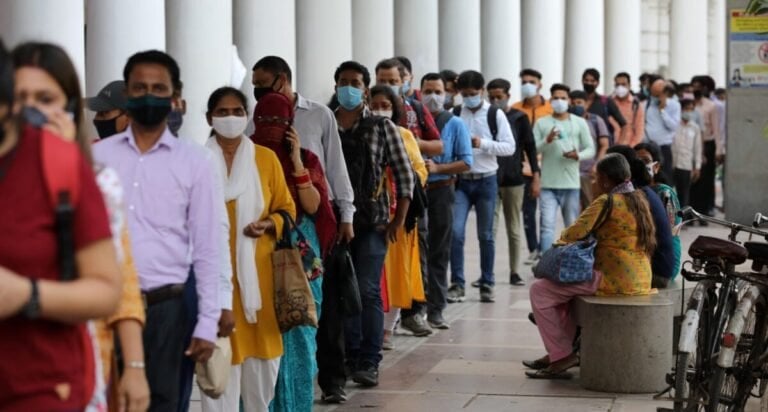
From reporting under 10,000 new daily cases earlier this year, daily infections crosses 200,000 on Thursday in India, according to official data, the highest anywhere in the world.

At Lok Nayak Jai Prakash Narayan Hospital (LNJP), one of India’s largest Covid-only facilities with more than 1,500 beds, a stream of ambulances ferried patients to the overflowing casualty ward on Thursday.

Some also arrived in buses and three-wheeled autorickshaws.

The youngest patient was a new-born baby.

“We are definitely over-burdened. We are already working at full capacity,” said the hospital’s medical director, Suresh Kumar.

From an initial 54 beds, the hospital now has over 300 for COVID-19 patients in critical condition. Even that is not enough.

Unrelated patients share beds, while bodies of those who recently died lie outside the ward before being taken to the mortuary.

“Today we have 158 admissions in Lok Nayak alone,” Mr Kumar said. Almost all were severe cases.

After imposing one of the world’s strictest lockdowns for nearly three months last year, the centre relaxed almost all curbs by the beginning of 2021, although many regions have now introduced localised restrictions.

Mr Kumar said fast-spreading new variants that evade testing were adding to the burden, as was human behaviour as the country reopened.

“People are not following the Covid guidelines,” he said. “They are just careless.”

Outside the hospital’s mortuary, weeping relatives gathered in the hot sun to wait for the bodies of loved ones to be released.

Prashant Mehra, 40, said he had to pay a broker for preferential treatment before he could get his 90-year-old grandfather admitted to the hospital. The hospital did not immediately respond to a request for comment on his remarks.