Bengal Chief Minister Mamata Banerjee erupted in anger at Kolkata’s Victoria Memorial on Saturday evening – at an event to honour legendary freedom fighter Netaji Subhash Chandra Bose on his 124th birth anniversary – after she was interrupted with chants of “Jai Shri Ram“.
Prime Minister Narendra Modi was on stage for the incident – one of the few times in the recent past she has shared a platform with him. Bengal Governor Jagdeep Dhankhar was also present.
“Don’t insult me after calling me here. This is not a political programme. If you invite someone to a government programme, you should not insult them,” Ms Banerjee said, cutting short her speech.
Visuals showed the crowd shouting moments before Ms Banerjee spoke, forcing the organisers to repeatedly call for calm. When she finally got to speak a visibly upset Ms Banerjee urged the crowd to display some dignity and thanked the PM for attending the event.
A seemingly unperturbed Prime Minister Modi spoke shortly afterwards and began by referring to the Chief Minister as “behen (sister) Mamata”. As he spoke, chants of “Bharat Mata Ki Jai” were heard, but those of “Jai Shri Ram” seemed conspicuous by their absence.
With Assembly elections now only a few months away, the scenes at the famed Victoria Memorial quickly invited retorts and counter-retorts from members of the two parties.
BJP IT cell chief Amit Malviya was among the first off the block, alleging that Ms Banerjee had “insulted” the memory of Netaji and that “Bengal will not tolerate this disregard of its icons”.
Mamata Banerjee insulted the legacy of Rabindranath Tagore by refusing to attend Viswa Bharati’s centenary celebrations. She has done the same by not delivering her speech on the occasion of Netaji’s anniversary celebrations.
Bengal will not tolerate this disregard of its icons.
“Mamata Banerjee insulted the legacy of Rabindranath Tagore by refusing to attend Viswa Bharati’s centenary celebrations. She has done the same by not delivering her speech on the occasion of Netaji’s anniversary celebrations,” he declared.
Trinamool MP Derek O’Brien hit back by tweeting the dictionary definition of the word ‘dignity’ and saying “you can(not) teach lumpens to be dignified”.
dignity (noun) The state or quality of being worthy of honour and respect.
You can’t teach ‘dignity’. Nor can you teach lumpens to be dignified.
— Derek O'Brien | ডেরেক ও'ব্রায়েন (@derekobrienmp) January 23, 2021
“dignity (noun) The state or quality of being worthy of honour and respect. You can’t teach ‘dignity’. Nor can you teach lumpens to be dignified. Here is a one-min video of what exactly happened today. Including the dignified response by Mamata Banerjee,” Mr O’Brien said.
“The breath of a wounded lion is far more terrifying than its roar.”
India won a marvellous Victory against Australia amidst wounds made by injuries of top players, sledging and racism. This is the first-ever victory of the Indian team at Gabba and the first time that Australia has been beaten in 32 years. India started the test tour with an 8 wicket failure at Adelaide. Adelaide test loss was accompanied by a shameful record of lowest test innings total for India-36/10. The Adelaide loss and returning of captain Kohli to homeland made former Aussies players predict a whitewash for India in the Border-Gavaskar Trophy. But the astounding performance of Bumrha, Aswin, Jadeja and Captain Rahane’s class century bagged an 8 wicket win for India in the second test at MCG.
Although the third test started with a strong partnership of Smith(131) and Labuschagne(91), India defended very well with the ball. India who started with a target of 407 got a good opening by Gill-Rohit partnership. Even though India lost 3 wickets by scoring just 100 runs. The defensive play of Pujara and ODI style play of Rishab Pant who came after the fall of 3rd wicket helped India to achieve 250. Even though the wicket loss of Pant and Pujara descended the hope of Indians, team India heroically drew the match by the confident wall built by Aswin and Vihari in 6th wicket and. In addition to sledging and racism against Indian players, top players like Jadeja, Bumrha, Aswin, Vihari were injured by the third test at SCG.
Aussies started the 4th test with Labuschagne’s century and Captain Tim Paine’s half Century against the ‘handicapped’ India. But India replied with a record-breaking 7th wicket partnership by Shradhul Takoor and the debutant Washington Sundar. Although Indian innings was all out before taking the lead, the bowling row headed by Siraj (5wickets) and Takoor(4 wickets) threatened the Aussies batting line. India lost their first wicket in the first session on the last day. But the matured play shown by Pujara and Gill in the ground made the Indian score above hundred. When Mayank left the ground after Gill who missed his first test century by only 9 runs and Rahane got out after Pujara, Pant who came as 5th number played aggressively on the other side of the crease. When Washington Sundar who made 50 runs partnership with Pant bowled out as 6th wicket and Takoor got caught in Hazelwood’s over before reaching two digits, India was a few runs away from the victory. Pant smashes Hazelwood’s next ball after Takoor’s departure to the boundary and India won the series by 2-1 with the historic match.
Stars of India
As the commentator quoted after the winning shot by Pant, he is the main star of team India in this series. He played consistently throughout the series with two excellent half-centuries. He is leaving Australia with records in his hands. He became the first player to score above 25 in 9 consecutive matches against Australia. As the wicketkeeper of India, he became the one who crossed 1000 runs in less number of matches.
When looking into the opening batting line Shubman Gills gives good hope for Indian Cricket team. He showed a matured performance in the entire series. Rohit who joined the team lately also played well. But Skipper Rahane couldn’t keep the consistent performance after his century in the second test. The name Pujara is something we can’t forget in this series. Even though he got criticized for his slowest fifties, his defensive playing was what made a hold for India in the crease against the hazardous bowling line of Australia. During the last day, he played a ‘bloodshed’ innings against the bounces of Aussies bowlers.
Apart from Bumrha, Aswin the debutants Natarajan, Siraj, Saini, Sundar showed an excellent performance. Sundar made a dreamlike debut with 4 wickets and 84 runs with a class fifty. Siraj’s and Takoor’s bowling performance, Sundar-Takoor record-breaking partnership and Pant’s astounding innings have helped India to break the Gabba fortress.
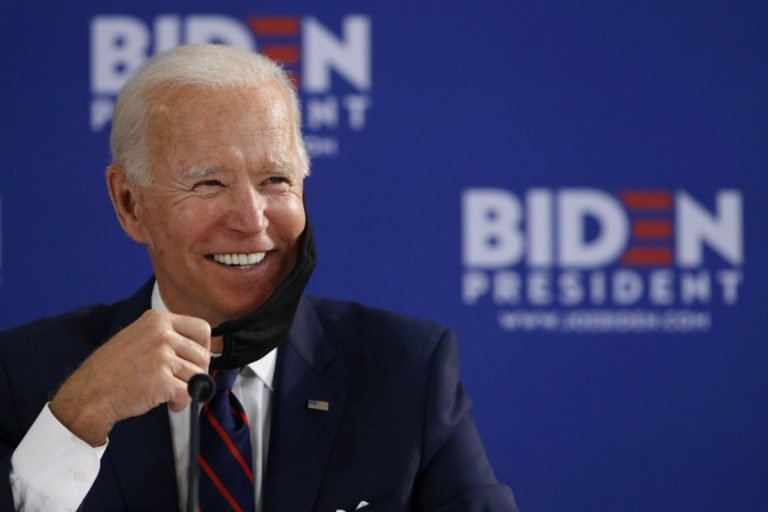
In a blow to his predecessor Donald Trump’s actions to limit immigration, US President Joe Biden on Wednesday has ended the ‘Muslim travel ban’, which blocked travel to the United States from several predominantly Muslim and African countries.
Hours after taking the office, Biden on Wednesday signed 17 executive orders memorandums and proclamations including ending the Muslim travel ban.
He has directed the State Department to restart visa processing for individuals from the affected countries and to develop ways to address the harm caused to those who were prevented from coming to the United States because of the ban, The New York Times reported.
Implemented in 2017 during Trump’s first week in office, the Muslim Ban initially restricted travel from seven Muslim-majority nations: Iran, Iraq, Libya, Somalia, Sudan, Syria and Yemen.
The ban faced several legal challenges, but the Supreme Court in 2018 upheld the final version of the measure.
The Muslim travel banso far restricts citizens from 12 countries — Iran, Libya, Syria, Yemen, Somalia, Nigeria, Myanmar, Eritrea, Kyrgyzstan, Sudan, Tanzania and North Korea — and some Venezuelan officials and their relatives from obtaining a broad range of US visas, NPR reported.
With another executive order, Biden has bolstered the Deferred Action for Childhood Arrivals program that protects from deportation immigrants brought to the United States as children, often called Dreamers.
Another executive order revoked the Trump administration’s plan to exclude non-citizens from the census count, and another overturns a Trump executive order that pushed aggressive efforts to find and deport unauthorised immigrants.
Biden has also halted construction of Trump’s border wall with Mexico. The order includes an “immediate termination” of the national emergency declaration that allowed the Trump administration to redirect billions of dollars to the wall.
Since time immemorial, dance as an art form had been limping through the veins of Indian culture. Natyashasthra as a manual, divulges the supreme role of theatre and dance which created the pedestal for all kinds of art forms which fascinated Indians for generations.
Natyashashtra propounds two dance styles, Lasya and Tandava or feminine and masculine. This dichotomy based on the layout of the art form created a taxonomy that females will be always graceful and males will always be vigorous while on stage. This inflicted chasm which even affected the true appreciation of them. The significance of gender neutrality comes in question here.
Taking a perspective regarding gender and sexuality, both are not fixed naturally and are flexible social constructs. Whenever we think of a dancer, the first thing that comes to our mind will be that of a female dancer, with attractive physique, captivating eyes appealing to the male voyeuristic gaze. It is surprising to find that even the dance forms carry this baggage of gender divide. For example, Mohiniyattam, an art form of Kerala, as the name suggests, is invariably performed by women. Kathakali on the other hand, is an amalgamation of femininity and masculinity. With time and the hegemony of femininity or gracefulness utilized in the dance forms, people always occupy the thoughts as dance is for women. If a boy has an inclination towards studying dance, he might not be admired as much as for a girl.
Anitha Ratnam, a legendary Indian Classical and contemporary dancer and an initiator of Neo Bharatanatyam, came up with an innovative concept ‘purush’ to mark the honor and acknowledgement of male dancers who are swathed under the carpet as a result of preconceived notions and misinterpretations. She paid tribute to all Indian male artists who played vital role in popularizing Indian culture across masses. She critiques the sculptures and paintings which ignore male dancers. Nevertheless, we cannot ignore the generous number of males entering this peculiar arena by breaking all stereotypes and stigmas.
Anita Ratnam
A renowned dancer and tutor Smt. Suni Vikas opines that it is the male dancers who drew international attention of classical forms and he says that it is a misconception that dance forms are a female privilege since it suits their body. Marginalizing male artists is therefore invalid. Another need for thought on gender pops up while females are interested in training martial arts. Some gurus are indifferent from this idea since they believe that practicing martial arts can affect the femininity of dancers and can cause them to lose their grace. “Femininity” or “gracefulness” are certain ideations which have got nothing to do with a particular gender. Is homosexual love a form of love?
Why does dance always celebrate the sexual desirability between men and women? Most of the literature which form the basis of dance forms, praises heterosexual love. What if Krishna loved Arjuna instead of Radha? The flamboyant hero whose name resounds in almost every Indian scriptures and art forms would have shed a landmark in the mindset of people. ‘Shringara’, the rasa which evokes love is rendered mostly through Radha- Krishna love. From Sathriya in Manipur to Krishnanattam in Kerala all chronicles through this love.
Mohiniyattam
The modern connoisseurs of these forms collectively open up the doorway for the third gender by supporting their incessant efforts to be on the mainstream. The first transgender group from Mumbai are labelled as “Dance queens” by the media spreading the wings of the artists to the zenith of regard. This rupture can eventually lead to the reimbursement for the ignorance of the past.
Caste demography in India has also influenced these art forms to an extent. During the reign of Cholas, Cheras and Pandyas, devadasis were women who performed in front of the upper caste who used them for sexual exploitation as well. Dancers were hence labelled as prostitutes and dance became an art performed by them. This designation abdicated the upper caste girls from learning dance as a performative art. Devadasis even receded from entering temples in the belief that they may “pollute” the purity of the temple. Later, these injustices instigated were disenfranchised, thanks to the dancers like Rukmini Devi, E Krishna Iyer with their efforts breathed life to the dying art form and made it global to all strata of society.
Any culture vultures have got a narrow chance of escaping the unparalleled Hyderali and his exceptional role in Kathakali music. He practiced under the pioneers of the field such as Kalamandalam Nambeeshan, Kalamandalam Sivaraman Nair and paved the way for singers of his generation as the first non-Hindu artist to mark the stance in four century old tradition from Kerala. As a non-Hindu, he faced a lot of criticisms in the Hindu ruling coliseum and was accused of tainting the age-old heritage of Kathakali music. He amended the aesthetics of the music and was praised for his soulful singing even by the legends like Kalamandalam Gopi.
Kalamandalam Hyderali
The connoisseurs of Kathakali recall the incident of breaking a wall in a temple and stretching the stage so that Hyderali can sing for them. The ensnare of his expertise was massive. Hyderali and his endowment towards this field reach across all differences, beliefs, practices and he erect the notion that “art escapes and transcends the fences created by mankind”. The secularism of art forms is therefore a serious school of thought. There are certain art forms in India which are passed on exclusively to members of certain communities who only are allowed to perform them in front of others. One such being Chavittu Natakam, a theatrical, colorful form performed by Christian communities in Kerala.
Classical dance forms, nonetheless of gender, geographical location or age, serve as a mighty avenue for everyone to express their views, desires thereby obtaining inner peace of mind. Art of any form is a weapon for battle against servitude, inequality and injustice. It is the commemoration of undying human spirit. Let’s behold these forms by giving no room for biases or prejudices.
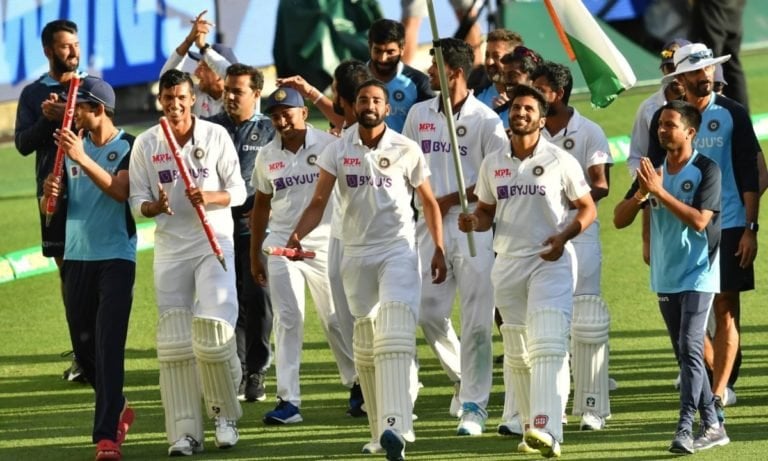
Team India registered a emphatic second ever test series win in Australia. It’s a stellar comeback after a disastrous start in the first test.
Resuming at four for none on the final day, India overhauled the target with 18 balls to spare in a match that went down to the wire. At the start, India lost experienced vice captain Rohit Sharma (7) early but young Shubhman Gill (91) rose to the occasion with an impressive knock that kept India in the hunt as Chesteshwar Pujara dug heels on the other end. Rahane did try to build on the good start with his short but attacking 24-run knock before his sift dismissal.
Under fire before the Test series, wicket-keeper and batsman Rishabh Pant hit 89 not out off 138 balls with his breathtaking strokeplay to take India to the finish line in the final overs of the game.
India chased down 328 in the last innings and recorded India’s third highest succesful chase in test match cricket. India scored a whopping 324 runs on the final day of the Brisbane test.
Before this match, Australia had won 12 while India had won 9 out of the 27 total series played between India and Australia since 1947. This is India’s 10th series win against Australia.
Shubhman Gill and Cheteshwar Pujara anchored the chase by scoring 91 and 56 runs, respectively. But it was Rishabh Pant yet again who provided the finishing blow to the innings with a quick and unbeaten 89 that helped India win the test match and the series. Washington Sundar, who was the hero of the first innings also played a cameo in taking the team over the line.
The Border-Gavaskar Trophy once again comes to India. It is for the second consecutive time that India have won a test series in Australia.
This test match concluded a successful campaign for India down under. India had also won the T20 series 2-1.
The victory becomes even more significant as they were playing in the absence of their skipper Virat Kohli. Cricket experts around the world are lauding this Indian performance. The stand-in captain Ajinkya Rahane would be proud of his team’s performance.
India on Tuesday became the first team to beat Australia at The Gabba in over 32 years when they defeated the hosts. In all, Australia had won 40 out of the 62 games they played at the venue prior to this match, losing just eight. Four of those losses have come against England while three came against West Indies, the last of which was in 1988. One came against New Zealand.
The BCCI announced a Rs 5 crore bonus for the Indian cricket team after the stupendous victory. BCCI President Sourav Ganguly and Secertary Jay Shah tweeted within minutes of each other to make the annoucement of a bonus. “Just a remarkable win…To go to Australia and win a test series in this way ..will be remembered in the history of indian cricket forever ..Bcci announces a 5 cr bonus for the team ..The value of this win is beyond any number ..well done to every member of the touring party,” Ganguly tweeted.
“The @BCCI has announced INR 5 Crore as team bonus. These are special moments for India Cricket. An outstanding display of character and skill,” Shah also posted.
Hailing the Indian cricket team for its victory, Prime Minister Narendra Modi took to Twitter saying their remarkable energy and passion was visible throughout.
“We are all overjoyed at the success of the Indian Cricket Team in Australia. Their remarkable energy and passion was visible throughout. So was their stellar intent, remarkable grit and determination. Congratulations to the team! Best wishes for your future endeavours,” Modi tweeted soon after India defeated Australia in Brisbane.
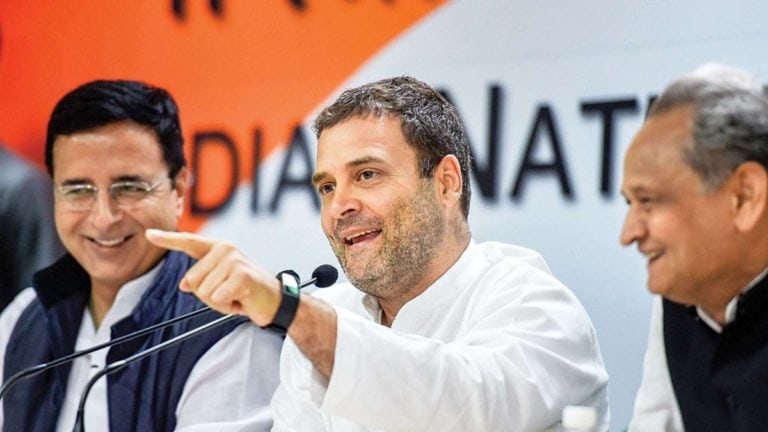
Congress MP Rahul Gandhi today pressed further with his party’s backing of the protest by some farmers against the new farm laws as “designed to destroy agriculture”. Taking aim at the centre, he said he’s “not scared of Narendra Modi or anyone”. Mr Gandhi said with the three new laws, the centre has put the entire farm sector into the hands of “three to four crony capitalists”, an allegation that the farmers have been making too.
“The new farm laws are designed to destroy the agriculture sector. I support the protesting farmers 100 per cent and every single person in the country should support them as they are fighting for us,” Mr Gandhi said today at the launch of a booklet on farmers and the new laws, adding nothing short of complete withdrawal of the laws would do.
Mr Gandhi also took a swipe at BJP chief JP Nadda, who had earlier criticised him in a tweet over the Congress leader attacking the government on reports that China had built a village in Arunachal Pradesh.
“Farmers know the reality. All farmers know what Rahul Gandhi does. Nadda ji was not at Bhatta Parsaul. I have a character, I am not scared of Narendra Modi or anyone, they can’t touch me but they can shoot me. I am a patriot and will protect my country… I am more fanatic than them,” Mr Gandhi said, referring to violence and alleged rapes during land acquisition in Uttar Pradesh’s Bhatta Parsaul in May 2011.
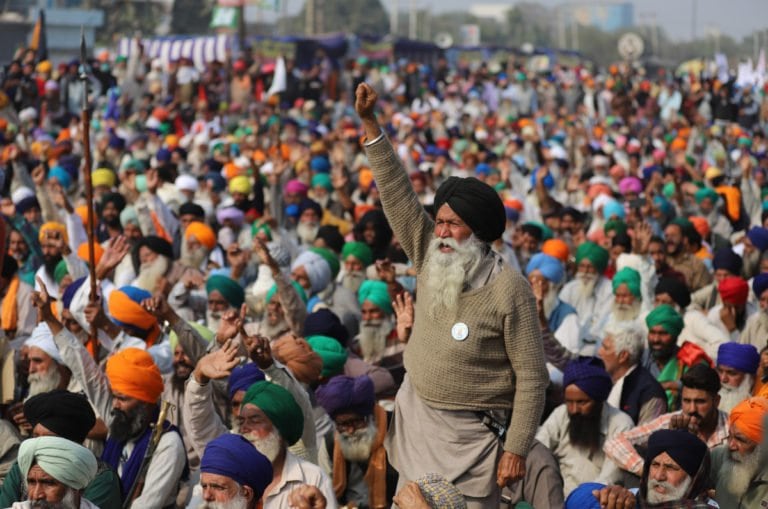
Protesting farmers who have dug in at the Delhi-Haryana borders have said they will push ahead with a massive tractor rally on January 26, Republic Day. The government approached the Supreme Court seeking to stop the rally as it could tarnish the nation’s image on an important day. The top court, however, left it to Delhi Police to decide whether to allow the tractor rally.
The farmers have met union ministers for talks for at least nine times, but there has been no headway. The government has said it was ready to discuss the laws clause by clause, but the farmers have stuck to their demand of complete repeal of the laws.
The centre has said the laws – passed in September last year – will boost farmers’ incomes by letting them deal directly with big companies and bypass government-regulated wholesale markets. But many of the unions disagree, saying they risk losing their bargaining power and becoming vulnerable to potential bulk buyers. They fear the eventual disappearance of minimum support price or MSP, the guaranteed prices the government pays for their grain.
Former Broadcast Audience Research Council (BARC) Chief Executive Partho Dasgupta and journalist Arnab Goswami allegedly colluded to give the latter’s news channel, Republic TV, an advantage over rivals, according to purported WhatsApp conversations between the two that went viral Friday.
Among other things, the purported conversations show discussions between the two about lobbying with politicians and the Prime Minister’s Office (PMO) against certain reform proposals regarding TV ratings.
The WhatsApp conversations are part of Mumbai Police’s investigation into alleged manipulation of Television Rating Points (TRPs) by news channels, including Republic TV and a few others.
According to the title of these documents, they were recorded by Mumbai’s Kandivali police station as part of the panchanama for Dasgupta’s mobile phone on 26 December last year. The chats online purportedly detail conversations between Goswami and “PDG”. The Mumbai Police documents identify the latter as Dasgupta.
Mumbai Police arrested Dasgupta on 24 December last year and has filed a charge sheet and a supplementary charge sheet in the case since then.
Reached for comment, Mumbai Deputy Commissioner of Police S. Chaitanya said, “The Mumbai Police has no comment on these documents.”
The BARC spokesperson declined to comment as well. “As the matter is a subject of an ongoing investigation by the various law enforcement agencies, we are constrained to respond to your enquiries,” the spokesperson said.
On 16 October 2019, Dasgupta asked Goswami to check if he could help him get a “media advisor kind of position with PMO” as he was “fed up with BARC”.
The two also discussed how actor Kangana Ranaut’s interview to Republic TV in the aftermath of Sushant Singh Rajput’s death in June 2020 generated TRPs for the channel.
Dasgupta purportedly praised Goswami’s interview for making Ranaut say things that were “controversial”.
In a chat dated 16 August 2019, Dasgupta allegedly complained to Goswami that journalist Rajat Sharma was giving him trouble for his “proximity” with him. But Goswami purportedly told him not to worry as “Rajat is in a mess with Jaitley almost gone”.
“Rajat is over. don’t take his bullshit anymore,” Goswami said, but Dasgupta told him that “others do”.
On Rajat Sharma’s appointment as president of the News Broadcasters Association, a body representing TV news channels, in September 2019, Dasgupta told Goswami, “So mota bhai influence didn’t work here, Rajat was elected as NBA head.”
“Mota bhai” is the term Gujaratis use to address elder brothers.
Talking about the appointment of Sourav Ganguly as BCCI chief later that year, Goswami said, “Rajat looks like an utter fool as he has announced that he will be taking over BCCI.”
The chat appears to be a reference to buzz that Sharma was vying for the post of BCCI president.
The documents show that, on a number of occasions, Dasgupta and Goswami allegedly shared confidential data with each other.
In 2017, Dasgupta allegedly said to Goswami, “If you have exclusives lined up you should talk to BARC to release data first week. We don’t give daily reach figure to everyone — happy teams are unofficially coordinating.”
Similarly, after the launch of Republic Bharat in 2019, Goswami told Dasgupta, “I will fight all out Partho boss. Honestly, will not spare a single effort and will implement every suggestion to take us to the highest position. Won’t let a second on air go without winning.”
Dasgupta responded, “Am sure boss, nowhere would we share things as we do with you.”
Later that month, one of Dasgupta’s purported messages to Goswami said, “I strongly wish for your success. Meanwhile, I am being pissaoed (crushed) in between government and big broadcasters.”
In another message, Goswami allegedly told Dasgupta, “Reminder of the stuff you have to give me on BARC? Meeting mid next week.” To this, Dasgupta responded, “Check gmail. Use your own language”
Goswami said, “Yes I shall tweak add and expand on what I had done.”
In July 2019, Arnab allegedly complained to Dasgupta that he was badly hit as the TRPs were not up to the mark. Dasgupta then allegedly suggested that he take a look at the “confidential break strategy”. He added that he had asked Romil Ramgarhia, another BARC official, to show him how the News 18 strategy works.
According to the documents, Goswami said, “I will review the break strategy”
Dasgupta replied, “I have asked Romil to show you what kind of cuts happens (sic) in News 18.”
“Have a look. Confidential of course,” he purportedly said.
Goswami allegedly responded, “I appreciate. Will also take inputs on break strategy.”
The three new laws at the heart of massive farmer protests near Delhi will not come into force for now. The Supreme Court today pressed pause on the laws enacted in September in a huge blow to the government. The top court also said a committee of agricultural experts would take over negotiations with farmers to end the crisis, and called it a “victory of fair play”.
“We are staying three farm laws until further orders,” Chief Justice SA Bobde said, announcing the order.
“While we may not stifle a peaceful protest, we think that this extraordinary order of stay of implementation of the farm laws will be perceived as an achievement of the purpose of such protest at least for the present and will encourage the farmers bodies to convince their members to get back to their livelihood, both in order to protect their own lives and health and in order to protect the lives and properties of others.”
The government had told the court that the laws “were not hurriedly made”, that they were the result of two decades of deliberations.
In eight rounds of talks with farmers’ unions over the past month, the government had firmly ruled out withdrawing the laws but had offered to make amendments.
Noting that “no solution was in sight”, the Supreme Court said it was trying to solve the problem in the best way and had the power to suspend the laws.
“These are matters of life and death. We are concerned with laws. We are concerned with lives and property of people affected by the agitation. We are trying to solve the problem in the best way. One of the powers we have is to suspend the legislation,” the Chief Justice said.
“We want to solve the problem and that’s why we are making the committee,” he added.
The names suggested by the Supreme Court include agricultural economist Ashok Gulati, Anil Ghanwat (Shetkari Sanghatana), Bhupinder Singh Mann (former Rajya Sabha) and Pramod Joshi (International Food Policy Research Institute). All four are known to support the farm laws.
Former Chief Justice of India RM Lodha, widely tipped to head the panel, told NDTV he had declined the offer.
The top court also issued notice to farmers’ unions on a Delhi Police plea to stop a tractor rally on January 26, during Republic Day parade.
The judges rebuffed the lawyer for protesting farmers, ML Sharma, as he said farmers would not participate in the committee as Prime Minister Narendra Modi had refused to talk to them. “We cannot ask the PM anything, he is not a party before us,” said the Chief Justice.
“This is not politics. There is a difference between politics and judiciary and you will have to cooperate.”
“Each one of us we will responsible if anything goes wrong. We don’t want any injuries or blood on our hands. Who is going to be responsible for bloodshed if any,” the Chief Justice had said in a series of sharp comments.
The farmers, protesting on highways outside Delhi since late November, have said they will accept nothing short of the government cancelling the laws, which they believe will deprive them of the Minimum Support Price (MSP) – the guaranteed cost at which the government buys from them — and leave them at the mercy of corporates. They have refused to buy the central government’s argument that the laws will bring long-delayed reforms in the agriculture sector by doing away with middlemen and allowing farmers to sell anywhere in the country.
Hearing a clutch of petitions challenging the new farm laws as well as the ones related to the ongoing agitation at Delhi borders, the Supreme Court on Monday said it was disappointed with the way negotiations between the government and the farmers have progressed.
“What is going on? States are rebelling against your laws”, a bench headed by Chief Justice S A Bobde told the Centre. We are extremely disappointed with the negotiation process.
The apex court asked the Centre to stay the laws till a committee constituted by it discusses the same and submits a report.
“We are not experts on economy; you tell us whether govt is going to put on hold farm laws or we will do this, the court said.
To the protesting farmers, the court said, “Whether you have faith or not, we are the Supreme Court of India, we will do our job”. Thousands of farmers, mostly from Punjab, Haryana and Uttar Pradesh, are staying put at various border points of Delhi since late November last year to protest against the laws.
The eighth round of talks between the Centre and the farmer unions on January 7 appeared heading nowhere as the Centre ruled out repealing the contentious laws while the farmer leaders said they are ready to fight till death and their ‘ghar waapsi’ will happen only after ‘law waapsi’
The Monday hearing in the Supreme Court assumes significance as the Centre and the farmer leaders are scheduled to hold their next meeting on January 15.
History and the Modern World is full of ‘Conspiracy theories’ which apparently are turning to not just be theories but a reality which is shocking the World and making it wakeup.
Greed is the nature of man and more so of the Supremacists out of which was born a new form of morality and humanity which some dubbed as ‘Philanthrocapitalism’ to those who may not be aware of the term it is bluntly cashing in on unfortunate events and circumstances while making a show of magnanimity.
Before we go further into the discussion it is important to understand the fact that politics today is not limited to respective it is now an international affair with the whole world now having become a single community which in itself is beautiful and an achievement for the human race.
However beautiful as it may be it is unfortunate how it has turned all world democracies to capitalism. One must be really ignorant or absolutely lacking intellect to not see or understand the above fact.
In general when we talk capitalism it is mostly corporations, sometimes individuals that run affairs and control the politics of their nations and sometimes others too in which case the governments become puppets or brokers for these corporations and billionaires.
As far as the Indian Farmers are concerned it is known that it is one of the biggest industries of the nation and has been so far a long time seeing how lucrative it is international corporations have been trying to affect and control it.
It is easy for everyone to want a piece of such a great industry creating genetically structured seeds and patenting them even trying to automate and mechanise the industry. Fortunately thanks to some Indian activists they were not able to succeed.
As fortunate as that wall is, it is now unfortunate that the corporations of our motherland that have grown are now aiming for the same goals as their international counterparts. Hence the new ‘Act’ which gives these corporations total control over the farming industry ignoring the fact that Indian Farmers are refusing, for it being detrimental to the life and growth of the farmer.
The president of India Mr. Ram Nath Kovid on 27.09.2020 gave his consent to the three farm reform bills –
The Farmers’ Produce Trade And Commerce (Promotion And Facilitation) Bill 2020,
The Farmers (Empowerment and Protection) Agreement on Price Assurance and Farm Services Bill 2020, and
The Essential Commodities (Amendment) Bill 2020.
As per our head of the nation “A watershed moment in the history of Indian Agriculture!” but the farmers for whose betterment these Acts have been passed are on the streets protesting against these Acts. Farmers organizations like Bhartiya Kisan Union (BKU) and the All India Kisan Sangharsh Coordination Committee (AIKSCC) have been protesting the bills from September 2020 itself. They have raised the slogan of ‘KISAN BACHAO MANDI BACHAO’ in this article we will know about the reason for the farmers’ negative reaction.
I think all of India that has studied upto high school knows about zamindari system and its abolition. 90% of Bollywood movies from the sixties to the nineties were full of stories about Zamindars and the Zamindari system and how it deterred the growth of the farmer, the farming industry and in turn the Nation. So we have three decades of cinema apart from 100’s of documentaries and programs defining the evil of the zamindari system which in modern parlance could be understood as a form of contractual farming, which is why the average intellect fails to understand why we want to go back to the same contractual system that we abolished in the form of the zamindari system. Any layman would understand that no assurance can be given about the result of a particular season of farming because the result of it depends on nature. How can we justify taking under contract a process that has an uncertain result. No wonder the Indian farmer is out on the streets protesting and fighting against these bills.
To end the zamindari system, the government introduced APMC (Agriculture Produce Market Committee) Act. It was introduced in the 1960’s at the very same time when the green revolution started in India many experts believe that in the major green revolution APMC Act played a major role. APMCs set up Mandis or Markets across India where farmer’s produce was sold. There are around 7000 APMCs in India at present. Now, the process of selling the produce is that after harvesting crops are brought to the Mandis or Markets where they sell the produce through auctioning or price discovery. To whom the farmers sell the crops? Not to the government but the middlemen or Arhatiyas. Middlemen are people between the farmer and the retailer or big traders. Government gives license to these Middlemen; shops, storage facilities etc. are provided to them in APMC markets. Many people work in these APMCs, there is storage of grains, so it requires labourers, accountants so overall it is a self-thriving ecosystem. One thing which should be noted here is these APMC markets are regulated by state governments, a tax is charged on each transaction so in a way the government knows that, at what price the produce is being sold.
Now what about the produce that is not bought by the middlemen in these markets? This is being bought by the government at MSP (Minimum Support Price). MSP is constant throughout the country. MSP also ensured that produce bought by the middlemen were not below a certain price. When everything is so good are farmers happy? According to the National Crime Bureau report 2018, 1,34,560 suicides were reported in India out of which 10,350 were farmers remember this was the total number of reported cases. This system was good seeing the 1960’s but with time we need to evolve similarly, not much was done to APMCs and some problems popped up. Middlemen started exploiting farmers; they formed cartels or an understanding among themselves and started buying the produce at MSP only and sold to traders at a high rate. For example, MSP for onion is Rs.8.5 per kg (data as of February 06, 2019) but we buy onions at Rs 35 – 80 per kg depending on state. In a way we can say Minimum Support Price became Maximum Selling Price. Voices arose from time to time to remove these defects and in response the government brought the three Acts in 2020. Farmers were exploited not because of those
These Acts envisage to bring change in some of the key aspects of the farm economy — trade in agricultural commodities, price assurance, farm services including contracts, and stock limits for essential commodities. These Acts sought to bring much needed reforms in the agricultural marketing system such as removing restrictions of private stock holding of agricultural produce or creating trading areas free of middlemen and take the market to the farmer.
The Farmers’ Produce Trade and Commerce (Promotion and Facilitation) Bill 2020 or The Market Place Law
We have already discussed the process currently in place well according to the new market place law, farmers can sell their produce anywhere not just in the APMC approved mandis or market places but literally anywhere i.e., they can sell inside the state, outside the state, or if they wish they can also sell it online. Which means according to the union government this law has been brought in to give freedom of choice to farmers they will have a variety of marketplaces. The government says this is actually going to do good to them because they can choose from several options.
The Farmers (Empowerment and Protection) Agreement on Price Assurance and Farm Services Bill 2020 or The Contract Farming Law
Farmers can enter into ‘written agreements’ with anyone, including a company, and sell them their produce for a set period of time, as per the contract. In other words, companies can now have contracts with farmers for buying with farmers for buying their produce. They can set the price for the produce, the standards and qualities and other legalities can be mentioned beforehand. The Union government says this will protect and empower farmers to sell to anyone a wholesaler, a retail giant or an exporter. They will have written contracts which will protect the farmer in case the buyer tries to cheat them. And they can also sell future produce today, according to the government.
The Essential Commodities (Amendment) Bill 2020 or Essential Commodities Amendment
The Essential Commodities Act was first brought in decades back in 1955. The Act basically controls the production, supply and the distribution of certain commodities that are known to be essential. So if an item comes under this Act for instance a food item or an important drug then companies and supermarkets cannot hoard these items when there is a shortage, they also cannot artificially increase the prices etc. the list of essential commodities as per the original act includes: Drugs (medicines); Fertilizers (inorganic, organic, mixed); Foodstuff (including edible oilseeds and oils); hank yarn made wholly from cotton; Petroleum and petroleum products; Raw jute and jute textiles; Seeds (food crops, fruits and vegetables, cattle fodder and jute seeds). The new amendment has removed food stuff such as Potato, Cereals, Pulses, edible oilseeds and oils, from the list of essential commodities which means unless there is a dire circumstances like a war or famine or an extraordinary price rise these commodities will not be considered under the essential commodities list.
Further, the government cannot impose a stock limit i.e. it cannot stop a supermarket chain or a retailer from hoarding unless there is a 100% (percent) increase in price of perishable goods or 50% (percent) increase in price of non-perishable goods. All items removed from essential commodities act are: Rice, Wheat, Potatoes, Onions, and Oil.
CONTROVERSIES
The Act which is going to be implemented in the whole country has not been discussed with states which will be affected by the Act Farmers are demanding for legal backing to the MSP is Legitimate that’s why we are witnessing a country wide protest, Although there is no provision of removing of APMCs then why are farmers fearing and raising slogans of MANDI BACHAO? APMCs are under state government and are maintained by taxes collected in APMC market’s transaction. Government says in private markets, which can be set up now, no taxes will be charged in the transactions of private market so this would save taxes, all companies and traders will buy farm produce from private markets which will slowly result in the end of APMC because the state government will have no funds to maintain APMC.
Our farmers cannot bargain with corporate houses. In the private sector there will be no control and exploitation by middlemen may multiply. (86% farmers of our country are marginalized farmers i.e. they have less than 2 acres of land.) With the end of APMCs, MSP will also practically end. That’s the most important reason why farmers are on the streets against these bills.
We are talking about ‘One nation One market’, ‘freedom of choice of market’ any farmer can sell his farm produce anywhere, looks good on seeing but the ground reality is this already exists and a farmer can sell his produce any where he wishes in any part of country, it does not happen because our farmers do not have medium and money to transport goods from one place to another because government itself says 86% of farmers are marginalized.
Contract farming is as good as the zamindari system. Our farmers cannot bargain with these profit making companies and can pay whatever price they want to the farmer.
Nevertheless these private companies, exporters, wholesalers, and processors, will always have an edge in disputes. Written contract is not mandatory which means the farmer will never be able to prove violation of terms of contract. Farmers have a valid point because they have seen privatization in markets of seeds and fertilizers where the government believed prices will go down because of competition but results are opposite, and farmers fear the same in this case also due to which they are protesting on a large scale.
These bills removed limits on hoardings because the situation of ‘Extraordinary price rise’ will be way too high to reach which simply means big private players can any time cause artificial price fluctuation. Not only farmers will be affected by it, consumers will also be affected because the main goal or focus of a private company will be to raise its profits.
Farmers needed the corruption to be taken care of not the facility the facility was good the said system only needed to check corruption it is very clear that the farmer of India doesn’t want this change and it is not the minority but the farmers of the entire nation are one on this Nation needs to stand for the farmers because everybody eat food produced by them which means it is the need of the people as far as democracies go they work for the people. If these bills are enforced in spite of Nationwide protest then the government has vested interest and if they can impose their vested interest on the people of the country then this act itself is not democratic anymore rather our nation has become a capitalist dictatorship I leave the rest for my fellow country men to understand and follow.