Home Blog Page 21

CBFC clears Varthamanam for release

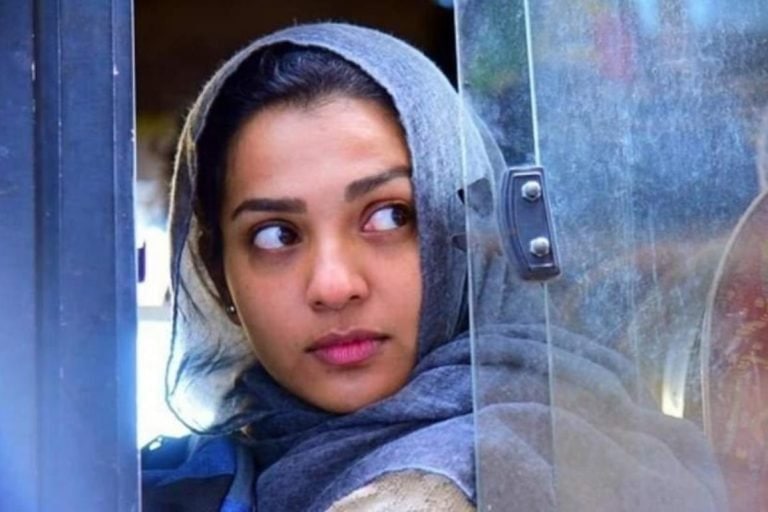
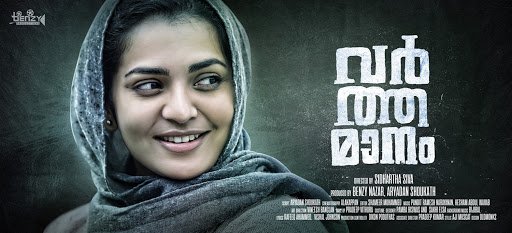
Parvathy Thiruvoth starring Malayalam movie Varthamanam has been cleared for release a week after it had been rejected permission for screening by the Kerala regional office of the Censor Board of Film Certification (CBFC). The Delhi Central Board revising committee has given the go ahead for the film, which is set to release in February.

Announcing the news at a press conference at Kochi, director Sidhartha Siva and script writer Aryadan Shoukat called it a victory for cinema lovers and secularists. According to a Times of India report, they alleged that the film had been denied certification as Shoukat, who is also a Congress leader, had scripted the film, and said that they would appeal for the removal of BJP leader advocate V Sandeep Kumar from the Censor Board.

Varthamanam, which also stars Roshan Mathew and Siddique, is about a young woman from Kozhikode who goes to the Jawaharlal Nehru University (JNU) to research a freedom fighter, and the issues she has to face in her journey. “It is set against the Delhi campus of the JNU and the student movement there. It shows how all of them come together despite political differences, and shows very secular ideas,” Shoukat had earlier told The News Minute. “We have received a notice from the board that the film has been sent to a revising committee. No reason has been mentioned in it,” he added

1655 hours of Internet blackout in 2020, India lost $ 2,779 million

0

India had an internet blackout for 1,655 hours in 2020, throttling 7,272 hours of bandwidth while the total cost of the restriction was $ 2,779 million.

In the year 2020, 280 million US dollars (about 20 thousand crore rupees) were drowned in the country due to internet shutdown. There have been many reasons for the Internet shutdown, but it has caused a lot of damage. Every year, the account of which country is harmed due to internet shutdown is released by the top10vpn portal.

India, Belarus, Yemen and Myanmar are on the top-4 in terms of internet shutdown. According to the report, in the last one year, 8927 hours of internet was closed in India. More than 10 million users were affected by this. The report added that the actual economic impact for India may be even higher than the $2.8 billion figure — which itself was double the losses on account of Internet shutdowns in 2019, with businesses in 2020 anyway hit due to the Covid lockdown. “As in previous years, India continued to restrict Internet access more than any other country — over 75 times in 2020. The majority of these short blackouts were highly targeted, affecting groups of villages or individual city districts, and so were not included in this report, which focuses on larger region-wide shutdowns,” it said.

The report made a separate mention of the extended curbs on Internet use in Kashmir, with suspension of services lasting from August 2019 — when J&K’s special status was scrapped — to March 2020, and still remaining severely throttled, with only 2G access available. Calling it “the longest Internet shutdown in a democracy”, the report says, “The restrictions have negatively impacted the distribution of medicine, businesses and schools.” According to the latest Telecom Regulatory Authority of India data, as of October 31, there were 11.70 million wireless subscribers in the J&K circle.

To calculate the economic cost of Internet shutdowns, the firm used the “Cost of Shutdown Tool” from Netblocks and Internet Society, which uses the Brookings Institution Method. Regional shutdown costs were calculated by determining the region’s economic output as a proportion of its national gross domestic product.

The report defines an Internet shutdown as “an intentional disruption of Internet or electronic communications, rendering them inaccessible or effectively unusable, for a specific population or within a location, often to exert control over the flow of information”.

Along the year, across the days; 2020- a retrospection

History, thy split the stretch, January to December, mask to myrth, subsistence to survival, havoc to hope, to define 2020.

When I write this, I know this is not my story alone.

Nobody even in their wildest of dreams should have felt that they are going to be a part of a novel life culture marked by distancing and isolation.

 As a student who is at the threshold of adulthood, it was not quite easy for me to calibrate with what is happening around and how life turned out to be as it is. You find the whole life that happens around you turning blank. Physical spaces being replaced by virtual spaces and yes, it is high time to call for an adjustment. Everything was reduced and decimated to platforms which could only provide a glimpse of the sense of real. To make things more precise, life is all about making adjustments.  The change that happens within and outside the physical and mental space could be gradually felt. . Things that we once considered little and small started to prove priceless and constant longing for them becomes an unending story.

 But we couldn’t do anything rather than directing ourselves to be a part of this novel spell of life. Live, so that you can fight for another day became the principle. A bit of maturity and a lot patience could be the key which I realised as times passed.

I started getting involved in the process, the process of making me fit to go forward with this novel spell of life which is of course, something I never wanted to.  But, when drastic times ask you to step up, it’s hard to be that good old you.  All of us have been through times of distress, emotional conflicts and of course feelings of existential crisis. Most of us have also come across a number of students who have been fighting hard to get their mental health back to normal. I always wanted to go back and ask them directly, ‘How is life?’Life would never be easy, I know.

 Constant internments with the same routines stamped the trademark of the ‘2020 way of living’. Take this for granted; ’there is no harm in crying. Sometimes, it is the best way to rejuvenate yourself’.

The sole idea of existence itself became an underrated conception. During this period of uncertainty and intricacies, the fact that you exist is something that you could always be proud of.

Looking back, it’s the time for us to realize.

Every moment of life is unique. Kissing your parents, a sunset, listening to the tunes of nature, watching a movie that you always wanted to see; each and everything possesses greater significance. “Never had in our life that we could find a way to go back to your home and be that person crying out loud, Mom what is for today’s dinner? “

At the same time, we should not suspend the lives of thousands of people who are still fighting hard to revive their fortunes. They lay on bare grounds. Their voices go unheard and unattended. They know no political doctrines and ‘human rights’ must be the biggest ridicule they have ever come across their lives.  The voices of the dissent are too good to encompass the kingdom of democracy that is overshadowed by growing clutches of capitalism and religious chauvinism.

We saw how people change. Physical separation could unite as well as separate people. Permanence is the biggest joke of life; the most remarkable lesson of 2020.Sometimes, the act of saying goodbye also proves to be a luxury and a mere formality, which hurts sometimes.

At times, most of us have been involved in a process of retrospection which could expose the evil, the angel and the human being in you at the closest proximity. Go back to yourself. Hear what your mind always wanted to tell you.  Take your time and console yourself saying: everything will be alright and this time too shall pass.’

A decade begins.

We never know what lies ahead. The kind of life we live today must be well outstretched from what it was 10 years before when we proffered ample importance to test papers and school assemblies. Take some time to think about the teachers who lifted us towards heights of excellencies and made us dream of a colourful future. Take some time to think about the paths you have come across; the agonies and hues of happiness that painted the canvas of your life. Ready to embrace what lies ahead. Unpredictability and ambiguity add to the symphonies of life.

So that’s that.

2020 was a lesson that we should always remember for: a lesson that could keep us moving forward amidst the darkest of times.

Trust the process. The result is inevitable. It finds the way to you as times beckon.

Let 2021 recoup the dreams and fortunes that were destroyed in the aisles of 2020.

10 years from today, let’s say, ‘we came across a time when life was redefined; normality was suspended and concealed within the veils of nylons and polyesters’.

Happy New Year

‘Anti national’; Regional censor board denies screening permission for Parvathy’s movie

Kerala state regional censor board declines Parvathy Thiruvoth’s upcoming movie ‘varthamanam’ stating it has ‘anti national contents.’ Varthamanam is directed by Sidharth Siva in which Roshan Mathew and Sidheeq play lead roles with Parvathy.

Some Malayalam news channels report that the film has been sent to the revising committee of the central censor board in Mumbai. Award-winning director Sidharth Siva’s movie Varthamanam was touted to be highly political. The film, as per reports, is a story of a girl who goes to study in Delhi University and how her world view and political stand change, and how she evolves as an individual. Film has references of JNU protests and the Kashmir crisis.

Aryadan Shoukath scripted the movie. Cinematography done by Alakappan and Shameer Muhammed handled the edits. Pandit Ramesh Narayanan and Hesham Adul Wahab jointly managed the music department. Bijibal is in charge of the background scores for the film. Major portions of the movie were shot in North India, and regions of Mussoorie.

Honor killing in Kerala; 27 year old man killed by father in law

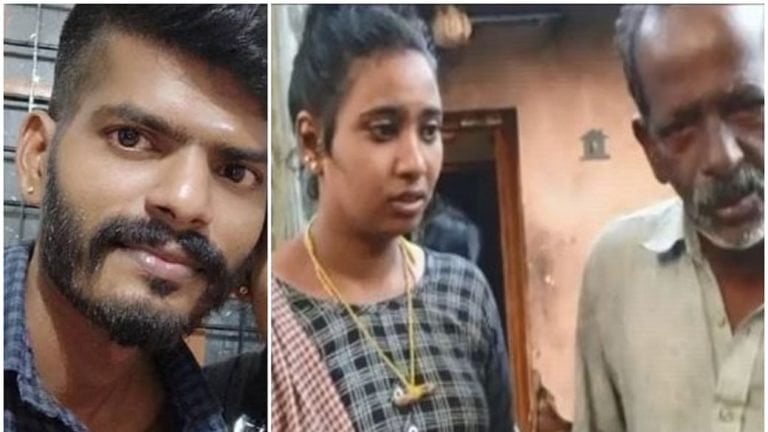
Two people, including the father-in-law of a 27-year old man, who was hacked to death in Palakkad district on Friday, have been taken into custody in connection with the incident, which is suspected to be a case of honour killing.

Aneesh, a painter, had married Haritha (21) some three months ago.

Due to the differences in their caste and financial status, the woman’s father, Prabhukumar and uncle Suresh Kumar, used to threaten them often, Aneesh’s relatives told media personnel.

Aneesh along with his younger brother Arun, was riding a motorcycle and had stopped to get some soft drinks when they were waylaid and attacked near Thenkurissi on Friday evening.

Arun, who witnessed the murder, and is yet to recover from the shock, said Haritha’s father, who came on a two-wheeler with her uncle, allegedly hacked Aneesh using a sharp weapon.

Aneesh’s father said the accused used to threaten the couple often and despite filing a police complaint last month, no action was taken, he alleged.

Palakkad SP S Sujithdas said Prabhukumar was taken into custody from Coimbatore early on Saturday while Suresh was picked up last night itself. Their arrest would be recorded and they would be produced before a magistrate on Saturday itself.

Since the deceased’s wife is in a state of shock, police have not been able to take her statement on Saturday, the official said.

In 2018, Kevin P Joseph, aDalit christian was abducted and killed by a gang hired by his wife, Neenu’s relatives, in the first case of honour killing in the state.

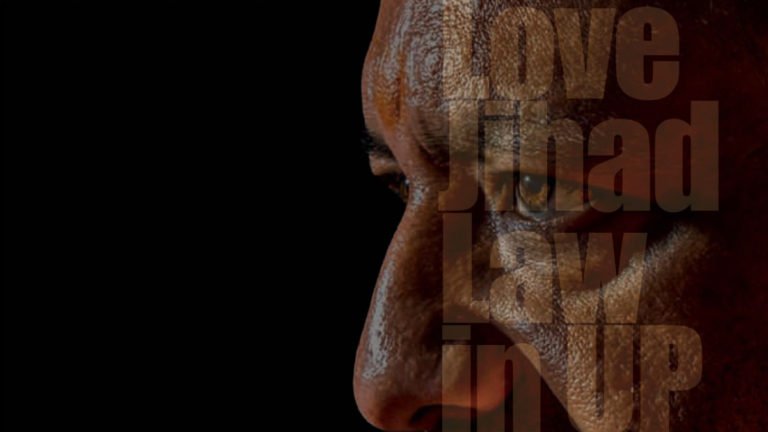
Nearly 35 arrests on ‘Love Jihad law’ in UP

0

Uttar Pradesh police have made more than one arrest a day since the controversial anti-conversion ordinance came into action a month ago, having apprehended about 35 people so far. Almost a dozen FIRs have been lodged since the Prohibition of Unlawful Conversion of Religion Ordinance, 2020, was notified on November 27.

Eight arrests were made from Etah, seven from Sitapur, four from Greater Noida, three each from Shahjahanpur and Azamgarh, two each from Moradabad, Muzaffarnagar, Bijnor and Kannauj and one each from Bareilly and Hardoi, officials said here.

The first case was registered in Bareilly just a day after the legislation came into force.

The police cracked the whip following a complaint of Tikaram Rathore, the father of a 20-year-girl and resident of Sharif Nagar village in Bareilly. He alleged that Uwaish Ahmad (22) had become friends with his daughter and was trying to “coax, coerce and lure” her to convert.

An FIR was lodged at Deorania police station in Bareilly district and the accused was arrested on December 3.

Acting swiftly after being tipped off about interfaith marriages, the Lucknow Police stopped a ceremony in the state capital, asking the couple to meet the legal requirements first.

In Muzaffarnagar district, one Nadeem and an accomplice were arrested on December 6 for allegedly trying to force a married Hindu woman to convert.

Nadeem, however, got reprieve when the Allahabad High Court directed the police not to take any coercive action against him.

Likewise, in Moradabad, two brothers, arrested earlier this month under the anti-conversion law, were released on an order of a CJM court.

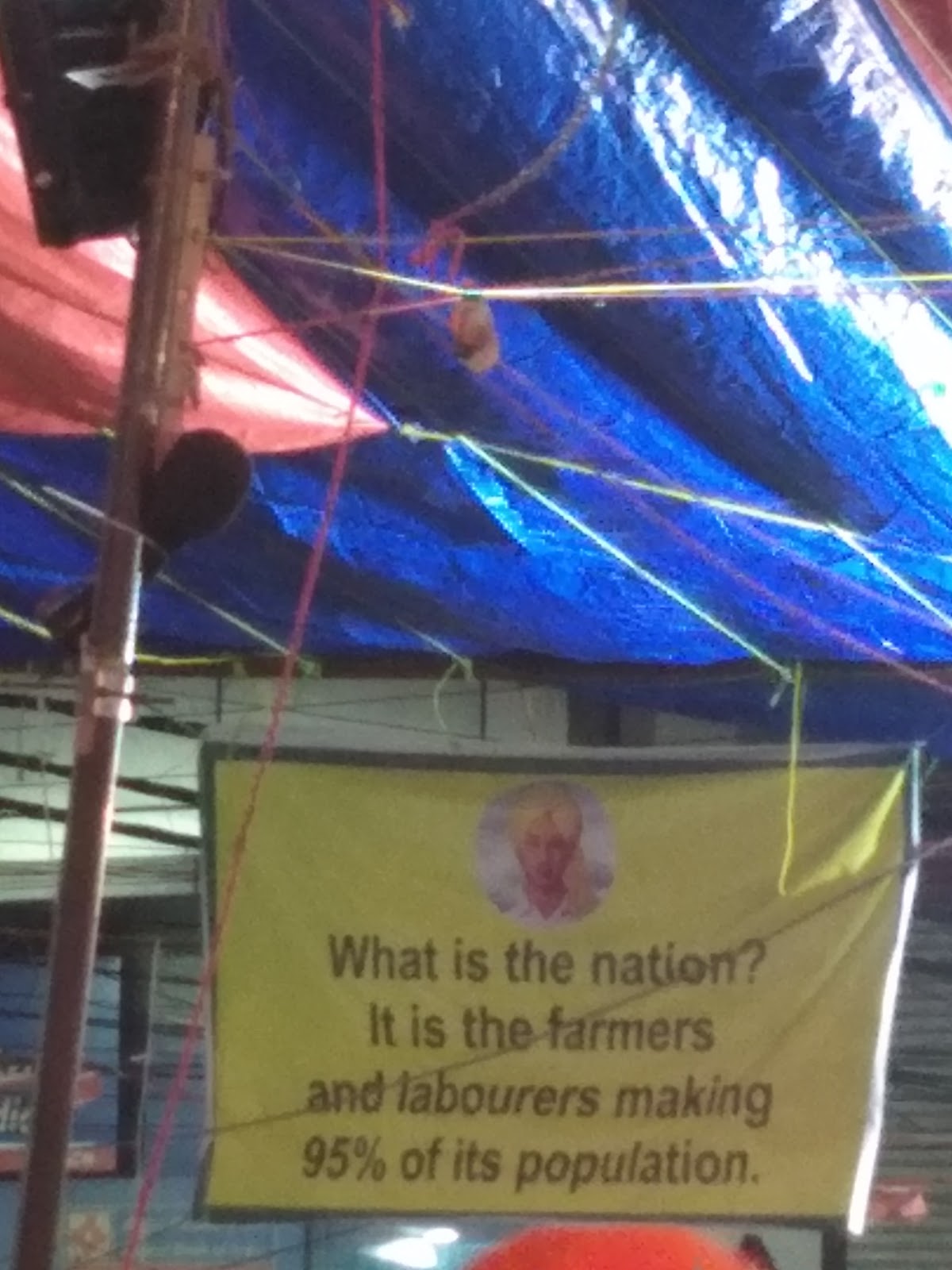
No democracy in India, Rahul slams Modi Govt. on farm laws

There is no democracy in India, said Congress leader Rahul Gandhi today while adding that it can be our imagination but democracy does not exist in reality in the country.

The Congress leader said, “Democracy? Which country are you talking about? There is no democracy in India.”

“There is no democracy in India. It can be in your imagination, but not in reality,” he said on Delhi Police taking party leaders into custody during their march to Rashtrapati Bhavan.

“PM Modi is making money for the crony capitalists. Whoever will try to stand against him will be called terrorist – be it farmers, labourers and even Mohan Bhagwat,” he added.

The Congress leader added that the Government should convene a joint session of Parliament and repeal these laws.

“I want to tell the Prime Minister that these farmers are not going back home until these farm laws are repealed. The government should convene a joint session of Parliament and take back these laws. Opposition parties stand with farmers and labourers,” he added.

“China is still at the border. It has snatched away thousands of kilometres of the land of India. Why doesn’t Prime Minister speak about it, why is he silent?” the Congress leader said.

Prime Minister Narendra Modi is making the country weak and outside forces are seeing it as an opportunity, he said. “I want to tell media, understand this, I know you have salaries to protect, but see what is happening,” he added.

A reverential memoir, to the collective creative resistance

The movement was a creation. A modern one. Because it could carve out a space in one’s own neighbourhood to resist the brutalities one had to endure. And could successfully capture the imagination and solidarity nationally and internationally. 

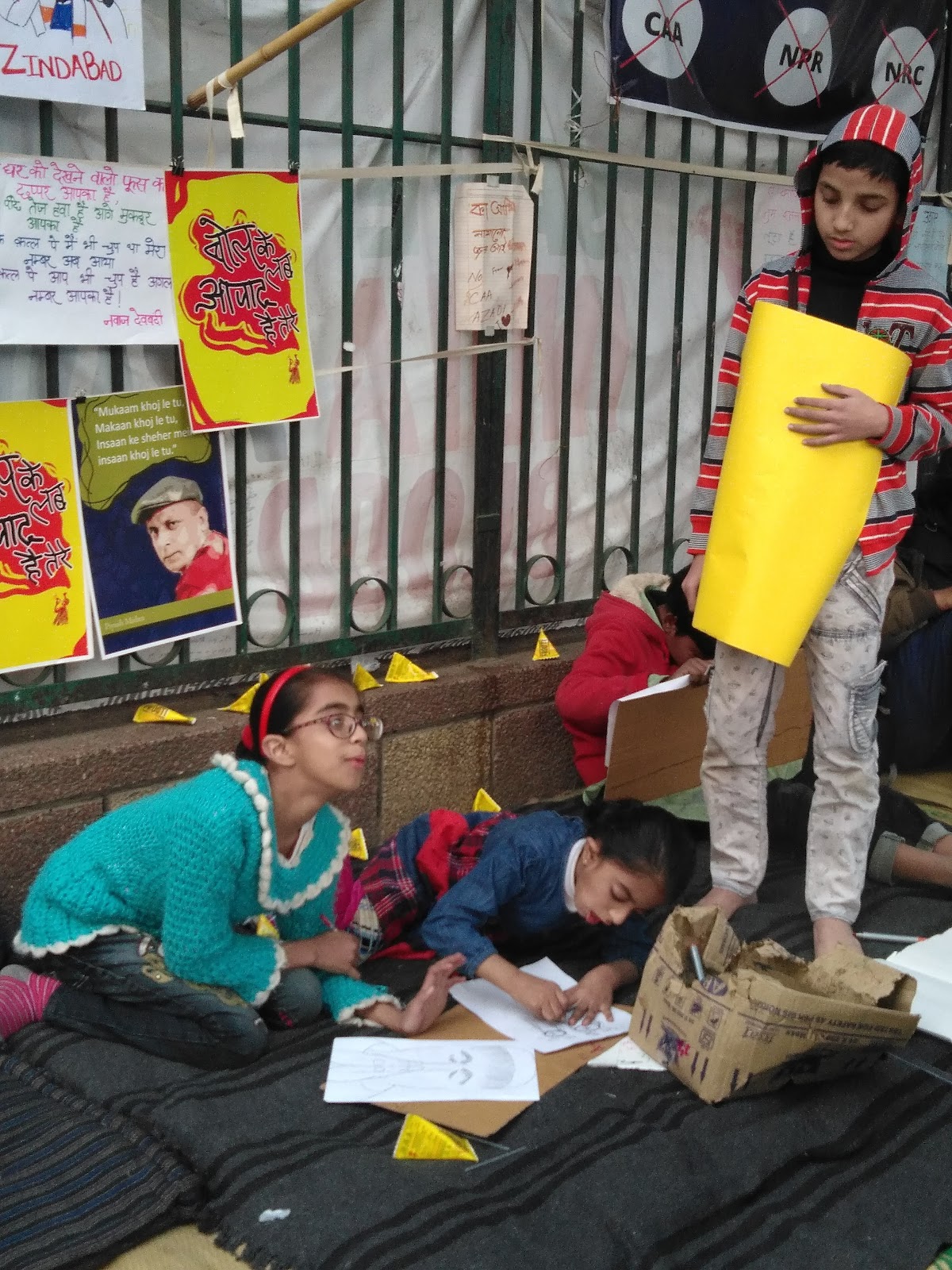
Looking back to last December amidst a pandemic and the  clamp down of social life along with it, It was a time of happenings and gatherings. Of people flocking in again and again, every time against an attack that  had happened. Be it the first police attack on Jamia university, or the subsequent state sponsored firings and pogroms. What is more empowering for a community other than to be heard and talked to. With the setting up of a protest shed and a small stage, for a duration of over three months,  many across the nation spoke to the women of shaheen bagh and many came to hear them. 

The people of Jamia Nagar will be remembered for facilitating the movement with much love and care and for reminding us that even when our lives are seemingly  segmented, we are bound together in resisting  an oppressive state. This was being reminded to every student of Jamia, when the women of shaheen bagh sat up for a road blockade and when farmers from punjab flocked in and fed shaheen bagh. 

The movement had the charm of creativity and wit. It also had its graceful way of busting out the myths about the community. The myth of saviour seeking muslim women, the assumption that muslims tend to strictly segreagte their genders, and the dominating dictating muslim men. 

The movement gained greater meaning and relevance whenever it bridged the larger struggle with the inner ones. One such instance was when the girls of Jamia hostel broke their curfew at midnight to march out on the night when Jamia was attacked by an unnamed gunman. There were several instances like these, when speakers and creative works at Shaheen bagh referred to other injustices around and reminded people that injustice anywhere is a threat to justice everywhere. 

The beauty and exception of Shaheen Bagh is that along with the space it created in the neighborhood, it ensured that the space is accessible for all. Young kids, women and men spoke. It also democratized and  normalised the culture of protesting, sloganeering, and muraling.  Such revolutionary practices continuing for over three months would have created immeasurable waves of  changes in the lives of the people around. The large number of people joining the protest site along with their families after the Friday prayers, ensured expanding meanings to spirituality and to domestic life. 

There were kids who came everyday to the protest. They always had something to contribute. Once before them was a chart with  dates of their examination , excusing them from the protest only for those days. 

Every form of creative expressions were used. Murals, road art, photo exhibition, theatre, street lecture series, street libraries, out-door movie screening. Protest sites attained more meaning through the movement. A new possibility of protest sites expanding beyond anger, fury and hunger strikes were brilliantly sought. 

It has been several months since many of the student leaders and activists are jailed unfairly. It was hopeful to see the farmers’ protest demanding the release of all political prisoners on Human Rights Day. 

The movement for sure had politicized the muslim households and had given them the ground to express their concerns and to have dialogues about them. But any politics that deviates from people and is negligent to the larger oppressive mechanisms can’t take us far.      

Kim Ki duk passes away

Renowned South Korean film director Kim Ki-duk, famous for his disturbing and controversial art-house films, has passed away after having tested positive for COVID-19, according to reports. He was 59.

Kim had travelled to the Latvian capital of Riga when he developed health complications, according to the Korean Herald.

A regular winner at the international circuit – including the hallowed trio of Berlin, Venice and Cannes film festivals – Kim’s most well known films include Arirang, The Isle, 3-Iron, Samaritan Girl, Pietà, Spring, Summer, Autumn, Winter… and Spring and One on One. He is the only Korean director to have won the top prize at the above three European film festivals.

In December 2017, a female actor had accused the director of physical and sexual abuse while shooting his 2013 film Moebius, claiming that he beat her and forced her into unscripted, unwanted sex and nude scenes.

By March 2018, two more actors had levelled multiple accusations of rape, assault and sexually predatory behaviour against Kim, according to The Guardian. Since then, he had largely shunned public appearances.

After Delhi minority commission, now CPIM’s fact finding report points at Amit Shah as responsible for Delhi riots

A fact-finding report by the Communist Party of India (Marxist) on the communal violence in Delhi in February has held Union home minister Amit Shah responsible for the escalation of the violence and prejudicing the probe. The report was released on Wednesday. Earlier, Delhi Minority Commission’s Fact Finding report also had pointed its finger towards Amit Shah as responsible for deadly violence.

“The role of the home ministry under Mr Amit Shah was in substantial measure responsible for the escalation of the violence,” said the report, titled Communal Violence in North East Delhi, February 2020.

The report concluded that “it is incorrect to describe the communal violence as Delhi riots. ‘Riots’ describe a situation where both sides are equally participatory…. However, the offensive was from the Hindutva mobs while the other side, in the main, was desperately trying to save themselves from such attacks…. In almost all areas, there is video evidence of the police siding with the Hindutva mobs.”

As many as 53 people were killed — 40 were Muslim and 13 Hindu.

The report said: “On March 11, 2020, Mr Shah informed Parliament that he had been in constant touch with top police officials in Delhi, monitoring the situation. The question is, why was curfew not imposed from February 24, when violence escalated? Why was the army not deployed? Even the additional deployment of Delhi police and Rapid Action Force personnel was not only grossly inadequate, but also extremely delayed.”

The report, steered by CPM politburo member Brinda Karat and state secretary K.M. Tewari, was undertaken to give context and explanations to the responses of 400 people interviewed by the party’s relief and rehabilitation solidarity committee.

The report breaks new ground by listing several specific instances of violence that go against the general narrative pushed by the police and highlights several identical FIRs and confessions cited by the police as well as complaints of torture.

Quoting a chargesheet filed in one of the cases — in which several students have been charged with terrorism for allegedly inciting riots by their protests against the new citizenship regime — the report shows that the number of personnel deployed during the riots from February 23 to 27 ranged from 1,393 to 4,756 in a district with a population of 26 lakh.

The report adds: “Before any investigation was done, the home minister laid down its findings (in the Lok Sabha on March 11). The subsequent investigation was only to substantiate and validate this narrative.

“Shah dismissed the well-documented speeches by BJP leaders that called for shooting traitors or alleging that members of the minority community will invade homes of Hindus to rape and kill.

“Then he went on to describe what he thought were the real hate speeches. He said that Congress leaders gave hate speeches on December 14, 2019, at a rally calling upon people to come out onto the streets because it was a do-or-die battle. With this, he not only sought to build the version that it was really the Opposition that incited violence, but more significantly, he blamed the minority community for the violence.”

In the Lok Sabha on March 11, Shah called the riots a “well-planned conspiracy” and praised the police for controlling the violence within 36 hours. The Congress and the CPM walked out during his speech.

 The report describes attacks even on February 28, five days after the killings began.

PTI quoted West Delhi BJP MP Parvesh Verma as saying on January 28: “What happened in Kashmir with Kashmiri Pandits could happen in Delhi also. Lakhs of people gather at Shaheen Bagh, they could enter houses, rape and kill your sisters and daughters. The people need to decide now.”

The Election Commission of India barred Verma, Union minister Anurag Thakur and BJP candidate Kapil Mishra from campaigning for the Delhi Assembly polls for several days as punishment for incendiary and communal remarks.

Veteran police officer Julio Ribeiro had called the police inaction against the trio as “a licence to rant, rave and threaten those who are peacefully protesting perceived wrongs”. Police commissioner S.N. Shrivastava had defended the probe, saying that more complaints of minorities had been registered as FIRs than that of the other community.

Besides the speech of Mishra on February 23, the report highlights provocative sloganeering in Shivratri processions of February 21. It added that two Muslim boys were waylaid near the Maujpur-Babarpur Metro station on February 22.

The report slammed the Delhi government for delays and partial compensation, and sought an independent probe by a retired high court judge.