Growing up, though I had no interest in cooking, whenever a scene around the dining table came in movies, I used to peep into their plates.
In the movie, Newton, a civil servant on election duty in an Adivasi village of Chhattisgarh, on seeing a man crunching red ants asks a native, “can these be eaten?” and she replies pungently, that it is ridiculous that he never knew about red ant chutney, even when he lived only some kilometers apart. Red ant chutney is a remedy for malaria.
Never having enough oil and other spices, the Dalit preservation techniques of pork and beef are unique. Forced to live in deprivation, nothing could be afforded to be classified as waste. Rakthi or coagulated blood, intestine, rat, beef and pork are all cooked. These recipes taste the dignity of survival. Even when we get to see Dalits and Adivasis in movies, their food is regarded as taboo or worse censored.
Once after reading that, Dalits used to store watermelon seeds and grounded them to thicken the curry, I asked grandmother, if we also did the same. She replied. “Old times, when hunger and scarcity was everywhere, in every jackfruit season we used to boil and dry the jackfruit seeds. When food was scarce, men and kids used to eat the boiled seeds, and women, the boiled peels of jackfruit”.
Vijayan Kanampilly, in his Essential kerala cookbook gives a comprehensive history of Kerala cuisine and how each community’s beliefs and occasions gave birth to various recipes, thereby diversifying the Kerala cuisine. He also mentions the hegemony of Nair – Namboodiri cooking style as the “authentic” Kerala cuisine. He tells the history of the entry of tapioca in 1880-1885 from Latin America through Africa. To survive famine, tapioca cultivation was ordered by the Maharaja. Kannampilly gives an insight into the Kerala utensils, how they evolved from stone, earth and to metals. And how the evolution of the utensils affected the recipes. An interesting example is the Puttu Kutti. HowPuttu was made in Cheratta (coconut shell) and bamboo stick, covered with coir thread to prevent the expansion and cracking of the bamboo, and later how metallic Puttu Kutti took the place.
We are not only hesitant to celebrate the diversity of cuisines; we tend to even trivialize cooking itself. For me cooking was a daily skill, but after watching the documentary “Cooked”, cooking became an essential store of human knowledge. And of all the knowledge, the knowledge of preservation and fermentation amuse me the most.
It was the knowledge of fire, agriculture, wheel and writing that made us human. The knowledge of fire relieved us from the burden of chewing for hours and thus our jaws became smaller and the brain bigger. When the knowledge of driving and writing is taken with enthusiasm, cooking is often stereotyped for women. But when cooking is done outside the premise of domestic household, men are eager to take it up.
“The less time we cook, the more time we watch other people cook”, because cooking is an integral human experience that we cannot completely do away with, saysMicheal Pollan in the documentary, “Cooked”. When women and men argued over who will do the cooking, food industries jumped in between and took the role of saviour. They convinced us that cooking is time consuming and messy. They came with efficient ways of cooking with packed food items. They least care about our health or the biodiversity. No harm in being the prophet of efficiency and true, cooking is all chopping and scrubbing. But the question is efficiency at the cost of what.
“Trapped in the four walls of the kitchen”, that is the clichéd phrase of women empowerment stories. But is the kitchen truly an isolated universe? I think, there is no room in our households other than the kitchen which absorbs the highest, the changes of the outside world. Our changing aspirations and tastes can be seen bottled in the shelves of the kitchen. From when did our kitchen start to have ketchups and sauces? Our utensils and appliances keep advancing according to the times. My grandmother asks, “when did onion become our base of cooking, we never had onions. We cooked with coconut and shallots”. Our economical and political ties reflect in our kitchen space. Food industries now and then endorse an all saving super food. Avocado and Aloe Vera are currently hitting that list. Once coconut oil suffered a bad reputation, recently coconut oil is being revived.
Shalini Arya
Recently the Food scientist, Shalini Arya won awards and international recognition for designing a healthier cheap chapatti. She replaced the wheat flour with other cheap and more nutritious locally grown grains in the chapatti recipe. She said, growing up malnourished in a slum and cooking for the whole family from a young age itself, she did not intend to choose a career which is connected with food. But her father prompted her to study Food Science. Though she enrolled reluctantly, she credits her invention, to her first hand understanding of malnourishment and how poor kitchens work. The stringed burden of the kitchen on women alone discourages girls from appreciating the knowledge of cooking.
Kitchen spaces suffer from the superfluous glorification of feminineness attached to it. Equally does it suffer from the efficiency and women empowerment propaganda of food industries. The kitchen is one field of humanity where various knowledge comes together to enhance the cooking. There is certainly a middle ground for cooking, where it does not become a fancy or a mundane chore. And maybe, it is easily achievable when we meditatively chew and digest well, that cooking is an essential human knowledge and experience.
“Gaslighting is a form of psychological manipulation in which a person or a group covertly sows seeds of doubt in a targeted individual or group, making them question their own memory, perception, or judgment, often evoking in them, cognitive dissonance and other changes including low self-esteem.” (Source: Wikipedia)
Just like many other concepts in psychology, Gaslighting is a term that still hasn’t made it to the Indian public. Even worse, the idea that a person can manipulate them into doing things that they otherwise won’t do or believe is still talked about as though something impossible. However, this pretension has not helped the thousands of people who have fallen victims to Gaslighting. And, keeping itself on par with other problems in India, the victims of Gaslighting also reflect the gender bias, a considerable number of victims being women.
For a society that has an extensive history of shaming and blaming victims, Gaslighting is nothing new. Even if the victims manage to speak up, which is a difficult task considering the post-traumatic issues most of them go through, they are faced with the herculean task of justifying their actions as to satisfy the social morality. But, almost no one takes an effort to understand how our culture has contributed to the growth of these Gaslighters — by creating potential victims who have lower self-esteem and self-respect and by encouraging people to prioritize material success over mental wellbeing and happiness. That is no tough task when the typical Indian parents are concerned about good grades, higher education in premier institutions and a high-paying job in an MNC.
One question that many people ask the victims of Gaslighting is how on earth they believed what the Gaslighter was talking about, how they let someone take control of their lives, how they were led to believe that another person can make better life decisions for them and why did they do many inappropriate things when they were allegedly being controlled by the manipulator. One of the many things that a potential Gaslighter does is to understand your utmost weaknesses and the low points in your life. There have even been instances when this potential abuser could make your life a mess — often involving others’ lives — if they cannot find a loophole strong enough to make that entry. But this extra effort is often unnecessary, thanks to the lower self-esteem scenario that we mentioned earlier.
And, should I emphasize on the fact that a Gaslighter is good at choosing the most gullible people out there? They are good at finding out people with low self-respect, broken familial relationships, toxic romantic relationships, lower self-confidence and with traumatic experiences in the past. If you happen to be one of those gullible people and don’t have any of those issues mentioned above, a skilled manipulator can make you question normal things.
Provided that a lot of Gaslighters are doing these for fulfilling their sexual fantasy, we have to ask the question: what happens to the concept of consent?
One of the ways to make a victim say Yes is through a level of other-worldly persistence. Now, this isn’t the normal streak of ‘would you have sex with me?’ questions. Instead, the Gaslighter may label you as non-progressive if you say you say No to them. There could also be other labels, such as when you are called as someone who doesn’t have personal growth. There have even been many personal accounts where victims were convinced that they should become polygamous or polyamorous if they want to attain personal growth and ‘modern’ outlook.
One of the alternative methods is to remind the victims about a traumatic event in the past — something they had during their childhood or in a toxic relationship. Then, it becomes easy for the Gaslighter to convince the victim that there are some parts of trauma left inside them and that they should have a new sexual experience to overwrite that traumatic experience. I want to iterate here that, by the time a Gaslighter does this to you, the victim would have come to the stage of taking their opinion as the word of God.
So, the victim agrees, thinking that everything this God-like person does is for the victim’s good future and personal growth and a bright future. That is how corruption of agency works. For the record, the victim said Yes and that’s enough for the Gaslighter to escape legal action. Of course, the judiciary that doesn’t give a damn about mental issues actually helps these kinds of manipulators.
Now, that was the deal with sexual abuse and the corruption of agency. When it comes to gaining monetary benefits, the narrative could be entirely different. A typical narrative of this sort would start with estranging the victim from their family and becoming the *other* family in their life. The victim could be even convinced to an extent that no matter how much money they spend on the Gaslighter, it will be done with complete consent and even happiness.
Also, I don’t think we need to mention again that these Gaslighters are good at making stories about their own financial issues, health problems and childhood poverty that can induce some sympathy. Once again, I’d like to draw the line between these pricks and the people who have genuine issues. However, the latter would not probably go to the extent of taking the source of help for granted.
Full disclosure, though: this isn’t an attempt to compile a few traits that make a gaslighter. It is, instead, a humble effort to spread a few ways in which a manipulator could sabotage your autonomy and mental health for their personal benefits. While the methods vary according to the victimizer and the potential victim, the negativity surrounding the whole discourse has to remain the same.
The gap between the reality and the vision envisaged in the Constitution is widening in India. The focus has also been shifted from holding the fundamental rights in primacy to fitting restrictions under the reasonable category to surpass constitutional scrutiny. The constitution prescribes reasonable restrictions to fundamental rights, and Courts often should strike a balance between rights and restrictions, while it is expected that courts must make the least restriction to civil rights. However, looking at the recent decisions and even numbness of the court to the arrest and detention of students, academicians and activists, for exercising their fundamental rights, the ability of the courts in striking a balance that is least restrictive and its ability in being the guarantor of rights of citizens is questionable.
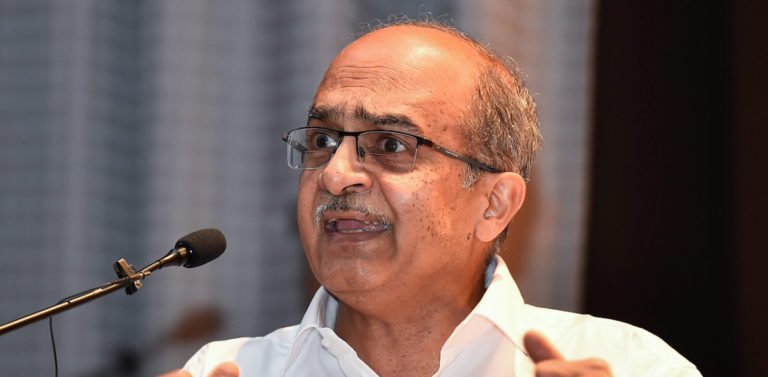
Freedom of Speech and Expression is a guaranteed fundamental right under the Constitution of India. However, many laws are employed and implemented in a way to curb dissent and shut down all opposing voices. This includes the sedition laws, AFSPA, UAPA etc, the most recent in discussion being the Contempt of Court law in India. Senior Advocate Prashant Bhushan was found guilty of contempt by the apex court, for his tweets criticising the Supreme Court and the last four Chief Justices in their role for the fall of democracy in India. Bhushan has unapologetically stood his stand defending the tweets to be his bona fide belief and has declined the court’s offer for an apology. He has been sentenced to a fine of One rupee.
Before delving into the contempt law in India, let’s look into the jurisprudence of the ‘contempt’ law and its presence in other democracies of the world.
ORIGIN & USE OF CONTEMPT LAW IN OTHER DEMOCRACIES
The contempt law is rooted in English Common law and has Monarchical origins when the King of England used to decide cases. The contempt provision then gave sanctity to the authority of the Queen and held it above public criticism. However, in a democratic system, where judges decide cases, this law is against the norms of democracy as it keeps judges and the court beyond criticism. In many foreign democracies, the contempt law has almost become inexistent, unemployed since years or has been held to be unconstitutional.
Britain, the country where India has based its contempt law upon has abolished the offence in 2013 following the recommendations of the Law Commission report of 2012. The commission report’s reasoning of its recommendations states that the contempt law is not only to save the sanctity of the courts as impartial institutions, but also to be perceived so. The purpose of the offence is not only “preventing the public from getting the wrong idea about the judges, and that where there are shortcomings, it is equally important to prevent the public from getting the right idea.” In the contempt case against Prashant Bhushan, this rings many bells.
An interesting instance from Britain in 1987 was when ‘The Daily Mirror’ in its report referred to judges as ‘old fools’. Declining contempt proceedings against this, British Judge Lord Templeman stated that he was indeed old and him being a fool or not is just a matter of perception.
In the United States, the offence of ‘Scandalising courts’ has been left unapplied for decades. The US supreme court also demands a ‘clear and present danger’ for invoking the law.[1] The application of the law in Canada is also in a similar position to that of USA, which requires an ‘imminent danger’.[2] Australia and New Zealand[3] demands a real risk of undermining public authority and not just a remote possibility. In all these countries, the contempt law has not been invoked since long.
Justice Madan B Lokur
Retired Justice Madan B Lokur in his recent article draws our attention to a number of instances in which various Presidents and government officials of the United States of America has bashed and harshly criticized the Supreme Court of the United States. He poses a question that if words of such powerful men in the world have not been able to shake the foundations of the second most powerful court and democracy in the world, why should the Indian Supreme court consider two tweets of a lawyer- activist a threat to the institution, that too of the most powerful court and the said to be largest constitutional democracy. This is where we should see Prashant Bhushan’s place in being a fierce and active critique of the recent political issues in India and why selectively targeting and punishing him becomes an interest and priority of the state.
CONTEMPT LAW IN INDIA
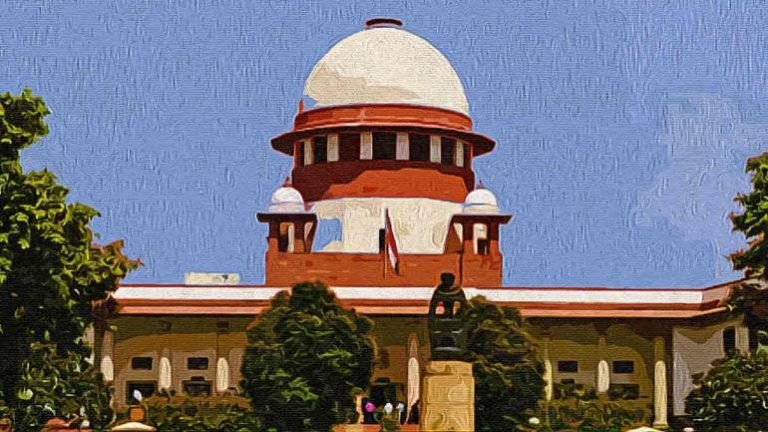
The Indian Contempt of Court can be found in Article 129, and the Contempt of Court Act,1971 lays the procedure. As this power is derived directly from the Constitution in itself, the court exercises vast discretion in deciding contempt. Further, Contempt of Court is a reasonable restriction permitted to the fundamental right of Freedom of Speech and Expression (Article 19). This gives an upper hand to the contempt law in restricting free speech in the country. Contempt law in India is used majorly to curb criticisms directed against the judiciary, while the basic jurisprudence of the contempt law is to punish those who disobey or does not respect the orders the court has pronounced. (Civil Contempt) The vague terms ‘scandalise’ or ‘tends to lower the authority of the court’ widens the discretionary power of the court in deciding the contempt cases.
Contempt of court as a restriction to Article 19 (Article 13 in the draft constitution) was a matter of debate in the constituent assembly. It seemed like a debate between the assembly members who were lawyers who defended the contempt law for preserving the authority of the court, and a few other members like Biswanath Das and RK Sidhva who insisted that Judges are not an infallible authority or mistake- free and thus a citizen should have a right to fairly criticize them.
Justice V R Krishna Iyer
Justice Krishna Iyer comments on the inherent danger in the Contempt of Courts Act as “A vague and wandering jurisdiction with uncertain frontiers, a sensitive and suspect power to punish vested in the prosecutor, a law which makes it a crime to publish regardless of truth and public good and permits a process of brevi manu conviction, may unwittingly trench upon civil liberties”
THE FINE LINE BETWEEN FAIR CRITICISM AND CONTEMPT
What constitutes fair criticism or contempt is decided upon facts of each case. But looking at the various instances in which the Indian Supreme Court has held guilty or ignored contempt charges shows that the discretion the judges have on deciding whether a ‘speech’ becomes contempt or not is wide and that the court has shown various levels of tolerance to criticism.
The contempt law as such doesn’t exist to punish every criticism targeted on the court, rather those which are malicious, unfair and which hamper the course of justice. In various cases, the court has categorised the ‘speech’ as fair comment and has taken a right- based approach holding the alleged contemnor free of charges. A comment which can be justified as truth, fair and bona fide is protected and is a valid defence against contempt. The comment should also not interfere with the administration of justice and should be made upon the individual capacity of the judge and not upon his/her judicial capacity.
In Indirect Tax Payers Association, Bangalore v. R.K Jain, the court held that ‘truth based on facts’ is a valid defence. Section 13 of the Contempt of Courts Act, 1971 also considers ‘justification by truth’ as a defence. Similarly, in Hari Singh Nagra v. Kapil Sibal, the SC dismissed contempt charges against Kapil Sibal on his comments upon judges, stating that fair criticism was to be encouraged and is essential for the effective functioning of the institution. However, these precedents didn’t save Arundhati Roy when she was held guilty for contempt or Prashant Bhushan or many others. This implies that the fine line between fair criticism and contempt is often drawn from the discretion of the judges when they sit to decide and punish their critics.
PRASHANT BHUSHAN’S CASE
Senior advocate Prashant Bhushan who is an active critique of the government has been held guilty of contempt for two of his tweets, in which he opines that the virtual court system has denied an effective legal remedy for the underprivileged and he says that history might record the role played by the Supreme Court and the last four CJI’s in the fall of democracy in India.
Prashant Bhushan
Bhushan mentions the role of the last four CJI’s – Justices JS Khehar, Dipak Mishra, Ranjan Gogoi and SA Bobde in diminishing the role of the judiciary as a check and balance for the acts of the government and destroying democracy. He mentions cases like enquiry on the Sahara- Birla diaries during Khehar’s time, Judge Loya investigation case during Mishra’s time, the Assam NRC, Abrogation of Article 370, Ayodhya Verdict and Sexual Harassment case during Gogoi’s time and the CAA, Migrant labourer issues during the lockdown, failure to restore 4G in Kashmir during Bobde’s times and many other cases that explicitly points out to the declining trend of the judiciary being a protector of fundamental rights and being an independent institution. The reasoning in his affidavit is clear enough to place his tweets as fair, bona fide and truthful criticism.
However, just like in the case of J. Karnan when the court refused to look into the allegations of casteism and corruption among judges made by him, the court overlooked into punishing the alleged contemnor in the instant case also. The reasoning behind the court’s decision reveals that the court has completely ignored the justification provided by Bhushan in his affidavit, clearly and precisely.
The haste and interest of the Supreme Court in prioritising the contempt case against Prashant Bhushan amidst a very restricted virtual court schedule due to the pandemic is notable. While many matters of importance like the CAA petition or the petitions from Jammu and Kashmir are still pending the court overlooked into two tweets that too exercising its power under Article 129 to punish for its contempt.
CONCLUSION
A petition challenging the contempt law as such has been filed by T.N Ram, Editor of ‘The Hindu’ along with Prashant Bhushan and former Union Mininster Arun Shourie. The petition challenges the law on the ground of being arbitrary, vague, colonial and violating Freedom of Speech and Expression. The provision is very subjective and based on the discretion of the judges, thus violating Article 14 for non-arbitrariness.[4] This case has led to a listing controversy as the petition was removed from the bench of Chandrachud and K.M Joseph.
In a nutshell, the question is, if the judiciary is not infallible, why should it stand out of criticism?
[1] Bridges v. California, 314 US 252, 270-71 (1941); Pennekamp v. Florida, 328 US 331 (1946); Craig v. Harney, 331 US 367 (1947); Wood v. Georgia, 370 US 375 (1962).
[3] Solicitor-General v. Radio Avon Ltd. [1978] 1 NZLR 225, p. 234.
[4] For instance, in P N Dua vs P. Shiv Shankar , the respondent was not held guilty of scandalising the court despite referring to Supreme Court judges at a public function as “antisocial elements i.e. FERA violators, bride burners and a whole horde of reactionaries” on account of the fact that he was Law Minister. However, in D.C. Saxena vs Chief Justice of India, the respondent was held guilty of criminal contempt for alleging that a Chief Justice was corrupt and that an F.l.R. under the l.P.C. should be registered against him. (From the petition)
In a first since 1962, the Question hour has been excluded from the Monsoon Session of Parliament, which is starting on 14 September until 1 October. Zero hour will be restricted and Private members business given a miss as well as per official notifications issued by Lok Sabha and Rajya Sabha secretaries.
The opposition has reacted strongly to this move by the Centre, calling it Autocratic in nature. “Parliaments overall working hours remain the same so why cancel Question Hour? Pandemic excuse to murder Democracy.” Tweeted TMC MP Derek O’Brien.
Congress Lok Sabha MP Shashi Tharoor tweeted, “This government seeks to reduce Parliament to a notice board.”
However, BJP spokesperson Anil Baluni later added that unstarred questions will be allowed.
Responses are presented in a written format to Unstarred questions and no supplementary question can be asked, whereas starred questions get verbal responses in the House with follow up questions to responses.
The Question Hour happens in the first hour of a Lok Sabha session, during which Members can ask questions on every aspect of administration and Governmental activity. Question hour allows Parliament to be effective in its accountability function.
Dr Kafeel Khan was released from a jail in Mathura, Uttar Pradesh, on Tuesday midnight after the Allahabad High Court quashed his detention order under the National Security Act, PTI reported. The court said Khan’s speech at the Aligarh Muslim University during the anti-Citizenship Amendment Act protests did not promote hatred or violence, but was an appeal to national integrity.
“Mathura jail administration informed at around 11 pm that Dr Kafeel will be released, and at around midnight, he was released,” Khan’s lawyer Irfan Ghazi told PTI. On Tuesday, Khan’s family members said they would file a contempt of court plea in the Allahabad High Court if he was not released as per the orders of the court.
Khan’s brother Adeel Khan claimed that the Mathura jail authorities told the family that they would consider the order of the district magistrate, and that Kafeel Khan would be released only when the magistrate permits it.
Dr Khan’s mother Nuzhat Parveen said she will finally be able to “see, touch and feel” her son. “I am very happy that my son is coming out of the jail. I will be able to see him, touch him and feel him after a long time,” she added. “My son is a good person and he is never against the country or society. Today is my daughter-in-law’s birthday as well, and we are carrying a cake with us as she is in Mathura.”
Nuzhat Parveen had filed a writ petition in court against her son’s detention. The petition argued that Khan was granted bail in February and was supposed to be released on bail, but this was not done. Instead, the National Security Act was slapped on him. Hence, it said, his detention was illegal. The court declared Kafeel Khan’s detention under the Act as illegal.
“A complete reading of the speech prima facie does not disclose any effort to promote hatred or violence,” the Allahabad High Court said in its order. “It also no where threatens peace and tranquility of the city of Aligarh. The address gives a call for national integrity and unity among the citizens. The speech also deprecates any kind of violence. It appears that the District Magistrate had selective reading and selective mention for few phrases from the speech ignoring its true intent.” The court also said that the “causal link” in the instant case was found to be missing or broken.
आज इलाहाबाद हाई कोर्ट ने #drkafeelkhan के ऊपर से रासुका हटाकर उनकी तत्काल रिहाई का आदेश दिया।
आशा है कि यूपी सरकार डॉ कफील खान को बिना किसी विद्वेष के अविलंब रिहा करेगी।
डॉ कफील खान की रिहाई के प्रयासों में लगे तमाम न्याय पसंद लोगों व उप्र कांग्रेस के कार्यकर्ताओं को मुबारकबाद
Congress leader Priyanka Gandhi welcomed the court’s order. She said in a tweet that the Uttar Pradesh government should now release Khan “without any malice”.
Kafeel Khan has been in custody since January 29 for making allegedly inflammatory remarks during a protest against the Citizenship Amendment Act at the Aligarh Muslim University in December.
Khan was a paediatrician at the Baba Raghav Das Medical College and Hospital in Gorakhpur, when 63 children died in 2007 due to lack of oxygen. He was suspended from his post and jailed for nine months after a criminal case of medical negligence, corruption and dereliction of duty was filed against him. But an Uttar Pradesh government inquiry last year cleared him of all charges and instead lauded his actions to save lives during the crisis.
History may not repeat itself; but it is possible that more often, it can repeat the objective conditions appropriate for collective action. There are no iron laws of history; however, the way a society responds to a given condition can shape the architecture of the social formation. What complicates the sensible landscape of history is the multiple stories that it reflects to create opportunities for what Nietzsche calls ‘uses and abuses of history.’ Collective action for change, for its seriousness, must be historically informed to not only understand the past but also to assume the responsibility for creating tomorrow’s history. In the thesis VI of “On the Concept of History”, Walter Benjamin writes:
“To articulate what is past does not mean to recognise “how it really was.” It means to take control of a memory, as it flashes in a moment of danger.”
The ‘iron cage’ (increasing rationalisation in social life) of society as Max Weber thought modernity has brought about, can come under a severe threat during or after a pandemic outbreak like COVID-19, if the response to it is well thought and historically informed. It can endanger the imposed fate while transcending all our concepts of space, time and social differentiation. The Covid-19 pandemic has taken the lid off of unpleasant and harsh realities of our everyday life from global to the local level. We live in an unequal world where according to Credit Suisse Global Wealth Report 2019, the richest 1% owns almost half of the world’s wealth.
Will inequalities reduce by the call for collective action? Or will they increase as job loss and economic recession can be a reality at a significant scale? There are a lot of social scientists turning the pages of history books to find a strong possibility; however, history has often contented itself with inadequate causal factors for a fairer world. Therefore, it necessitates an outward push for an Aristotelian notion of “Dynảmea on” (what can become possible).
People in an uncertain condition are willing to sacrifice even dearest possessions, so sometimes the uncertainty and mass anxiety can take a wrong turn. They can fall prey to the charisma of some ideal oratory which in the pretext of promises like utopia or unprecedented riches and a glorious past, can subjugate them to the harshest conditions possible. For instance, Adolf Hitler came to power in the midst of deep economic crises. Nevertheless, a joint commitment is likely when the effects of the pandemic outbreak are shared beyond borders.
Geoffrey Parker is a renowned British historian who in the book “Global Crisis” published in 2013, addresses the question of why long-oppressed people during the 17th century almost all across the world caused a socio-economic change. It was the time when subversion became widespread because of the impact of extreme weather on people, right across Europe and Asia. Thirty years war along with plague and famine resulted in devastation and population loss. However, it brought decline to feudalism in continental Europe. Likewise, in the series of civil wars and revolutions in Britain and France, we can find a common underpinning, i.e. the significant role played by severe climatic conditions. His extended observation concluded that the natural catastrophes and political crises came together in “fatal synergy” despite geographical and cultural distances and provided a threshold for the change.
In the present century, the dissatisfaction with capitalism is growing as can be seen by the extreme wealth and social inequalities, unemployment and ecological crisis. Capitalism’s expansion of consumption and production is rooted in a path of destructive development. The profit-maximising capitalism has more negative externalities from ecological and social point of views. Its exploitation ranges from appropriating labour to expropriating nature as a free gift. It has been undermining public welfare from its inception and added significantly to the vulnerabilities of people all over the world.
The ‘globalisation project’ ensured the rapid diffusion of capitalism around the world, and the governments institutionalised it. Nevertheless, the spread of COVID-19 can also be attributed to capitalism as Mike Davis, an American Historian, shows in a recent article published in Jacobin Magazine, how global capitalism facilitates the spread of Coronavirus. He lays stress on people’s movement to break the power of Big Pharma and for-profit healthcare, and considers capitalist globalisation biologically unsustainable. Such a condition of the world, and possibly more intense to come, necessitates the social ownership and the democratisation of economic power from global to the local level. Those who still think in terms of domestic affairs of a country may be stuck in categories that no longer reflect present reality.
History may testify for the possibility of a kinder, more humane and fairer world; but it is always the people who will have to materialise it.
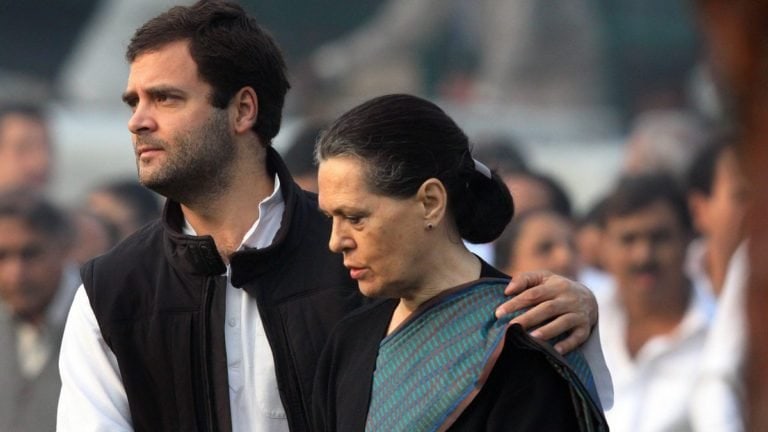
Sonia Gandhi will remain as Congress party’s interim president for now and the new chief will be elected within next six months, the party decided on Monday.
This decision was taken at the eventful Congress Working Committee meeting that concluded after seven hours on Monday.
Congress Working Committee urged Sonia Gandhi to continue as interim party chief and to bring changes to strengthen organisation, PTI quoted sources.
“Members expressed faith in Sonia Gandhi and Rahul Gandhi & urged her to continue leading the party and she agreed. Next meeting will be called soon, probably within next six months, to elect new chief. Till then, Sonia Gandhi agreed to remain interim president,” said P.L. Punia, a member of Congress Working Committee.
Crisis and confusion marked the crucial CWC meeting on Monday, after a letter written by senior party functionaries, calling for a change in leadership, betrayed the fault lines in the party. While Rahul Gandhi slammed the letter criticising the Congress leadership, the party denied that he accused the signatories of the letter of “colluding” with the BJP.
Senior leader Ghulam Nabi Azad, who is one of the signatories of the ‘dissent’ letter and had said that he would resign if the “collusion with BJP” allegation can be proven, has clarified that Rahul Gandhi never said the ‘dissent’ letter to Sonia Gandhi was written in collusion with the BJP, reported ANI. “Was informed by Rahul Gandhi personally that he never said what was attributed to him,” said Kapil Sibal after slamming Rahul Gandhi for allegedly accusing the dissent letter signatories of “colluding with BJP.”
Hindustani classical music has many well known performers like Ustad Bade Ghulam Ali Khan, Ustad Amir Khan, Ustad Nisar Hussain Khan, Ustad Fateh Ali-Amanat Ali Khan and Ustad Allah Rakha and Amjad Ali Khan, belonging to various gharanas (schools) such as Agra, Gwalior, Patiyala, Rampur-Seheswan, Kirana, Dilli, Jaipur-Atrauli, and Banaras etc.
In 1947, at the time of the Partition of India, a large number of Muslims, including many gharana musicians migrated to Pakistan while many Hindu and Sikh connoisseurs of music from that region came to the Indian side.
Moreover, since Pakistan was looking for a national cultural identity that would be different from India, it tried to ‘cleanse’ its culture of many older roots and moved towards a more ‘Islamic’ culture. As a result, many practices of music such as dhrupad, khayal and other forms were not promoted well in Pakistan, and their practitioners were left with hardly any patronage or audience.
However, other forms such as qawwali, ghazal, folk and pop music thrived and developed further in Pakistan.
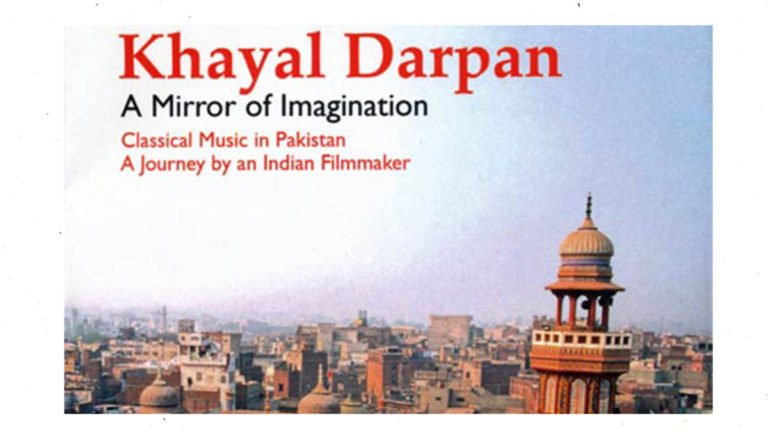
A documentary film named ‘Khayal Darpan’ explores this ‘loss’ and development of classical music in Pakistan, through the eyes of an Indian filmmaker.
“In a crisis, be aware of dangers but recognize the opportunity” – John F Kennedy
It’s been months since someone in China decided to consume a bat and everyone knows how the bat and the little monster inside it have brought about a new normalcy in the World. Since then we have been forced to go through situations similar to what we had heard from our grandparents or the likes of which we had seen in movies; situations we never thought we would have to experience in real life. Countries all over the world closed down their markets, international flights were suspended and lockdowns were enforced wherever it was considered at most necessary. In India, lockdown started when the month of March was about to end, it was extended thrice and we stayed in lockdown until the end of May. Lockdown here came almost out of the blue and was enforced much more stringently as compared to other countries like Vietnam, Indonesia and Pakistan etc. which left no room for people to prepare. It was around that time WHO Director General Tedros Adhanom warned countries which opted for a lockdown that it may not be enough to contain the pandemic. He urged countries to use the lockdown period to boost the public healthcare system, train and deploy workforce and stressed on tracing suspected cases1. However, with clanking utensils and showering flowers it seemed like the Government of India had other plans.
Stranded migrant workers in Delhi during the early days of nation wide lockdown.
Failing the true spirit of Aatmanirbhar Bharat
Soon after the Prime Minister declared lockdown, we saw an exodus of migrant labourers throughout the nation. Despite being in the middle of a crisis, the government could neither minimise the danger nor leverage opportunities to save the affected. Men, women and even children were dying on the road due to thirst and hunger and yet various governments defeated sloth in terms of speed to take action. Finally, when governments allotted trains and buses to various locations, migrant workers were charged hefty prices to book a seat. Yet we saw trains going to wrong locations and in some cases reaching entirely different states than the ones they had set out for, showing the disregard of the government towards the concerns of the citizens. We even witnessed the Karnataka State Government cancelling its application for trains meant for migrant labourers just because building contractors lobby wanted them to do so2.
Forced by the circumstances and the public pressure, soon after the announcement of lockdown, the government rolled out a relief package amounting to 1% of the GDP, but it was not enough to cater to 1.3 billion people. That’s when our Prime Minister decided to appear on TV and announce his grant plan for Aatmanirbhar Bharat. This included a financial package that amounted to 10% of the GDP to revive the stalling economy. Once we get into the fine print of this package, we realise that figure 10% of GDP included prior measures taken by government bodies at various times prior to the announcement. For instance, it included the first economic package of 1.7 lakh crore rolled out by the finance minister in March along with an 8 lakh crore that was announced by the Reserve Bank of India for liquidity enhancements for over three months.3 Experts say that the stimulus package that the Prime Minister claimed to be 10% of GDP cost in reality close to 1% of GDP.4 Manipulate the numbers to project an ant as an elephant!
Twist it if you cannot make it – the welfare funds
It gets even scarier if we look into the fact of how the government managed to raise the leftover amount in the package. According to Deval Desai, Christine Lutringer and Shalini Randeria of The Graduate Institute, Geneva, 5.2 lakh crore was raised by diverting the welfare fund meant for construction workers.5 The money was accumulated through a special tax levied on construction projects since 1996. Another one lakh crore was raised by diverting the welfare fund meant for workers and communities affected by mining. The amount was accumulated by a law passed in 2015. It is important to ask how these funds remained unused throughout these years?
The fund diversions spilled over into the CSR realm as well. Under the CSR law corporate companies have to spend 2% of their net profit towards social responsibility. The CSR funds are the backbones of NGOs throughout our nation using which social welfare activities are carried for the marginalized sections of society. Be it health, education or sanitation, the lion’s share of our population relies on any one of the NGOs working in those sectors. However, since the inception of the PM-CARES fund, a major portion of the CSR fund goes to that with no information on where and how it is spent.
For the sake of argument even if we overlook the diversion of funds the states were still not able to disburse the amount to all construction workers citing the reason that many are not registered under the welfare board. Due to shifting sites, illiteracy and ill awareness, many construction workers are not registered. This is coming during a time when more than 90% of construction workers have lost jobs because of the pandemic. The conditions are not different with mining workers as well. Even after diverting and renaming the funds, when disbursing it to the beneficiaries the government could not ensure that it reaches everyone who is affected.
The health, the wealth and the crisis
The government could have identified legitimate welfare opportunities during the COVID 19 crisis. There have been clear warnings from time to time from international watchdogs that India has to pay attention to the needs of the healthcare sector. Recently the World Bank pointed out that our investment in core public health facilities are scarce. The report also noted that Indian spending on the health sector is about 1% of the GDP, which is among the lowest in the whole world.6 Similar remarks had been made by the World Health Organization back in 2016. The standard doctor to people ratio according to the WHO is 1:1000 but on an average, a government doctor in India serves more than ten thousand patients! That is more than ten times above what the WHO recommends7. The statistics are no better in case of the number of hospitals or other healthcare workforce. Thus, the lockdown period could have been used to take urgent measures to tackle the pandemic, like the WHO director suggested, by deploying and training the workforce, by setting up First line Treatment Centres and to ramp up testing facilities.
India’s continuous meagre investment in public healthcare has led to a boom in private healthcare facilities. However, for the weaker sections of the society these private sector alternatives are out of reach. Taking that into consideration the government should have invested in them which would have turned out to be beneficial not just for the poor but for the entire society. In the seventh economic conclave conducted by the State Bank of India, many economists agreed that India should grab this opportunity to strengthen the healthcare sector8. However, the healthcare sector found no place for any kind of major investment under Aatmanirbhar Bharat package. It carried a promise to increase investment in grass root health institutions and proposed setting up of new Health and Wellness Centres across India. This should be read along with the fact that there are already 1974 health centres across India operating without a single doctor9.
The way forward
The reforms should start from a robust expenditure in the healthcare sector. Such an investment should cover the entire value chain, that includes infrastructure and human resources with an objective to increasing access to the public. Along with that, the effectiveness of the expenditures shall also be scrutinized. Even if we analyze the Corona cases, we can see that Maharashtra and Gujarat are having higher mortality rates and ironically, both are among the states with maximum healthcare expenditure. However, the State of Kerala and Goa, both widely praised for their commendable work in tackling the virus tops the list of states with best healthcare facilities. It is commendable that they did it with lesser per capita healthcare expenditure than that of bigger states like Maharashtra and Gujarat. Thus, there should be an effective mechanism to ensure proper return of investment. Wherever it is possible, the government should team up with private players to deliver public goods. An example will be that of Kerala where the State collaborated with Tata trusts to set up a 540-bed hospital.
It is evident that with a weak health care sector economy can never run but crawl. Organizations like the IMF have already noted how India can boost its economy by investing in the health and education sector. There are many studies by economists, which show the relation between the health of the population and economic growth. A UN High level commission report of 2016 on health and growth says that an increase in life expectancy by one year can result in an increase of GDP per capita by 4%. The commission put forward ten points of recommendations including fostering women empowerment and institutionalizing their leadership roles10. That is an important observation considering the fact that significant shares of care workers are women in places where healthcare delivery is effective. At least during the time of a pandemic India should pay attention to its healthcare sector, whose resources are on the verge of being exhausted with the rising number of cases with every passing day. However, with policies to encourage the private sector and lousy delivery of services in the public sector it seems like the Government of India is focused on the wrong set of opportunities during this time of crisis and is completely unaware of its dangerous consequences.
Lawyer-activist Prashant Bhushan, held guilty of contempt for his tweets on Chief Justice of India SA Bobde and the Supreme Court, told the top court today that he was “pained” at being “grossly misunderstood” and that he considered his tweets an attempt to discharge his highest duty. After a sharp back-and-forth during a two-hour hearing over whether his tweets had crossed the line, the Supreme Court gave the 63-year-old lawyer two-three days “to reconsider” his statement.
“There is no person on Earth who cannot commit a mistake. You may do hundreds good things but that doesn’t give you a license to do 10 crimes. Whatever has been done is done. But we want the person concerned to have a sense of remorse,” said Justice Arun Mishra.
Prashant Bhushan’s request to defer the hearing on his sentencing forcontempt was rejected by the Supreme Court. “I am pained to hear that I am held guilty of contempt of court. I am pained not because of the would-be sentencing, but because I am being grossly misunderstood. I believe that an open criticism is necessary to safeguard the democracy and its values,” he said.
“My tweets need to be seen as an attempt for working for the betterment of the institution. My tweets, I consider, was discharge of my highest duty. Apologising would also be dereliction of my duty. I do not ask for mercy. I do not appeal for magnanimity. I cheerfully submit to any punishment that court may impose,” he said.
As the top court asked him to reconsider his statement, he said: “I may reconsider it if my lordships want but there won’t be any substantial change. I don’t want to waste my lordships’ time. I will consult my lawyer.” Justice Arun Kumar Mishra then replied: “You better reconsider it… don’t just apply legal brain here.”
Justice Mishra said this was his first such contempt ruling. “There is a Lakshman Rekha (boundary) for everything. Why cross it? We welcome pursuing good cases in public interest but remember, this is a serious thing. I haven’t convicted anyone of contempt in 24 years as a judge. This is my first such order,” he said.