Home Blog Page 28

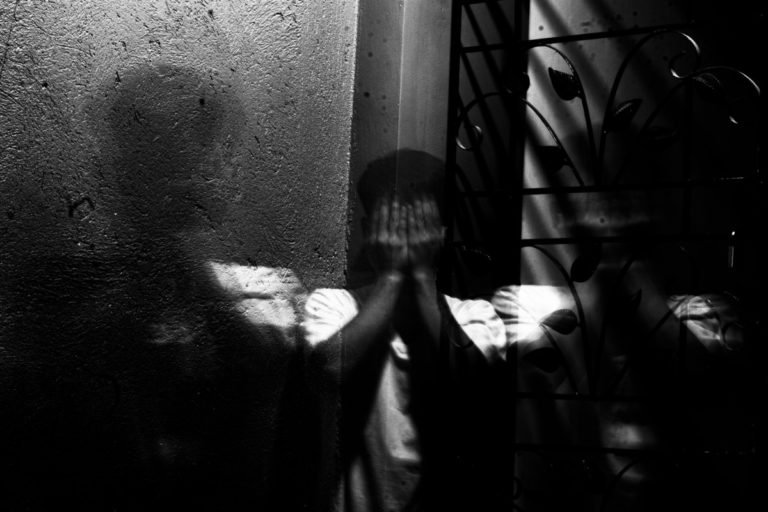
Depression and the role of Physiotherapy

“I am exhausted from trying to be stronger than I feel…..”

“Sleep just isn’t sleep anymore; it’s an escape…..”

“No amount of sleep could cure the tiredness I feel…….”

“I’ll be alright, one day, someday, just not today……….”

These are some common thoughts, emotions, feelings and fears when there is an acquired  state of altered mental health in a human. The unspoken truth, that ultimately drags a person into a world of despair, loneliness, distress, agony and pain, that we all in our common language call DEPRESSION.

We all take care of our physical and physiological health well. Taking good care of your body’s physiology is an excellent practice indeed but, ever thought of the brain going through the same? Physiological abnormalities around us are socially acceptable. However, there still exists a stigma for confronting mental issues and most importantly for asking help. When it comes to finally speaking up about mental health and seeking medical help, there exists only a few treatment options that a person can go for. All the currently available and most commonly known treatment options definitely help a person combat the condition but the effects are not observed to be long lasting. Also, the treatment process goes on for a long duration burning a hole in the pocket.

What depression looks like?

Depression is a type of mood disorder which results in feelings of misery, despondency and dejection. A state of prolonged sadness which creates a feeling of heavy heartedness and discouragement. The symptoms may appear as feelings of sadness, anxiety, low energy, fatigue, restlessness, irritability, difficulty in decision making, lack of focus and concentration, headaches, cramps, poor digestion, lack of interest and suicidal thoughts in severe cases. Depression may occur due to personal and family issues, side effects of certain medications, excessive workload and stress or major life changes and traumatic events.

The common treatment protocol for depression since years have been medications (pharmacological), psychological treatments, maybe some counseling sessions or psychotherapy and in worse case scenario electric shock treatment. Can we think of some other alternatives? Which are drug-free, pain-free and involve full participation of the person. Here, physiotherapy might make things easier and may serve as one of the most effective and long lasting treatment options if adherence level is high.

Biology of exercise in mental health conditions:

Several hypotheses are made about physical activity and mental health. Physical activity releases neurotransmitters; the body releases chemicals called endorphins under physical stress which help in relieving pain and feeling of stress. There occurs release of some other substances in the body like dopamine, serotonin, etc. which plays an important role in mood regulation. Exercise causes an increase in blood circulation resulting in sufficient oxygen supply and nutrient supply to the blood which results in mood regulation by assimilating the important nutrients and oxygen where needed, especially to the brain.

Physiotherapy as an effective treatment option:

Physical activities prescribed by a physiotherapist are associated with improved quality of life. It improves the physical and cognitive functions, boosting up the confidence and self-esteem. Physiotherapists emphasize on improving muscle strength, flexibility, cardiovascular endurance, maintaining body weight, body mass index, reducing the chances of falls. The exercise prescription to the person with depression is as follows, however the major exercises prescribed in depression are aerobic exercises and strength training.

·     Deep breathing exercises.

Deep breathing exercises help in relaxation. This can be done in a sitting position. Relax your body completely, relax shoulders, take a deep breath, inhale and exhale through your nose. This can also be done by exhaling through mouth (pursed lips).

·     Muscle flexibility exercises.

The flexibility exercises include stretching of muscles. It enhances the extensibility of muscles and maintains the normal range of motion of major joints in the body. These exercises can be done very easily on your own also called as the Self- Stretching exercises.

·     Endurance training.

Endurance is the ability to withstand fatigue and stress. It enhances the ability of a person to remain active. Aerobic and anaerobic exercises help maintain the muscle endurance, cardiovascular endurance and respiratory endurance as well.

·     Relaxation techniques.

Relaxations techniques are very useful for acquiring a state of peace of mind. It helps a person to effectively combat stress. These techniques involve meditation, yoga and deep breathing.

·     Muscle strengthening.

Muscle strengthening exercises are important to overcome bodily weaknesses. These are done with an external resistance provided while performing exercises. It strengthens the muscles and joints and helps to relieve body pain and overcome certain degenerative changes in the body, causing an increased blood circulation and blood pressure regulation. It helps to maintain metabolism in the body. It helps to improve mood and reduce depression, especially among older adults, as revealed in a  research from Harvard University

·     Mobility exercises.

These exercises improve the joint motion and function. It maintains joint range of motion. These exercises can be used as a warm up.

·     Hydrotherapy.

Hydrotherapy means exercising in water. This is a beneficial way of physical activity as water’s property of buoyancy helps put less impact on joints, water provides resistance in all directions to the body helping in muscle strengthening. Underwater exercises are beneficial for improving respiratory function.

 Adding all these forms of physical activities to your routine will help you improve the quality of life. Distracting yourself from negative thoughts, stress and over thinking is the aim of treating a person suffering from depression. Engaging yourself in such activities helps improve overall fitness, giving a major impact on your mind along with the other parts of the body. Also, it prevents the recurrence of such mental disorders by enhancing the secretion of certain hormones and chemicals in the body which improves mental health, emotions, thoughts and mental activities.

With over 20 lakh patients cured, India’s COVID-19 recovery rate at 73.64%

0

With 64,531 people testing positive in a day, India’s Covid-19 tally on wednesday, climbed to 27,67,273 including 6,76,514 active cases. And the death toll in India raised to 52,889.

The recoveries crossed the 20-lakh mark pushing the recovery rate to 73.64 per cent, according to the Union Health Ministry data. 

(Image source: ND TV )

Indian Campuses: Hot beds of caste based discrimination

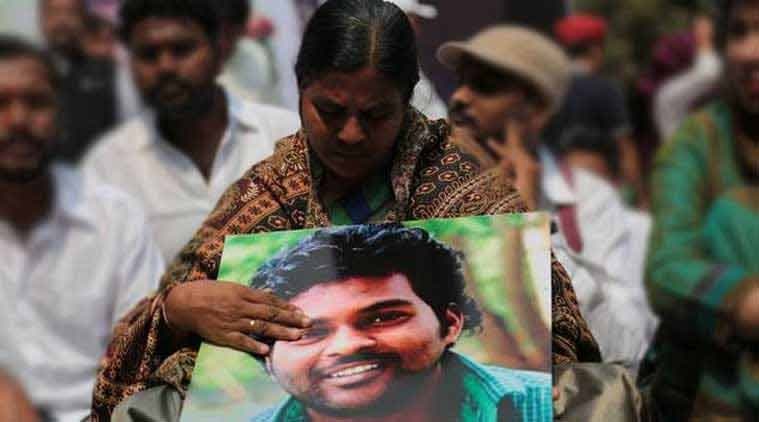
Indian campuses which reflect the diverse nature of India are the sophisticated arena where caste and other forms of discrimination are allowed to nurture and breed through the upper caste – elite hegemonic dominance. In a very precise term, Institutional Murder is putting a life to end because of caste and other socio – economic backwardness. From administration to professor to their peers they have to face casteist slurs and comments over and over. This venom of caste discrimination is taking the lives of minority and lower caste students. From Mudassir Kamran to Fathima Latif, the list of tragic loss is endless.

The crux of this discrimination by upper caste is the fact that the marginalised students are provided reservation in congruence with the affirmative action enunciated in Article 15 of the Constitution of India to emancipate them from their blighted condition because of the historical discriminatory realm which is working in our nation. SC, ST, OBC students are called as ‘quota students’ and caste is accredited to all of their achievements and failures, they are taunted and ostracised in the campus.

An individual’s educational and social concerns are coalesced and will influence from one’s family, parental education and access to resources. They may also face impediments because of the ‘lack of fit’ between the culture at home and culture in elite colleges. Higher education remains a selective field and elitism built within its institutional mechanism excluding students from the weaker sections due to the design of its selection, admission and tendency towards neutralising merit (DESHPANDE:2006). Been deprived of the privilege of education for so many generations and as a first-generation entrant into the University and first learner in English Medium, they are intimidated, they lack support and handholding to increase their language skills to cope up in that atmosphere.   

When these elite teachers and students who belong to the same socio – economic status, they share a degree of familiarity during the classes where they converse their private school experiences, foreign travels, and those books in which they were negated. Also how these marginalised sections of people contribute when all these institutions are being made beyond their economic limit. The expenditure of IIT, IIM, and other higher educational institutions are deliberately making the fee structure accessible to students hailing from elite background only and making sure that students from economically weaker background do not reach there just to make those institutions similar to Brahmanical Agraharas. As a result of the pandemic and the resultant online classes, Universities simply postulate that all of their students have laptops and proper facilities back at home. Even there are students who don’t have good mobile phones, laptops, and they hail from remote villages where the Digital India is a dream and they face issues like paucity in the internet. The institutions had blatantly neglected their troubles and put them in a burden of another stress.

If it is in the case of Hijabi Muslim girls when they assert their identity they are being pestered and tortured to take of their hijab by the pretended so called “progressive /feminist savarna elites”, and try to stereotype muslim women even at a time when they have gained much legitimacy and visibility. I had faced verbal torture and queasy questions related to my identity as a Muslim girl and their way of fascism by limiting my Muslim identity to ‘Burkha’. There is no feminism until and unless a woman accepts the rights and choices of another woman.

I swear institutional murders happen every single day in every space of the university. The voices of subaltern are excluded and unheard. They lack representation. Nancy Fraser argues that Public Sphere is constituted “by a number of significant exclusion” of historically marginalised groups. She calls for ‘Participatory Parity’ in which she views social justice as a requiring social arrangement which make it possible for all to participate on an equal footing in social life. Even if it’s IIT, JNU, DU, JAMIA, or any institution, everywhere the voices and spaces of minorities are suppressed and subdued. If our institutions are killing students from Dalit, Adivasi, Muslim communities then it’s high time to have a serious look into these highly corrosive institutional mechanisms. Or else these elite Indian campuses will continue to kill those students hailing from backward community and will remain on the top of India’s academic rankings until we democratise our institutions which reflects the diversity of India.There must be effective and stringent legal safeguard against discrimination as a punishable offense, civic Education and awareness,  academic assistance to the students who need support, participation of these students among all the decision making bodies of the college and so on. The way towards this is a strong and resilient political battle and perpetual struggle for human rights, equality and social justice.

BJP and RSS control Facebook and WhatsApp in India, says Rahul Gandhi

0

An article by a foreign publication, alleging that Facebook overlooks hate speech by BJP leaders, became the latest flashpoint between the Congress and the BJP on Sunday. While the Congress posted the article as evidence of the alleged social media manipulation by the BJP, the ruling party cited the Cambridge Analytica data scandal and said the Congress should not point fingers.

In the article titled “Facebook Hate-Speech Rules Collide With Indian Politics — Company executive opposed move to ban controversial politician”, the Wall Street Journal reported that Facebook looks the other way in cases of hate speech and objectionable content from leaders and workers of the ruling BJP.

The Journal also reported that an executive of the social media giant had said punishing violations by BJP workers “would damage the company’s business prospects in the country”. Quoting current and former employees, the article said Facebook has a “broader pattern of favouritism” towards the BJP.

Congress’s Rahul Gandhi — who has been targeting the BJP every day on social media over its handling of the coronavirus, the state of the economy and the violence in Ladakh – tweeted:.

Senior Congress leader Shashi Tharoor also flagged the issue. “The Parliamentary Standing Committee on Information Technology would certainly wish to hear from @Facebook about these reports & what they propose to do about hate-speech in India,” his tweet read.

Union minister Ravi Shankar Prasad, who heads the communications department, was quick to retaliate with the three-year-old Cambridge Analytica issue.

The BJP’s Kapil Mishra — one of the leaders accused of hate speech ahead of the Delhi riots in February – also made the same point. “Seems Congress is blackmailing Facebook to hide some serious crimes… Cambridge Analytica scam is just tip of the iceberg of Congress manipulating opinions and freedom of expression in India,” his tweet read.

In another tweet, Mr Prasad said today, “access to information and freedom of expression has been democratized”. “It is no longer controlled by retainers of your family and that is why it hurts,” he added.

In March 2018, a year before the general elections, the Congress and the BJP traded charges after it emerged that the scandal involving Cambridge Analytica — a London-based data firm accused of accessing data of millions of Facebook users to help elect US President Donald Trump in 2016 — could have links to elections in India.

Cambridge Analytica’s website said the company provided its services during the Bihar election in 2010 to a political party in India. The website of the Indian affiliate of Cambridge Analytica, Ovleno Business Intelligence (OBI), mentioned the BJP, Congress and the Janata Dal (United) of Nitish Kumar as clients.

The Congress had immediately denied BJP allegations that it was misusing data. “Problem: 39 Indians dead; Govt on the mat, caught lying. Solution: Invent story on Congress & Data Theft. Result: Media networks bite bait; 39 Indians vanish from radar. Problem solved,” Rahul Gandhi had tweeted.

“How much Independent are you”? -India 2020.

Hamna Tharayil

Just before the Independence day, Sri Prashant Bhushan was held by the supreme court for finding him guilty, quoting his two tweets a “serious contempt of court”. India, world’s largest democratic country with a fully furnished constitution clearly states that all citizens have the right to freedom of speech and expression(article 19).

Prashant Bhushan’s tweets are facts. Not a hate speech nor a terrorizing comment. But the audacity of the court to scan a tweet and not the actual issues happening around cannot be appreciated. This is the very same court that kept silence when the whole country was protesting against CAA. This is the very same court that failed to take an action against all the people who showed the nerve to spread hate through their speech . Most of them being the BJP leaders, the ruling party. Its very clear that the Delhi riots began with Kapil Mishra’s hate speech. Yet, he is free. The same freedom of speech is not applicable when others does. How absurd?

We might have gained independence from the British, but not from the group of fascist mongers. Lets not ignore it anymore. Our government directly and indirectly is aiming for a single goal. A ‘Hindu Rashtra’. A saffronised community. The very famous malayalam movie, Kalapani quotes “There will be a day when every Indian will realise India has only one religion, and that’s patriotism.” But when? Here a person’s patriotism is measured by taking his religion into consideration.

With a collapsed economy, unemployment at its peak, increased violence against the minority communities, the whole of Kashmir under darkness; cut from communication, Dalits still struggling for existence, educational institutions vandalized by the police, students and teachers arrested for raising their opinions,a broken judiciary, and a government and prime minister that claims we have reached our heights, what have we gained over these years? Again, lets not ignore it, like always. Its a beginning. A beginning of a lifelong suppression. Our ignorance is their strength. Our silence is their power. We do not want our citizens wandering to other lands as migrants. We do not want our people to get killed and lynched for the food they eat and the religion they follow. When the world is moving forward, lets not go back centuries. And yet, if you feel like this does not concern you, ask yourself, “how much Independent  are you”? -India 2020.

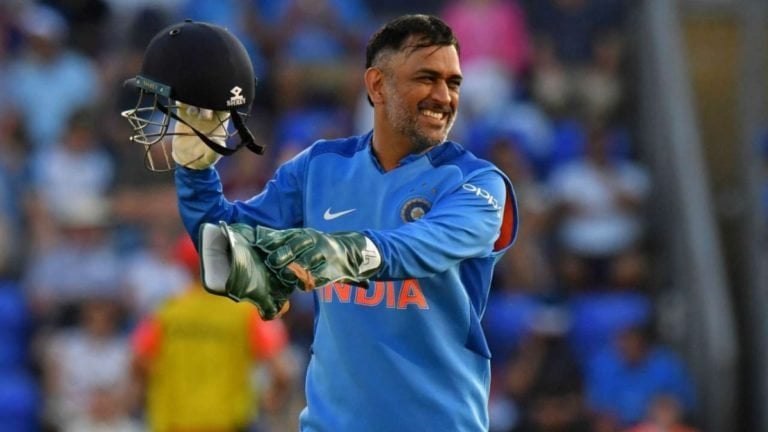
MS Dhoni and the tacit life lessons

I think of the word “Hope” and two things come to my mind. Shawshank Redemption & Mahendra Singh Dhoni. You taught a generation the value of ‘Hope’. No game was finished till you were in the middle.

Unorthodox by approach, unconventional by thought, but most importantly ‘unfazed’ and happy with who you are. In millennial parlance-a captain like Unmukt would agree with me- ‘Sorted banda.’

Obscured in winning photographs- with trophies but the first to come forward & absorb criticism. All with a sense of equanimity.

Throughout India’s impressive silverware collection spree under your tenure(T20 World Cup,  World Cup 2011 , Champions Trophy 2013, Test mace) you showed results mattered, but the process, even more so.

Always backing a player, making him realise his true potential, while fighting pain and backing yourself to finish games. In these ways you made us realise the nature of cricket being a team sport as much a personal one.

Every Single refused by you in a crunch situation, was an example of more pressure on the bowler despite it being a dot ball. Such was your impact. Selfless as always, never viewed another keeper as competitor but gave him chances, aplenty; giving up captaincy to see Kohli bloom as a skipper in your presence. If one reads between the lines there is a lot more than cricket here to learn from you.

Many a time after a riveting Indian run chase-courtesy your butchering of the ball, the gentlest deposing of the bail to unscrew the stump, would be missed.

Perhaps DRS would go back to being ‘Decision’ Review System again, when India plays.

The crocodile grabbing of the ball, behind the wicket. The lightning fast stumpings, witty sledges and the helicopters are reserved exclusively for the yellow Jersey now.

Your first game for India and your last, might be bracketed by run outs, but what happened between them will remain one of the most sparkling international careers as a number 3, a keeper, a finisher, a captain, an astute reader of the game and an extraordinary ambassador of the sport.  

Thank you MSD for being India’s magician in front of the wicket and behind it.

What does Independence Day mean to You?

0

Growing up, Independence Day always meant waking up to Lata Mangeshkar’s Aye Mere Wattan Ke Logo being played out in the community loudspeakers. As I sang along with all the emotion and enthusiasm that could be mustered, it was time to get ready for school. Wearing a crisp white kurta that had a paper flag proudly pinned onto it, I took part in all the Independence Day celebrations not just in school but also in my community. While the program at school meant sitting in the scorching sun for an hour before we were distributed snacks, the programs at my colony were more fun. After a flag hoisting ceremony, there were games, races and competitions organised for all the children with loads of prizes being given away.

But with time and the passage of my carefree childhood, Independence Day and the very idea of independence has come to hold new meanings and more importantly it has made me go on quest for what it means to be independent.   

Today marks India’s 74th Independence Day. And yet yesterday, Dr. Khafeel Khan’s detention under the draconian National Security Act (NSA) was extended by three more months. Dr. Khan has already served 480 days in prison. The NSA allows a person to be held without charge or a lawyer for up to a year. I am not sure what Independence Day means to a people’s doctor like Dr. Khan today. 

Another headline striking news was reported on the eve of India’s 74th Independence Day. In a landmark case, the Supreme Court found eminent lawyer, Prashant Bhushan guilty of contempt of court for his tweets on the CJI. In a 142-page reply, the SC declared that it was beyond criticism. Journalist, Shekhar Gupta summed up the sentiments of a majority of public activists when he said, “The mildest thing we can say about the SC contempt order on Prashant Bhushan is, a great institution is letting itself down. No criticism can undermine the top judiciary more than such thin-skinned shots fired in anger.” I am not sure what Independence Day means to a public interest lawyer like Prashant Bhushan today.

Speaking of journalists, this week also witnessed three journalists from The Caravan be victims of mob violence as they were attacked, chased and threatened with death in North East Delhi for reporting on the Delhi riots that took place in February which resulted in scores dead. The Delhi Police is yet to file an FIR in the case. I am not sure what Independence Day means to those three Caravan journalists today.

This week also witnessed communal riots take place in Bengaluru over an instigating Facebook post. In order to control the violence the police resorted to opening fire killing three people. I am not sure if we as a nation share the same understanding of independence.  

Also, this month marked the one-year anniversary of the abrogation of Article 370 and an intense communication blockade in the Kashmir Valley. Its been a year since 4G was scrapped in Jammu and Kashmir. I am not sure what Independence Day means to the residents there today.

While we as a country have come a far way since we gained independence from the British in 1947, I am not sure if we can completely call ourselves independent today. Is Independence Day only supposed to signify independence from foreign rule? Does independence also not consist of freedom of liberty and expression? Does independence not consist of freedom from bigotry and hatred in society? Is independence not supposed to mean equal rights to one and all irrespective of caste, religion, class and one’s personal political opinion? What is independence supposed to mean?

-Thoughts and questions of a confused Indian.  

Ashok Gehlot-led Rajasthan Government wins confidence vote in Rajasthan assembly

0

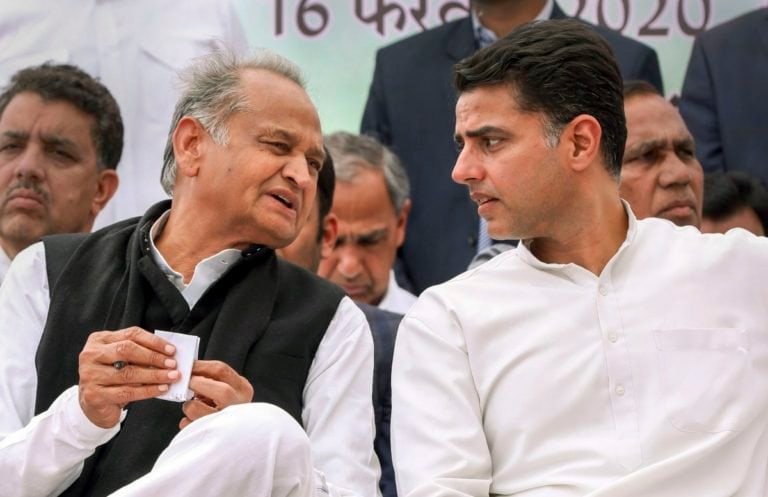
Ashok Gehlot’s Congress government wins in confidence vote in Rajasthan assembly after a series of political crises as Congress leader Sachin Pilot decided to quit from government earlier. Later, Sachin’s camp returned to the Congress team by maintaining a truce.

During the debate in the Rajasthan assembly on the Congress’s motion for a trust vote, Law and Parliamentary Affairs Minister Shanti Kumar Dhariwal, who tabled the proposal for a trust vote, started his speech accusing the BJP of trying to topple the Ashok Gehlot government. “Ashok Gehlot taught the BJP a lesson in Rajasthan. We did not allow a Goa or Madhya Pradesh to happen here,” he said after tabling the motion for a trust vote. He also quipped, without taking names, that “modus operandi” was now “Modi’s operandi”.

After the Congress move, the opposition BJP dropped its plan to ask for a no-confidence motion against the Gehlot government. For Mr Gehlot, however, establishing a majority is a way of securing his government for at least six months.

Chief Minister Ashok Gehlot had planned a trust vote for days, even when he was reduced to a wafer-thin majority of 102 following revolt of Sachin Pilot. Winning the vote will give him a six-month reprieve.

The BJP has 72 MLAs and the support of three more. Six MLAs who shifted from Mayawati’s party to the Congress have been asked by the former party to vote against the Ashok Gehlot government.

But the numbers are hardly enough to challenge Mr Gehlot, who enjoys the support of 125 MLAs with the return of Sachin Pilot.

Sources say the BJP’s move is more of a strategy to force a discussion in the assembly to corner the Gehlot government on various issues.

Till now, the BJP had always distanced itself from the Congress crisis and had denied that it would move a no-confidence motion against the state government.

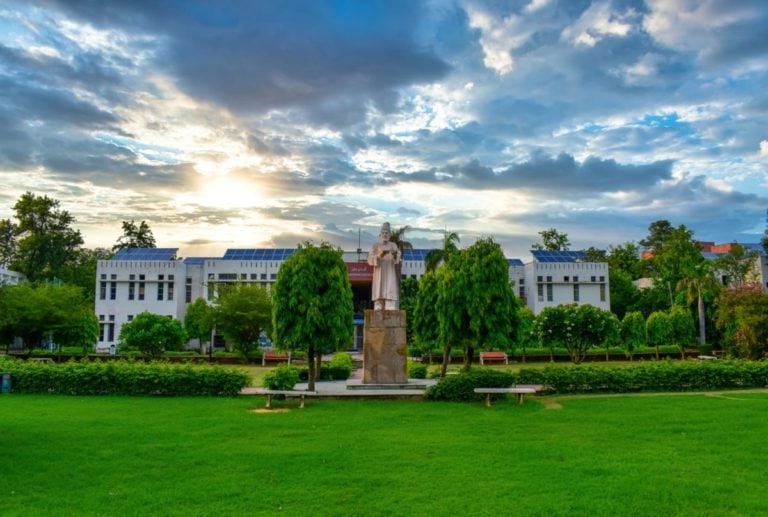
Jamia Millia Islamia tops among Central Universities in the ranking of Ministry of HRD

Jamia Millia Islamia Central University tops in the ranking of the Ministry of HRD among Central Universities in the country. Jamia was the epicentre of anti-CAA movements from December 2019.

Jamia overtakes Jawaharlal Nehru University, Banaras Hindu University and Aligarh Muslim University in ranking with 90% score.

Rajiv Gandhi University of Arunachal Pradesh scored 83% while JNU scored 82% and AMU 78%. The rank or score was based on parameters like number of students admitted annually in UG, PG, PhD and MPhil as well the range of diversity among students, measured in terms of percentage of female students as well as the percentage of students from other states and countries.

Additionally, aspects like faculty quality, student-teacher ratio, teacher vacancy and other factors were also included in the list of parameters used to determine the score. Students placed through campus interviews and those qualifying for NET & GATE, among other entrance tests.

On 15 December 2019, police had entered the campus to round up “miscreants” who it said had turned the ongoing CCA protest violent. But video footages from the evening show that police had assaulted students, broken into the campus library, vandalised college furnitures and destroyed the CCTV cameras.

The incident had created a massive uproar across the country and even abroad, making Jamia the epicentre of student-led protests against CAA for months. 

Featured photo: Mohsin Javed

Why EIA matters to prevent a disastrous future?

India now ranks third in the world with respect to the number of Covid 19 patients. The corner stone of Ram Mandir was laid on by the PM, a few days back. NEP has made its way into the limelight. We have got three differently polarised incidents. We may find that these episodes that are ‘accidental’ have much to do with the epoch making history of India, but I believe it’s not. The so called democrats and seculars now stand divided. They are left to get confused with too much of incidents happening around them. That’s how the whole system is working. The whole national focus and media attention is not at all fixed upon a specific issue.  It keeps changing. We miss those salient things that require utmost concern and consciousness. EIA has been one among them.

Dating back to 1992 in Rio De Janeiro, UN took an initiative to sign a global treaty regarding the EIA or Environmental Impact Assessment. This came into life in 1996. Nations posses their own EIA guidelines taking into account the sustainability and well being of the life zones of their parent environment. India has formulated the guidelines and legalised them in 2006, which comes in the purview of Environment Protection Act 1986. For years, these have been followed and now, a revised EIA proposal draft is at the threshold of implementation.

The latest update regarding EIA is the proposal of the new draft of National Environment Impact Assessment with a deliberate intention of replacing the existing norms and policies that were formalised in 2006. Setting up of industries and mining centres are exempted from government approvals. The project proponents are now only supposed to submit a single report annually in place of two that shows the compliance of the industry or company with the specified conditions regarding its working, which further weakens the protective and sustainable nature of environment. The industries are also in full freedom to benefit from the ‘ex post facto clearances’ in which they are free to go on with their industrial complexes regardless of the larger ecological desecration that they are capable of. This sole idea has been largely criticized by the Apex Court of our country in the case of Alembic Pharmaceuticals Ltd vs Rohit Prajapadi , stating that ‘Ex Post Facto Environment Clearance is unsustainable in law.’

The primary aim of EIA notification 2006 is to enforce and implement adequate precautions to mitigate ecological degradation that could occur as a consequence of industrial development.  The Ministry’s latest proposal of EIA perpetuates the faults and loopholes that were instilled in the former draft. The maximum scrutiny or let’s say, the stringent obligations and measures are now made limited to only a few projects.  For the rest, applying for an environmental permission has been made into a simple application for which clearance is almost guaranteed, which is the only formality to be exculpated.  Surprisingly, this simple solicitation is the only major requirement for larger projects like inland waterways and hydroelectric power generation of up to 25 MW capacity, which can potentially destabilize and destroy the riverine and hill ecology. To be more precise, the sole idea of sustainable development is decimated into nothing but farce. Everything is gradually transformed into an ‘act of letting go’ in the draft.

The novel draft posses no formal notifications or proposals in the view of climate change, one of the biggest perils in the closest vicinity.  India’s vulnerability towards this acute phenomenon has been left unattended. This also contradicts with the Paris Agreement which India has signed with pride.  The new proposal also undercuts the access to basic information regarding an infrastructure or industrial project to the public.  For instance, the revised draft has been left to public approval only in English, disregarding regional languages. Besides, the 60 day tenure for critical evaluation of any project proposal being put forward by an individual has been reduced to 45 days. We, the public are left with no time to be well informed and educated about the overall functioning and to seek additional information on the same. Thus the ideas of collective thinking, citizen’s mandate and public opinion are completely ignored. This poses a question mark in front of the country’s most glorified status – that is democracy.

In toto, it’ s actually a bigger step for a relatively smaller but a powerful section of industrialists and corporates to make full advantage of the new draft to fill their pockets leaving a bleak future ahead of us.  Undoubtedly, it’s a deliberate movement to commodify environment as a whole. This seems to be the last episode of the mockeries and ridicules we have been witnessing for the last few months .For the government, this is probably the best time to implement such a controversial and seriously biased legislation because the public has no chance to hold a physical resistance regarding this.

We have seen how illegal mining has reduced the richness of biodiversity of Dehing Patkai in North East. Similar fate awaits the Western Ghats as soon as the novel draft comes into being. It is said that 21 lakh trees and the ecosystems around will be massacred in the Western Ghats alone after the implementation of EIA 2020. We also witnessed the gas leak tragedy in Vishakhapatnam happened due to the mismanagement of the chemical plant, causing 11 deaths and 1000+ fatal injuries.  An impending tragedy is at the threshold if we do not learn from these lessons.

To conclude, this shouldn’t be the way the whole system should go. Enough damage has already been inflicted on the environment and we are collectively bearing the consequences of the same. So, priority should be fixed upon amending of those anti environmental activities that have been practised in the past. Or else, disasters seem inevitable.