The number of deaths in the massive landslide that destroyed a row of 20 houses of tea estate workers in the high range Idukki district of Kerala on Saturday climbed to 26 with 11 more bodies being recovered from the debris, as efforts were on amid continuing rains to locate those missing.
In his press meet at Thiruvananthapuram, Chief Minister Pinarayi Vijayan said 11 bodies were recovered from the site of the landslide at Rajamala while three are yet to be identified.
“This is in addition to the 15 bodies recovered yesterday. This brings the deaths in the landslide at the tea plantation to 26. Rescue operations are continuing at Rajamala in full swing. Post-mortem of the victims is being speeded up. An amount of ₹ 5 lakh was announced yesterday as emergency assistance for those who lost their lives. The government will bear the medical treatment expenses of those injured in the disaster,” Mr Vijayan said.
The chief minister said 78 people were staying at the spot where the tragedy occurred.
While 12 were rescued, 26 bodies were found, he said, adding that efforts were on to find the rest.
Mr Vijayan said the state government will support the families of the victims to enable them return to their normal lives.
“Two teams of National Disaster Response Force are involved in the rescue operations in addition to the locals, police, fire force and plantation workers. Swamp formation due to the presence of water in the landslide area is posing a big challenge to the rescue operations,” Mr Vijayan said.
The picturesque landscape of Pettimudi was flattened into a rough patch of boulders and mud with parts of asbestos and tin sheets seen scattered around.
The incident is said to have occurred in the early hours of Friday when a huge mound of earth fell on the “row houses” and two children and five women were among those dead, most of whom were plantation workers from neighbouring Tamil Nadu.
NDRF chief in charge of south Indian state, Rekha Nambiar is leading the 55-member team which is entrusted with the search and rescue mission.
The India Meteorological Department (IMD) has issued a red alert for Idukki, Malappuram and Wayanad districts on Sunday.
According to the State Disaster Management Authority, Kerala received an average rainfall of 95 mm in the last 24 hours while Vadakara in Kozhikode recorded 32.7 cms of rain, the heaviest in the state.
At least 15 people were killed after an Air India Express plane with 190 on board from Dubai skidded off the runway and broke in two while landing at Kerala’s Kozhikode on Friday amid heavy rain, the police said.
Among those killed were the two pilots of Flight IX-1344, authorities said. Four people are still stuck inside, the Kerala Police chief said.
Most on board have been evacuated and at least 50 injured, including 15 in serious condition, have been taken to hospital, authorities said.
There were 174 passengers, 10 Infants, two pilots and four cabin crew members on board the aircraft.
The flight was part of the Vande Bharat programme that has been bringing back Indians from abroad amid the coronavirus pandemic.
TV images from the site showed part of the fuselage of the Boeing 737 jet ripped apart with debris strewn all over.
According to flight-tracking website FlightRadar24, the aircraft circled the airport several times and made two attempts to land.
The Kozhikode airport is one of Kerala’s most prominent international terminals and handles a significant number of flights from abroad, Congress lawmaker Shashi Tharoor told NDTV.
Union Home Minister Amit Shah tweeted, “Distressed to learn about the tragic accident of Air India Express aircraft in Kozhikode, Kerala. Have instructed NDRF (National Disaster Response Force) to reach the site at the earliest and assist with the rescue operations.”
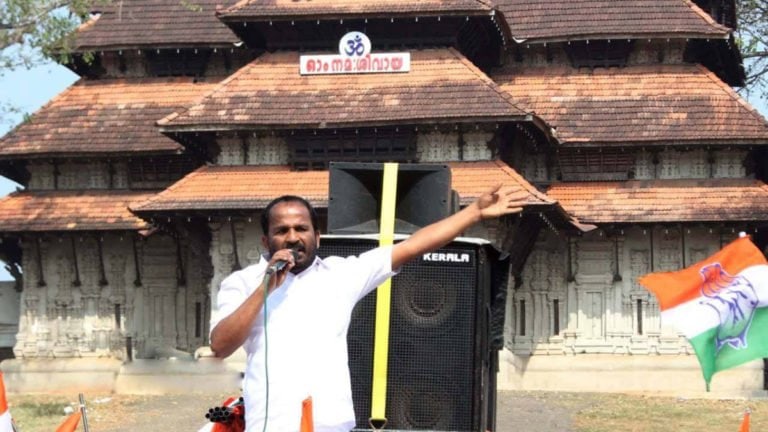
Congress MP from Kerala, T.N. Prathapan says “Ram of Hindu Dharma will not be pleased to see building a temple after demolishing a Masjid in his name.” The AICC member and national chairman of All India Fishermen Congress, Mr. Prathapan has also written a letter to the party chief Sonia Gandhi conveying his “concerns” over Ram Mandir issue.
In the letter T.N. Prathapan criticizes Kamal Nath and Digvijay Singh for “begging” for invitation to the “Sangh Parivar sponsored” event. Although Prathapan has taken a soft position towards Priyanka Gandhi saying: Smt. Priyanka Gandhi Vadraji has taken a position which is acceptable, I think, in a way as she is wishing unity in the name of temple. We certainly know that such unity wouldn’t be there as far as Sangh Parivar has power. Still, by considering the ground realities of the politics in North India especially in Uttar Pradesh, Smt. Priyankaji has kept the concern and dignity in her statement.
Prathapan raises the necessity of an alternative to fight communalism. He points: “We can’t chase an extreme religious nationalism with its soft prototype. We need to realise this situation and should accept an alternative, immediately. That should be upon the legacy of politics of unity, harmony and tolerance. Let Mahatma Gandhi, Jawaharlal Nehru, Maulana Abul Kalam Azad, Subhash Chandra Bose, Sardar Vallabhai Patel be our models.”
Read the full text of the letter:
04-08-2020
Hon’ble President Sonia ji,
I hope this letter finds you in good health and happiness. I always pray for your wellbeing and prosperity. All the hurdles that humanity faces these days will be gone and let us learn lessons from every such difficult times.
This is a letter that I kindly register my concern regarding the responses of some Congress leaders like Shri. Kamal Nath ji and Shri. Digvijay Singh ji on Ayodhya Ram Temple event. This letter is maybe a long one. But I kindly insist to read it amid your busy schedules. I strongly believe that the Assassination of Mahatma Gandhiji and Demolition of Babari Masjid were the most treacherous incidents happened in the independent India. The basic values that this country was built like secularism and pluralism had been facing a devastating future all these times. It was always Congress which held the hope of this great nation and its beautiful legacy of plurality alive.
The Supreme Court verdict on Ayodhya land dispute was a hope that an era of hate politics would end by it. But unfortunately, it is going on relentlessly. We can not take any type of stakes in it. I think that this particular event is a Sangh Parivar sponsored ‘Religious Political’ one. If we are not invited to this, why would our leaders beg for that?
Smt. Priyanka Gandhi Vadraji has taken a position which is acceptable, I think, in a way as she is wishing unity in the name of temple. We certainly know that such unity wouldn’t be there as far as Sangh Parivar has power. Still, by considering the ground realities of the politics in North India especially in Uttar Pradesh, Smt. Priyankaji has kept the concern and dignity in her statement.
But, other statements of some other leaders like Shri. Kamal Nathji and Shri. Digvijay Singhji has disappointed me a lot. There are million people who are grieving in the memories of Babari Masjid even though they are accepting the court verdict. Because, demolition was a kind of attack to their conscience. We are including that demography also. We can’t leave them in a despair. And sadly, the party has been left in defense by their statements.
It is clear that we are not against any temples or any other worshiping centres. Lord Ram is a cultural idol also. I have heard that there are traditional Muslim artists who make costumes and designs for the Ram Leela processions in Chandini Chowk, Old Delhi. We are with that sentiment. Personally, I am a believer. I visit and seek blessings of Lord Sreekrishna every month at the famous Guruvayur Temple. As a Hindu, Lord Ram is also an inspiration for the values of plurality. But, indeed, the Ram idol which is masculine and aggressive that Sangh Parivar has been exhibiting is not my Ram or Hindu’s Ram. There are numerous other Ram temples in Ayodhya. Most of them are known as the birthplace of Lord Ram. And all of them are having a fraternity with other religious communities. I strongly believe that a temple built by Sangh Parivar with the intentions of extreme communal politics will not be bearing the sanctity of other Ram temples built upon devotion and tolerance.
This is an unprecedented situation in which Covid19 pandemic became a huge threat to all of us. Our country is failing to control its spread. From Cabinet ministers to common people, nobody is exceptional from this pandemic. Still our country is performing weak and miserable. Currently, worshiping centres are shut down or controlling entries due to this pandemic. Yet our country is after such big events. And this is sad that our priority is not in the health sector. Instead it is set upon such religious-political issues.
We can’t chase an extreme religious nationalism with its soft prototype. We need to realise this situation and should accept an alternative, immediately. That should be upon the legacy of politics of unity, harmony and tolerance. Let Mahatma Gandhi, Jawaharlal Nehru, Maulana Abul Kalam Azad, Subhash Chandra Bose, Sardar Vallabhai Patel be our models. I believe that what ultimately matters is not the failures we face, but it is matter that we are not bowing low for the temporary successes.
I thought I should convey to the Hon’ble President my disagreement to those leaders in this particular matter. Congress party always had these agreements and disagreements within. Maybe these ironies are the strength of this great party. Let the best happen in the future for its legacy. And I have trust in your leadership like millions of others have faith in you.
Amidst the agreements and disagreements of leaders in Congress party towards the Ram Mandir event, congress former chief Rahul Gandhi says “Lord Ram is love, they can never appear in hate.”
मर्यादा पुरुषोत्तम भगवान राम सर्वोत्तम मानवीय गुणों का स्वरूप हैं। वे हमारे मन की गहराइयों में बसी मानवता की मूल भावना हैं।
राम प्रेम हैं वे कभी घृणा में प्रकट नहीं हो सकते
राम करुणा हैं वे कभी क्रूरता में प्रकट नहीं हो सकते
राम न्याय हैं वे कभी अन्याय में प्रकट नहीं हो सकते।
His statement following the Bhumi Pujan event in which Prime Minister Narendra Modi, UP Chief Minister Yogi Adityanath, RSS Chief Mohan Bhagavat performed rituals is showing a clear contrast within the grand old secular party.
Earlier Madhya Pradesh former CM Kamal Nath and Digvijay Singh had supported the event and conveyed their disappointment for not being invited. Later AICC secretary Priyanka Gandhi Vadra appeared with a ‘soft’ approach towards the event saying the occasion will be for ‘national unity’. Congress MP T.N. Prathapan and MLA V.T. Balram, both from Kerala, had criticized congress leaders for supporting the Sangh Parivar sponsored event. T.N. Prathapan had written to party chief Sonia Gandhi conveying his ‘concerns’ in the issue. In a facebook post, Mr. Prathapan said: “Lord Ram of Hindu Dharma won’t be happy to build a temple after demolishing a Masjid in his name.”
The All India Muslim Personal Law Board has asserted that the Babri Masjid will remain a mosque. The board in a statement on Tuesday said that the Islamic Sharia states that once a mosque is established at any place, it remains a mosque till eternity.
It went on to say that the Supreme Court’s November 2019 verdict allowing the construction of a Ram Mandir in Ayodhya was ‘unjust and unfair’.
“Babri Masjid was and will always be a Masjid. Hagia Sophia is a great example for us. Usurpation of the land by an unjust, oppressive, shameful and majority appeasing judgment can’t change it’s status. No need to be heartbroken. Situations don’t last forever. Its Politics,” it said.
#BabriMasjid was and will always be a Masjid. #HagiaSophia is a great example for us. Usurpation of the land by an unjust, oppressive, shameful and majority appeasing judgment can't change it's status. No need to be heartbroken. Situations don't last forever.#ItsPoliticspic.twitter.com/nTOig7Mjx6
— All India Muslim Personal Law Board (@AIMPLB_Official) August 4, 2020
“It has always been our position that the Babri Masjid was never built by demolishing any mandir or any Hindu place of worship,” AIMPLB general secretary Maulana Mohammad Wali Rahmani said.
The statement said that the Supreme Court also accepted that the placing of idols on 22 December, 1949, in the masjid was an illegal act. The court also accepts in its judgment that the demolition of the Babri Masjid on 6 December, 1992, was an illegal, unconstitutional and criminal act.
“It is indeed regrettable that after accepting all these facts, the apex court in an extremely unjust verdict handed over the land of the masjid to the people who had placed idols in the mosque in a criminal manner and were party to its criminal demolition,” Wali said.
“The Babri masjid was a masjid before, is a masjid today and shall Inshallah remain a masjid,” he added.
The AIMPLB had backed the prime litigants in the Ram Janmabhoomi-Babri Masjid case in the court. It had also filed a review petition in the Supreme Court against its November 9, 2019 verdict. However, the court had in December 2019 dismissed all review petitions.
The constitution bench headed by Chief Justice Ranjan Gogoi (now retired) had unanimously in November ruled that the land where Babri masjid once stood belongs to the Hindus. The court’s order paved the way for the construction of a Ram Mandir. The court had directed the Centre to allot an alternative five-acre plot to the Sunni Waqf Board at a prominent place in Ayodhya for building a new mosque. Uttar Pradesh has allotted a five-acre land in Dhannipur village in Sohaval Tehsil of Ayodhya.
The AIMPLB’s statement comes just ahead of the Ram Mandir bhumi pujan. Prime Minister Narendra Modi will perform the bhumi pujan on Wednesday afternoon. The construction of the temple is likely to be completed in the next three years.
AICC General Secretary Priyanka Gandhi Vadra marked the oncoming groundbreaking ceremony at Ayodhya with a tweet saluting Lord Ram, marking the shift in the party’s stance towards the Ayodhya issue. Ram is with everyone, she tweeted, expressing hope that Wednesday’s ceremony at Ram Janambhoomi will become an occasion for “national unity, fraternity and cultural congregation”.
“Simplicity, courage, restraint, sacrifice, commitment, are the essence of the name Deenbandhu Rama. Ram is with everyone, Ram is with everyone,” read a Hindi tweet of Ms Gandhi Vadra, who is an in-charge of the party in Uttar Pradesh, the state where Ayodhya is located.
“With the message and grace of Lord Rama and Mother Sita, the Bhoomipujan ceremony of the temple of Ramlala became an occasion for national unity, fraternity and cultural congregation,” read another tweet, in a reminder of the clash and bloodshed over the issue for decades.
सरलता, साहस, संयम, त्याग, वचनवद्धता, दीनबंधु राम नाम का सार है। राम सबमें हैं, राम सबके साथ हैं।
भगवान राम और माता सीता के संदेश और उनकी कृपा के साथ रामलला के मंदिर के भूमिपूजन का कार्यक्रम राष्ट्रीय एकता, बंधुत्व और सांस्कृतिक समागम का अवसर बने।
— Priyanka Gandhi Vadra (@priyankagandhi) August 4, 2020
The Congress has not been invited for the ceremony at Ayodhya, where Prime Minister Narendra Modi and more than a hundred VIPs are expected to take part.
Following the Supreme Court’s verdict in November that said a temple should be built in Ayodhya, the Congress Working Committee had passed a resolution welcoming the judgment. At the time, Congress’s chief spokesperson Randeep Surjewala had also said the party was in favour of the temple construction.
But the party went into the silent mode since, aware that any false step will further impair its chances in the Hindi heartland, especially Uttar Pradesh, where it has practically been wiped out.
Ahead of last year’s elections, Ms Gandhi Vadra was given charge of reviving the party in eastern Uttar Pradesh. Her brother Rahul Gandhi, who was the party chief at the time, made it clear that it should be done by the next assembly election in the state.
The party has since been trying to nuance its stand on the issue — a task made difficult by Rahul Gandhi’s multiple temple visits which was branded as “soft Hindutva” by BJP leaders.
Madhya Pradesh leaders Kamal Nath and Digvijaya SIngh have already welcomed the temple. While Mr Nath, in a video message, said the temple construction is being “carried out with the consent of every Indian”, Digvijaya Singh warned the BJP that the date for groundbreaking ceremony is “inauspicious”.
In a series of tweets on Monday, Mr Singh said: “I again request Modiji postpone the ground-breaking ceremony of the Ram temple on August 5. After a struggle of hundreds of years, the occasion for the construction of the temple has come. Dont allow your arrogance create obstruction in the way.”
Another Congress leader, Manish Tiwari, posted a series of tweets on the “bhoomi poojan”, including a video message, where he sang Mahatma Gandhi’s favourite Ram bhajans.
Mr Nath, who lost power in the state in March after senior Congress leader Jyotiraditya Scindia crossed over to the BJP, conducted his own prayer meeting, where he pointed out that it was former Prime Minister Rajiv Gandhi who paved the way for the temple construction.
However, Congress MP from Kerala, T.N. Prathapan criticized congress leaders for supporting “Sangh Parivar sponsored ‘religious-political’ event.” He wrote a letter to Congress President Sonia Gandhi conveying his “concerns” over the issue. In a facebook post, Mr. Prathapan said: “Lord Ram of Hindu Dharma won’t be happy to see to build a temple after demolishing a Masjid in his name.”
In 1986, then Prime Minister Rajiv Gandhi had allowed the opening of the locks of Babri Masjid and three years later, ahead of the general elections, permitted shilanyas.
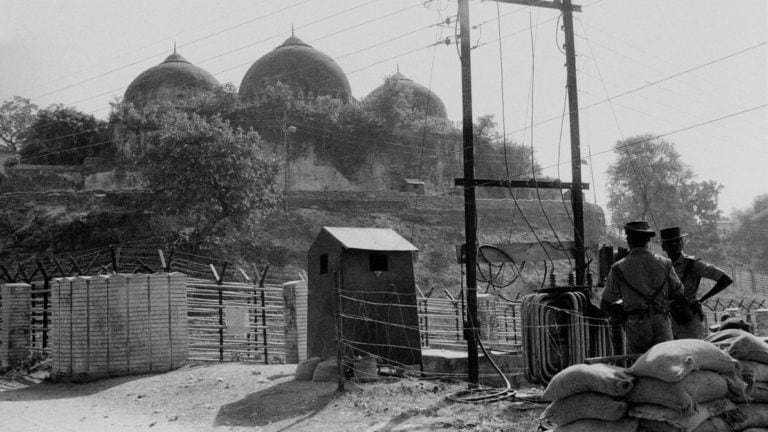
On December 6, 1992, a 16th Century mosque said to be have been built by Mughal emperor Babar, was razed by thousands of right-wing volunteers, who claimed it was built after demolishing a temple marking the birthplace of Lord Ram. The event unleashed a cycle of violence that claimed hundreds of lives and dominated political headlines for decades.
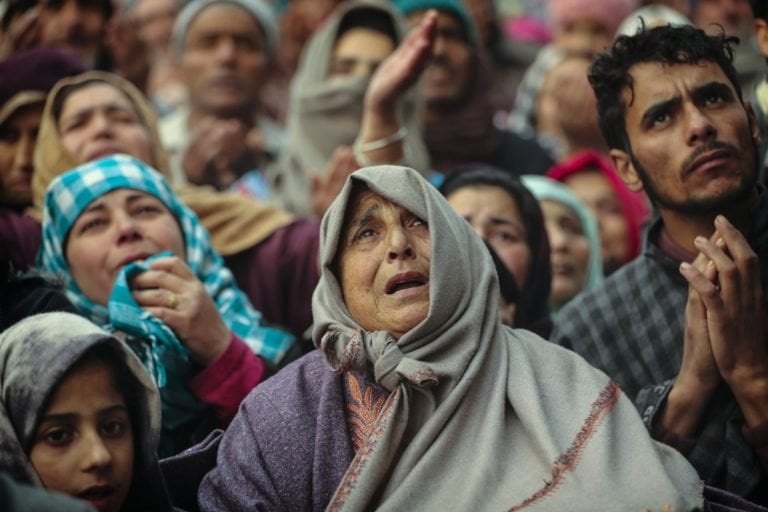
One year of abrogation of article 370, Article 35A empowered the Jammu and Kashmir state’s legislature to define “permanent residents” of the state and provide special rights and privileges to those permanent residents and the removal of special status of Jammu and Kashmir by Hindu nationalist government without the consent or consultation of its 12.5 million people. Since the revoke of autonomous status of Jammu and Kashmir , the Government of India imposed a Brutal security lockdown, detaining thousands without any trials. Many political leaders,academicians and activists are still being held . For the last one year, Indian government has often used draconian laws like Public Safety Act (PSA) and Unlawful Activities Prevention Act(UAPA) to stifle dissent.
When India suddenly scrapped disputed Kashmir’s semi-autonomous status, followed by an unprecedented security clampdown, economic ruin ensued. The lockdown from august 2019 devastated the economy especially small scale businesses, agriculture and tourism. Amid the alarm of covid pandemic many students are struggling with online classes , the people of Kashmir Valley face suspension of Internet services and communication blackout , while the Indian authorities say it is necessary to maintain security.
Military forces are there in the rest of the country by helping the state to fight against the pandemic while Kashmir, the territory having the world’s largest number of Militants are trying to cage the whole valley and the people. During the covid crisis , the people of Jammu and Kashmir are in double lockdown with lack of ventilators ,PPE kit and tests which fail to deal with the pandemic. Stand in solidarity with Kashmir’s fight for freedom and self- determination.
“O Prophet! Tell your wives and your daughters and the women of the believers to draw their cloaks (veils) all over their bodies (i.e. screen themselves completely except the eyes or one eye to see the way). That will be better, that they should be known (as free respectable women) so as not to be annoyed. And Allah is Ever Oft‑Forgiving, Most Merciful”.
[Qur’an, Al-Ahzaab (33:59)]
Key words:
Niqab- The niqab is a veil for the face that leaves the area around the eyes clear. However, it may be worn with a separate eye veil. It is worn with an accompanying headscarf.
Burqa- The burqa is the most concealing of all Islamic veils. It covers the entire face and body, leaving just a mesh screen to see through.
Trigger warning: Islamophobia
In recent years, the ban on hijabs and/or burqa has increasingly found its way in the news. So much so that over time, such violation of human rights does not seem surprising anymore. With the rapid rise in Islamophobia all over the world, countries have progressively either imposed such bans already, or have proposed the idea of the same.
In 2010, France barred Muslim women from wearing any form of dress that covers their faces and heads. In response to this in October 2018, the United Nations Human Rights Committee (UNHRC) said that the ban imposed by France on burqa and other full face-covering veils is a violation of human rights. Similar demands were raised in countries like the United Kingdom and Australia among others. Muslim women in workplaces, educational institutions, and other fields of life have faced some form of discrimination or the other, on the grounds of their dress, besides having to go through unfair/unequal treatment because of gender bias.
A similar tradition of covering the head is observed in Hinduism and Christianity. However, it’s extensively against the Muslim women that we witness exclusion and defaming approaches. Niqab – also a form of pardah in Islam and obligatory for women to sport, has also been criticized and used as an excuse by people to segregate the community and spread hate. This has led to snatching women off their right to freedom to wear the dress of their choice.
In light of current events and with the rapid increase in the number of Covid-19 patients, there has been a compulsion to don the face mask every time we step outside. Social distancing has been under practice ever since the world went on lockdown in March. People without masks have been arrested, beaten up, and not allowed public services, such as fuel for cars, fearing the spread of the virus. What is intriguing here is that, when it was up to Muslim women to wear the dress of their choice, they were looked down upon. But now that the entire world needs to have their faces covered and probably wear gloves when stepping outside or doing businesses, who is to fear now and from whom?
Face mask has become a necessity for every individual across the world. As a matter of fact, masks were a “trend” at fashion shows, even before the Earth was touched by this malignant virus. Models were seen walking the ramp with their faces covered to match their apparels. Were they treated as threatening? Were they barred from being at a public space, did they have to listen to abuses or live in fear or called “jihadis” or terrorists? No, they were not. Because that was fashion.
Today, no one will question you if you step out with a concealed face, regardless of your faith or sex. Let’s say you are a burqa and niqab wearing woman out to buy groceries, you will not have to be afraid of judgmental and filthy eyes or harsh words ringing in your ears. The niqab that is adorned by Muslim women is not only because it’s what their religion teaches them to do. When you come to think of it, covering their faces and heads protects them from the soaring pollution that is hazardous for the human lungs. It secures their hair, skin, and even the eyes if the entire face is shielded. And what did we do when the air around us was so thick with dust that our eyes burnt and we couldn’t breathe? You know the answer.
It’s a common notion that Muslim women are forced to wear the hijab, or the burqa, or the niqab when, in fact, majority of Muslim women do it because they want to. It’s their will and their love for their religion and their God that encourages them to do so. Muslim women are not oppressed in the households for covering themselves, but outside, for doing what is right for them, and that is a violation of a basic human right. People would roll their eyes and give malicious glares to anyone they see covered, and this has called for a ban on women practicing their faith.
Now that the face mask has become an obligation, one wonders if the empathy will continue or will it disappear once the world is free of the pandemic? Will people keep this reflection, the need to protect oneself, no matter what the reason? As a young girl who wears the hijab and has felt the need to replace it with a beanie to cover my head in college, it bothers me that although the world is on its way towards “modernization”, and some Indian traditions are far left behind because “westernization” is more accepted here, that a sense of hatred persists to be instilled in our minds. This doesn’t make us liberal, as some people would like to perceive themselves as. Wearing a hijab, or burqa, or niqab is not backward. For me, personally, it’s my identity, my crown. Nothing gives me more poise and spirit than my hijab does.
I can only hope that my fellow sisters don’t hold themselves back from the dogmatic mindsets and racism that follows them around. I pray that may Allah give them strength, faith and encouragement to do what pleases Him, and that they may attain comfort and pride from it, InShaAllah. I wish for the world to learn lessons from the deep waters that we’re in today so that tomorrow, when we wake up to a new bright and hopeful day, it doesn’t go back to being its bigot and prejudiced self.
The National Investigation Agency (NIA) said Tuesday it has arrested an associate professor of English of Delhi University, Hany Babu Musaliyarveettil Tharayil, 54, in connection with the Bhima Koregaon Elgar Parishad case.
The case relates to inciting people and giving provocative speeches during an Elgar Parishad event organised by the Kabir Kala Manch at Shaniwarwada in Pune on December 31, 2017, which promoted enmity between various caste groups and led to violence resulting in loss of life and property and statewide agitation in Maharashtra, an NIA spokesperson said.
On September 11, 2019, the Pune police had searched his house in connection with the Elgar Parishad case. The Pune Police filed a charge sheet and a supplementary charge sheet in this case on November 15, 2018 and February 2, 2019 respectively.
The spokesperson said that during investigation, the NIA found that senior leaders of CPI (Maoist), an organisation banned under the Unlawful Activities (Prevention) Act, were in contact with the organizers of Elgar Parishad as well as Hany Babu to spread the ideology of Maoism/Naxalism and encourage unlawful activities.
The NIA took up the investigation of the case on January 24 this year and arrested two other accused – Anand Teltumbde and Gautam Navlakha – on April 14.
“During further investigation, it was revealed that accused Hany Babu Musaliyarveettil Tharayil was propagating Naxal activities and Maoist ideology and was a co-conspirator with other arrested accused,” the NIA spokesperson said.
Domes with the music of love and peace, Minarets towering like symbols of care, The form that draws the history of the past, that melts into the elegance of the clear blue sky above, the birds that fly eternally in the vastness of the expanse of sky, the clouds that shine on the canvas of sight alone and in groups.
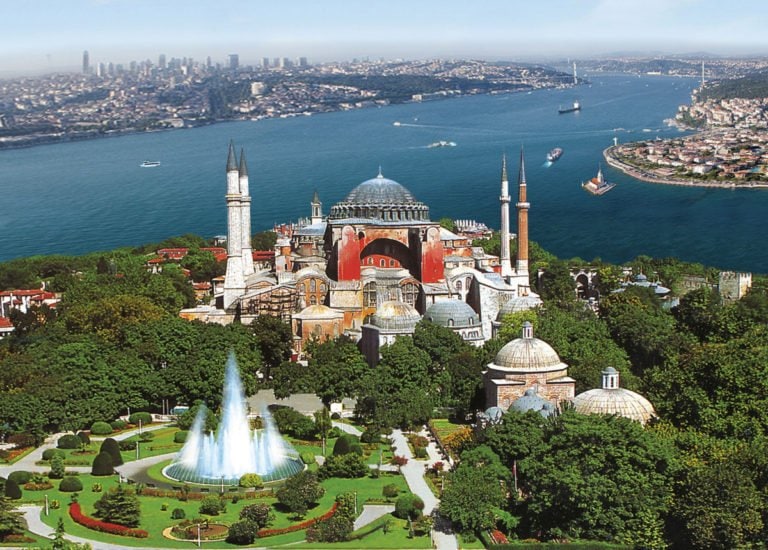
Hagia Sophia is a historical figure that touches the heart of Istanbul’s majesty, which enjoys the breeze and cold of the Bosphorus Strait. It has often been transformed into a focal point even on the world political map. Even the geography of Istanbul, which demarcates the East and the West, marks the history of civilization and many empires, especially Byzantine and Ottoman. The art and architecture of Hagia Sophia highly matters and it is much important to world legacy. Hagia Sophia, traces its nomenclature from the Greek word “Hagia” means God and “Sophia” which means wisdom.
In this “Divine Wisdom ”, merges logic of Greek theology. It was originally built as a cathedral in Constantinople (now Istanbul, Turkey) in the 6th century under the direction and supervision of the Byzantine emperor Justinian I. Much like the Eiffel Tower in Paris or the Parthenon in Athens, the Hagia Sophia is a long-enduring symbol of the cosmopolitan city. Hagia Sophia was built over a period of six years by Architects Isidoros (Milet) and Anthemius (Tralles).
Building Aesthetics
The original church was later renovated and rebuilt over many times. The building contains two floors centered on a large nave that has a great dome ceiling, along with smaller domes. The building dimensions In plan is about 82 meters long and 73 meters wide. The dome is 33 meters in diameter and its crown rises 55 meters above the ground. In plan the building takes almost a square shape.
There are three aisles separated by columns, above this is gallery spaces. The walls above the galleries are detailed with windows with tinted glass. A circular arcade made of 40 arched slit windows surrounding the dome bottom level. The ambiance of the space itself is amazing in the light that comes through the windows. In the glare of daylight, the dome feels as it has spread itself out in the sky without noticing any support rising from below. The light reflected from the inner mosaics and crystalline surfaces reveal the unparalleled mystics of the historical empires.
The central or Imperial Door provides the most perfect vision to the interior of the church. The main attraction of the structure is achieved by its symmetrical Centralised planning and mass scale, and it gives a serial vision capture to the viewer. Domes and arches mixed exterior view is fulfilled with windows and slits. Inside the dome pendentives, there are four concave triangles to set the dome and circular shape rather than a rectangular base.The decorations within the Hagia Sophia changed each time by a variety of design patterns. pillars capitals are carved design of a clear Byzantine motif tracery of vine leaves and foliage. The outer face of galleries continues the play of light and shadows with pearl and ebony inlay.
Hagia Sophia has been conceived as a unification of all architectural traditions of antiquity, ranging from the Eastern tradition of architecture like Mesopotamian, Persian and Syrian traditions merging constructive Greek-Roman and additions Islamic style. Speaking about this unique style, it influenced later architecture Romanesque and Renaissance.It might be an exaggeration to say that the Hagia Sophia is a church by considering its exterior form. Domes were once an important element of the Christian era. The concept of Islamic architecture as it stands today is shaped by different architectural styles from the times immemorial. Ottoman architecture has inspired much of the later Islamic architecture.
Materials used
The marble used for the floor and ceiling was produced in Anatolia (present-day eastern Turkey) and Syria. The interior is lined with large marble slabs that are said to be designed like the concept of moving water. Bricks used in the walls and parts of the floor, brought from as far away as North Africa. Columns were imported from the Temple of Artemis in Ephesus, and from Egypt. Byzantine mosaics made from gold, silver, glass, terra cotta, and colorful stones and portraying holy scenes and figures. some of the pillars and capitals were made of white marble. Also, iron and bronze, as materials and construction elements are present in Hagia Sophia.
Structural Identity
The geometry of Hagia Sophia is based on a Greek cross layout, square box. This base isn’t perfectly straight, when it goes to height, curves into the dome. By this design helping to support and allowing the weight to flow downwards and cause less tension on the structure. In total, 40 ribs were incorporated that extend from the bottom to the top, allowing the load of the structure to transmit between the windows to the pendentives. The previous dome was a challenge by its weight, and that caused it to collapse completely after a series of earthquakes in the year 558. At the time of reconstruction, they made structural improvements by using lighter materials and rebuilt all the interior walls first to make them vertical and strong enough to support the weight of the new dome and incorporated constructive elements that gave the dome its current aspect and dimensions. Hagia Sophia is not a structure that is as important to the flying buttress as it is to other large churches in general. It is more concentrated on its domes based load balancing features.
Church into Mosque
Another chapter in Hagia Sophia’s life began in 1453. Constantinople became Istanbul. Mehmed II, the sultan of the Ottoman Empire conquered and won over the Byzantine Empire. The Ottomans wanted to reintroduce the headquarters of an empire as a symbol of their victory. They tried to change the signs of building. It was a political strategy too. They added some of the Characters like minarets, “four slender pencil-shaped minarets” are more than 60 meters high, a great chandelier, a mihrab (niche indicating the direction of Mecca), and a minbar (pulpit).
Moreover, a unique Islamic calligraphy collection, which does not exist in any other mosque in the world was added to its interior walls. His son Bayezid II, erected the Red Minaret and narrow White Minaret. The two identical minarets on the western side were built by renowned Ottoman architect Sinan in the 1500s. This minaret was also used for religious purposes like the Islamic call to prayer and to fortify the structure following earthquakes that struck the city around this time. Changes occurred on the inside as well. Many mosaics figures covered with plaster but many elements still remain including the relics Theotokos [Virgin Mary with child] in the apse and added some new paintings, calligraphy designed by Kazasker Mustafa İzzet, an ottoman military judge and statesman best known for his calligraphy. When the building was converted into a museum in 1935, through an official degree of Ataturk, white plaster was removed from the interior, revealing many concealed mosaics and marble decorations.
The style of the Hagia Sophia, in particular its dome, influenced Ottoman architecture, most notably in the Blue Mosque, built in Istanbul during the 17th century, by sultan Ahmed khan.
Time and Space
Hagia Sophia was a church for 900 years and a mosque for 482 years. In 1934, the government of Turkey secularized the Hagia Sophia, thus turning it into a museum considered as a “Historical value”. It is also listed in the UNESCO World Heritage site. In 2020 it was again converted into a mosque. Thus reactivating in the world political debates. The dome and the magic of the light within must still remain as a symbol of the materiality of the past and soul of architectural beauty, no matter how political or religious conceptions may confront it.