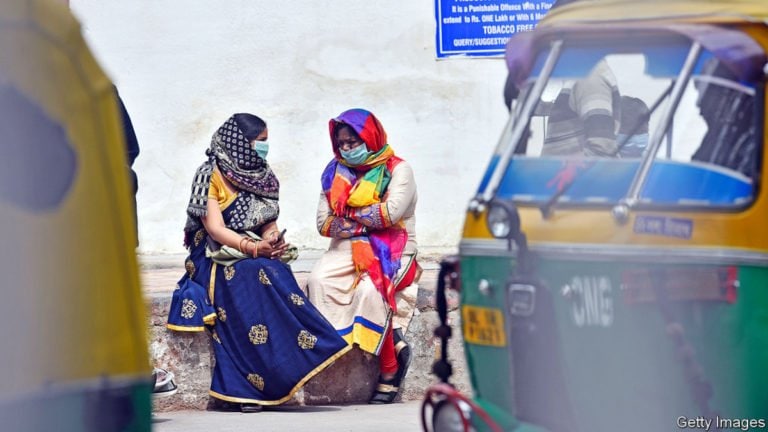
The death toll in Super Cyclone Amphan in West Bengal increased to 72, Chief Minister Mamata Banerjee said on Thursday. Fifteen of the deceased were from Kolkata, she said.
Ms. Banerjee, who met senior officials at the State Secretariat to take stock of the damage, said she had not seen such a disaster in her life. “I haven’t seen such a disaster in my entire life. I will ask the Prime Minister to visit the State and see it for himself.”
She said Union Home Minister Amit Shah had called her up, and she informed him of the enormity of the disaster. She said the impact of the cyclone was so severe that Nabanna, the State Secretariat building, shook.
Deaths were reported from eight districts. South 24 Parganas recorded the maximum of 18 deaths, followed by North 24 Parganas with 17 deaths. People also died in Howrah, Hooghly, Purba Medinipur and Nadia. The deaths were mainly due to the falling of trees, electrocution and the collapse of poorly built houses.
Such areas as Kakdwip and Namkhana in South 24 Parganas and Minakha and Hingalganj in North 24 Parganas were the worst affected by the cyclone, which made landfall near Sagar Island. Damage has been reported from eight districts, but the maximum damage has occurred in the coastal districts, including South and North 24 Parganas. Thousands of ‘katcha’ houses were damaged in the two districts and a large part of the Sunderbans police district was inundated because of the storm surge, which was four-five metres above the tide level.
Ms. Banerjee said she would visit the affected areas after three to four days, once connectivity was restored. “There is no telephone connection and there is no electricity in these parts of the State.” She said the government had set up a ₹1,000-crore relief fund. The government has evacuated five lakh people and kept them in cyclone shelters.
Prime Minister Narendra Modi will travel to West Bengal and Odisha on Friday to take stock of the situation, the Prime Minister’s Office said. “He will conduct aerial surveys and take part in review meetings,” the PMO said in a tweet.
Congress president Sonia Gandhi launched the Rajiv Gandhi Kisan Nyay scheme in Chhattisgarh through video conferencing on Thursday and said this was a true tribute to the former prime minister.
Addressing the launch event on the occasion of Rajiv Gandhi’s death anniversary, she lauded the scheme, saying it will bring a change in the lives of farmers and help them become self-reliant.
“Such schemes should be implemented at the ground level to help bring a change in the lives of people. This is a revolutionary scheme and is a true tribute to Rajiv Gandhi. This is a big step taken in lines with the values of Rajiv Gandhi,” she said.
Former Congress president Rahul Gandhi also lauded the Chhattisgarh government for launching the scheme at a time when the poor and farmers were facing hardships due to the coronavirus outbreak and the lockdown to contain the spread of the disease.
Chhattisgarh Chief Minister Bhupesh Baghel said the Rajiv Gandhi Kisan Nyay Yojana will benefit 19 lakh farmers and help bring more area under cultivation.
He said the aim of the scheme is to help farmers earn more and bring more area in the state under cultivation, which currently stands at 20 per cent.
From the vantage point of radical potentiality of revolutionaries who emerged in the last two centuries, the position of Malcolm X stands out unique. Precipitating the idea of Social Justice, revolutionaries put forwarded ideas and action plans in different manners across the globe, with the goal of liberation and emancipation from oppression of their living hegemonic societies and structures. Malcolm X is exceptional for his distinctive transcending position of projecting Islam as true potential for liberation, among the binary oppositions all revolutionaries had made in his time.
The significance of Malcolm X is that he rises from the heart of the metropolitan disenfranchised poor in the USA and moves out to reach one of the most massively manufactured civilizational other of ‘‘the West’’ in the Islamic world. Moving beyond any conformity and seeking the liberation potential, Malcolm X had changed his positions seeking the real truth. Thus, his revolutionary life was a way forward, comprising different periods, each succeeding ones getting advanced and becoming all-encompassing. Malcolm X carried with him different types of identities simultaneously according to the situations and occasions; still essentially being a proud Muslim, situating himself within (and countering) the hegemonic American empire.
In advancing his ideas and forging an alliance between the disenfranchised and marginalized, he so gracefully and courageously climbs over that dilapidated wall that mercenary Orientalists have constructed between the Western part of their own perturbed imagination and the rest of the world to separate the poor and the working class into the colonially engineered cultures and civilizations.
To understand the life and revolutionary appeal of Malcolm X, one must look into his short but energetic life; and want to understand the meandering positions that he took to the reach or seek the truth. The emergence of Malcolm X from a very unfortunate space, to the position of a world leader in his life time itself, stands out as an unparallel or rare event in the history. By the time that in December 1964 Malcolm X spoke before 500 people alongside the Tanzanian revolutionary Abdul Rahman Mohammad Babu and read a message to the audience from none other than Che Guevara, his stature and message as a global revolutionary had reached a far more embracing horizon than any Muslim revolutionary of his (or any other) time. In February 1965, when he took his revolutionary message to Europe, he spoke for the universality of a global uprising on par with anyone, ranging from Lenin and Trotsky to Frantz Fanon and Che Guevara!
Malcolm was exposed to brutal and violent racism in his early childhood itself, by witnessing his Father’s murder. He was arrested and jailed in his youth while he was a hustler. The prison days was the first breakthrough period of his life, being exposed and attracted to the ideas of Nation of Islam and Elijah Muhammad. After he was released from prison, Malcolm X spent few years transforming the Nation of Islam from its limited, ghettoized, and parochial vision into a vastly popular and increasingly revolutionary movement among African Americans.
A graffiti of Malcolm X in Jamia Millia Islamia, New Delhi, by Sidra Ali and Shibili TKT
Later two encounters marked another crucial moment that amount to a major epistemic shift in his revolutionary thinking: one was his trip to Arab and Muslim world and the other was in meeting with Fidel Castro. These two events, plus the July 1959 broadcasting of television report called ‘‘The Hate That Hate Produced’’ effectively turned Malcolm X into a national figure with a global perspective to his revolutionary politics.
The historic Hajj pilgrimage was the most important event of Malcolm’s life; the epoch-making shift which unraveled the true revolutionary potential of him. His ideas and visions got the wings to transcend the horizons of schisms and binaries and to unravel the true liberation potential of Islam through his words and deeds. The revolutionary potential was far wider and more radical than the ‘Black Muslim Brotherhood’ he was constructing so far. His speech after coming back from Europe tour was titled “Not Just an American Problem, but a World Problem”. Malcolm’s message got rooted in the understanding of Islam as a global brotherhood project promising the fraternity and egalitarianism among all. In short, not only his ideas and words and deeds, but his life itself is a great enlightenment for all who seeks justice and liberation.
Malcolm X with Muhammed Ali
Hamid Dabashi, in his book, Islamic Liberation Theology, rightly sums up; “Malcolm X shed one revolutionary skin after another, reaching out for nothing but a consistently emancipatory project, seeing in Islam not a matter of identity politics but a manner of liberating promises. Islam for Malcolm X was not only a combative occasion, but more as an infinitely liberating, progressive, alive, and living organism. In more than 200 years of encounter with colonial modernity, and literary hundreds of radical Muslim thinkers, no Muslim revolutionary comes even close to Malcolm X in the liberating, global, and visionary grasp of his faith and its place in facing the barefaced barbarity of economic and military world domination.
Perhaps because he emerged from the heart of that barbarity, perhaps because he was the direct target of its most racist ideas and practices – Malcolm X personified the life of a Muslim revolutionary for generations after ‘‘Islam and the West’’ had exhausted its historical calamities.”
My heart travels a thousand miles towards my native land.
My dream intertwines with sadness like a skein of a thousand threads.
Innocent, I have now endured a whole year in prison.
Using my tears for ink, I turn my thoughts into verses.
Ho Chi Minh or Vietnam’s “Uncle Ho,” penned these beautiful lines during his life in a Chinese prison. In 1942, at the age of 52, Ho Chi Minh was arrested in South China, accused of being a communist spy. Bound in leg irons, Ho was shifted from jail to jail for months.
Throughout this time he kept a diary with verses written in Chinese. As his verses echo, his heart always remained in the villages of Vietnam, with the people of his native land who struggled and suffered for generations in the hands of different colonial and imperialist powers.
For the people of Vietnam, he was a messiah who marched them to the promised land of freedom and dignity; for his nemeses, he was a mere Soviet agent with a mysterious life who took the oath to disseminate communism throughout the world. He assumed hundreds of names and ultimately became popular as Ho Chi Minh, or the ‘bringer of light’. The one who travelled across the world as a cook’s helper in a French passenger liner, as a Buddhist monk, as a Comintern agent and finally as the President of Vietnam. Ho was indeed a person with an enigmatic life and his death on September 3, 1969 did not end the fascination of the people to debate over his true political and ideological leniency.
Ho Chi Minh with Vietnamese soldiers
On his 130th birthday, the world remembers him as more than anything else but as the leader of the most successful movement for national liberation in the century, a man who is part Lenin part Gandhi part Confucius and all Vietnamese. In 1908 at the age of 17 when Ho was studying at the National Academy in Hue, a group of farmers marched past his Academy against the colonial government’s corruption and excessive taxation.
Ho translated their demands to French language so that the colonial administrators could read them. Knowing this, the authority expelled him from the school and this event turned out to be the first revolutionary act in the life of a man who led his people to fight the impossible. Later in his life, he travelled across the ports in Africa and Asia including the countries like Senegal, India, Algeria, and Morocco, experiencing the colonial oppression in these countries, and these had a deep influence on his views. This journey in pursuit of ideas for liberating his people took him to the United States, France, and with great admiration for Leninism, he finally reached the Soviet Union where he learned the craft to turn the communist ideas and rhetoric into revolutionary act.
It took almost thirty years for him to return to Vietnam, armed with the revolutionary ideas and a mind full of determination, and ultimately to lead his people to liberation. After years of armed conflicts and the guerilla war against the French, in 1954 when Việt Minh (national independence coalition formed by Ho Chi Minh) defeated the French troops, it was for the first time in history a European country was defeated by its colony since the American Revolution.
Later in 1975 when the U.S. was forced to withdraw its troops from Vietnam after the defeat from the communist forces, for them it was no longer the fight against communism but humiliation, a war which they terribly lost against a small country guided by the wit and wisdom of a Man.
As a communist leader, Ho Chi Minh had his own distinctiveness that cannot be matched with any other communist leader, whether it is Mao Tse Tung or Joseph Stalin. The Marxist ideology of Ho was more of an amalgamation of Leninist principles with Confucian ethics and the French revolutionary trinity of liberty, equality, and fraternity. In fact, when he read out the Declaration of Independence of Vietnam in 1945, he even quoted from the American Declaration of Independence – “All men are created equal. They are endowed by their Creator with certain inalienable Rights; among these are Life, Liberty, and the pursuit of Happiness.” His life was a journey in search of ideas that would equip him in his fight for the liberation of his people against some of the world’s mightiest nations, and he was open to all the ideas that would help him in this quest for freedom.
Nikita Krushchev, Mao Tse Tung and Ho Chi Minh
Ho was a scholar who wrote in different languages from English, French, Russian, Chinese to the native Vietnamese. He wrote many works such as, “The Way to Liberation,” in which he explained his ideas on the theory of the revolution of liberation and “Guerilla Warfare”, which described the principles of fighting methods of armed forces in times of rebellions, the structure and characteristics of armed forces, etc. But during the war of liberation, Ho spent most of his time interacting with the peasants, living like one among them rather than spending a lot of time in theorising and correcting the ideology. He was more of a pragmatic person than a theoretician in contrast to many other prominent revolutionary figures of his time. This made many scholars and even his contemporaries to consider him as a mere practitioner rather than a revolutionary theoretician. But Ho was never bothered in this distinction, in fact, to an interviewer who once asked him why he had never written an ideological treatise, he simply replied that ideology was something he would leave to Mao Tse Tung.
Even though Gandhi never had any direct influence on Ho Chi Minh, he was often compared with Gandhi for his strong emphasis on ethics and simplicity. On one occasion, he even said, “I and others may be revolutionaries, but we are disciples of Mahatma Gandhi, directly or indirectly, nothing more nothing less.” In Moscow, during the time he worked for the Comintern there he met and interacted with the Indian communist revolutionary M.N. Roy.
Jawaharlal Nehru and Ho Chi Minh
He always maintained a very amicable and warm relation with India. In 1954, after the victory of the Vietnamese forces over the French, Nehru was one of the first foreign dignitaries to visit Vietnam. Later in 1958 Ho visited India in an 11-day State Visit and this opened a new chapter in India-Vietnam relations.
In his last testament, Ho Chi Minh wrote, “In our patriotic struggle against American aggression, we may indeed have to endure greater difficulties and consent to new sacrifices, but we are bound to win total victory. This is a certainty. I intend, when that day comes, to tour both the North and the South, to congratulate our heroic compatriots, cadres and combatants, and to visit our beloved old people, youth and children. Then, on behalf of our people, I will go to the fraternal countries of the socialist camp and the friendly countries of the whole world and thank them for their wholehearted aid and support for our people’s patriotic struggle against U.S. aggression.”
It took almost six more years for Vietnam to win its war against the U.S. after the death of their great leader, but in the last testament to his people, he was certain about that victory.
In the time of Colonialism, Imperialism, and Capitalism, it is this determination that inspired the people who struggled and suffered under the mighty nations to rise against inequality and injustice.
Finance Minister Nirmala Sitharaman today derided Rahul Gandhi’s move to meet migrant workers camping at a flyover in Delhi as “dramabaazi” and said the Congress should “be more responsible” while targeting the centre on migrants in distress because of the coronavirus lockdown.
“Instead of wasting the time of migrants and sitting with them, walk along with them and carry their suitcase. In Congress-ruled states, request for more trains so that more migrants can reach home. They call us dramebaaz. What about yesterday? That is dramabaazi,” Nirmala Sitharaman said at her fifth press conference to share details of an economic stimulus package for various sectors hit by the virus crisis and weeks of lockdown.
“Let us deal more responsibly with this issue – this is my humble request to Sonia Gandhi,” said Ms Sitharaman.
Rahul Gandhi on Saturday evening went to meet migrant workers camped out near a flyover in Delhi’s southeast.
This was hours after the Congress MP urged Prime Minister Narendra Modi to “reconsider” the government’s Rs 20 lakh crore coronavirus package and ensure direct cash transfers to stranded labourers and poor farmers, who are among the worst affected by the COVID-19 crisis.
In photos circulated on social media, Mr Gandhi can be seen wearing a face mask and sitting on the pavement as he talks to a small group of migrant labourers, some of whom were walking back to Uttar Pradesh and others to Madhya Pradesh. They had already walked 130 km from Ambala in Haryana.
The lockdown, which brought almost the entire economy to a standstill, left lakhs of migrants and daily wagers without jobs, money, food or shelter. And, with public transport shut during the lockdown, they had little choice but to walk hundreds of kilometres home.
Many have died in accidents or from hunger and exhaustion before they could reach home.
India recorded the highest single-day spike in Covid-19 infections with 4,987 new cases in the last 24 hours as the national tally crossed the 90,000-mark on Saturday, according to the Union health ministry.
The jump in the number of Covid-19 cases comes on the last day of the third round of the lockdown, which was first imposed from March 25.
It is scheduled to end on Sunday night and the norms for the next round would be announced before that.
As of 8am on Sunday, the cases in India stood at 90,927, the number of deaths at 2,872 and the number of those recovered at 34,108.
Maharashtra, Gujarat, Tamil Nadu and Delhi have three out of every four cases in the country. Maharashtra reported 30,706 cases and 10988 followed by 10,585 in Tamil Nadu. The national capital has 9,333 cases.
The health ministry has told the government that 30 municipal areas, including Mumbai, Delhi and Kolkata which account for nearly 80% of India’s coronavirus cases, should have the maximum restrictions under lockdown 4.0 ground rules.
Congress MP Rahul Gandhion Saturday said an economic storm faces India, and the Rs 20 trillion package of the government would fail to fire the country’s economic engine as it does not put money into the pockets of the people. He appealed to the prime minister to “reconsider” the package.
In a video conference, Gandhi said the package was disappointing as it addressed supply side issues when the need is to spur demand and consumption.
He said the government should have put money directly into the pockets of farmers, migrant labourers and small businesses, but it is worried more about fiscal deficit and country’s credit ratings by international rating agencies.
Gandhi said any rating would be meaningless if Indian Economydoes not restart, and that can only happen if money is put into people’s pockets. “It will be catastrophic if we do not. It will overshadow the (damage by the) disease,” Gandhi said.
The former Congress leader indicated the Maharashtra government, of which the Congress is an alliance partner, could have handled the migrants crisis better.
Gandhi said his job as an opposition leader was to create pressure on the government, and that is what he is trying to do with his critique of the package. He said hopefully the government would listen to the opposition, take corrective measures and put money into the hands of the people.
In his recent press conferences, Gandhi has spoken of providing constructive opposition, and that this was not the time for finger pointing. “We are in the opposition and can choose to create pressure on the government either with hatred, or with warmth,” Gandhi said. He said his approach is the latter.
On Maharashtra’s handling of the crisis and whether he is putting pressure on that government as well, Gandhi said there is a difference between a Congress-run government and an alliance government. He said he cannot put the kind of pressure on an alliance government that he can on a Congress government. He said Congress governments in states like Chhattisgarh have been aggressive in helping migrants, farmers and poor by putting money in their pockets.
However, he said all state governments, including those run by the Bharatiya Janata Party, have complained that the Centre is not providing them with enough funds. He said the strategy of the centre should have been decentralized, to be a manager and let states be at the forefront of fighting this battle.
On the package, Gandhi said this was a time for the government to be like a mother to its people, to provide help and money to the hapless migrants walking hundreds of miles, and to the farmers. Instead, the government has behaved like a moneylender by announcing credit, he said.
“Bharat Mata should not become a moneylender to its children. Our farmers do not need credit, they need money,” he said. Gandhi asked the PM to reconsider the package, increase MNREGA work days to 200, adopt a minimum income scheme and transfer money directly into bank accounts of the poor.
“I have heard the reason for not giving money to people is the government’s worry that an increased fiscal deficit would downgrade India’s ratings by international rating agencies,” he said.
Gandhi said he would suggest to the government to not pay heed to the ratings at the current juncture, which would be fine if India’s workers and farmers start working. “Make policies with India in your mind, not what foreigners would think,” he said.
It was not only me who got shocked before four days, hearing the stimulus financial package of 20 lakh crore, pursued by the Prime Minister Narendra Modi. What made me ponder was the way the government has overcome their anxiety over financing a jumbo package in the last 45 days.
And still, I believe that nothing miraculous happened for the last one week for having ultra-confidence in the fiscal position of the nation. But, the explanation, given by finance minister, Nirmala Seetharaman in the last three days clearly explicates that there is no much sign of a stimulus package but boosting the confidence of people. Even though there are some good initiatives, especially in terms of farmer’s protection and tax cuts, it cannot be considered as a realization of the farmer’s struggle during the pandemic.
In reality, the nation has realized that the Gdp can only be increased by agriculture and MSME sector. Great thing! First of all, it is vital to understand what a stimulus package is meant for? It is a Keynesian idea to survive from the recession period through government spending. The prime motive is to increase aggregate demand through employment creation, direct spending and investment. Both monetary policy and fiscal policy can be used to meet this need. If monetary policy does not work, the nation can think about further quantitative easing by borrowing financial assets. In such a realm, how much the stimulus package announced by Nirmala Seetharaman will afford these prime objectives? The tax cut, fund of fund scheme to MSME and direct food distribution to migrant workers will definitely have some positive effects to the economy. Else, what can we count in tandem with direct spending of government or interest cuts in loan payments which are actually the cornerstones of a stimulus package?
Primarily, it feels happy that the nation has started to think positively to explore the opportunities provided by the COVID pandemic in the global scenario. The upliftment of MSME and creating demand through liquidity is, indeed, the best option to enhance a better financial position after COVID. The theory is clean and the question is how, when and where the plan will be executed?Giving confidence in the mind of investors and micro, small and medium entrepreneurs is very important to overcome a recession.
As most of the policies are done via bank loans without having any interest cuts and giving full credit guarantees to banks, it is clear that the prime motive was to boost the confidence of people and banks. But, the aggregate demand will not rise until the consumption side is well addressed. Thus it is vital to have money in the hands of the poor. Without having such government spending, the endeavor to gear the confidence of MSME’s and farmers will not work with an interest-based loan avenue. What actually is in need is an increase in government spending through direct payments to poor and interest-free loans. What actually the government thinks in pooling the cash flows is what I better call as miserliness and serfdom to corporate politics.
Finance Minister Nirmala Sitaraman
A month before, the Research Institute of Economy, Trade and Industry conducted research under the leadership of Hiroyasu Inoue and Yasuyuki Tado on how the lockdown will affect the supply chain of a nation. The study was titled ‘The propagation of the economic impact through supply chain crisis: The case of a megacity lockdown to contain the spread of Covid-19’. It clearly delineates that a nation can’t overcome the supply chain crisis unless it provides possible measures to end the lockdown and fear of the people. Numerically, the count of COVID patients in India is rising in a multiplier effect and the government has not taken any sufficient financial measures to maintain the health of the people, and help them fight against COVID.
Apart from motivating people through Video conferences, what a ruler of the nation has given to those who struggle against COVID. Here, it feels humorous that the so-called duty is fully entrusted in the State government and they have not even given any financial aid to meet their requirements. More sarcastically, the onus of caring for the long walking migrant workers are entrusted in state departments, while the finance minister keeps mum about how the long walking can be stopped. We can’t even think about an economic boost up through MSME’s unless the fear of the people gets lost. Negating their need for basic essentialities, how can a nation be able to think about the future pillars of growth?
What was the motive behind this package? What will be the intention for giving priority to aid Micro, small and medium entrepreneurs? During the last 30 days, economists like Abhijit Banerjee, Raghuram Rajan and Amartya Sen were reiterating in national media about the need of aiding the poor and motivating the MSME. In addition, the interview of opposition leader Rahul Gandhi with Raghuram Rajan added more pressure on the government to have a budget proposal on so-called areas.
Moreover, the realization that the nation cannot move with corporate funding also compelled them to do. It was just before a month the economic advisor of the Prime Minister, Aravind Subramanian wrote that the nation cannot afford a financial package of more than 5 percent of GDP, like what has been done in the other nations, as the country is not in a condition to maintain the inflation and price hikes. Paradoxically, now the package becomes possible(In only numbers).
Despite a proposal of 10 percent GDP of the nation, honestly, we can say that the government is only raising a 3 percentage and the remaining 7 needs to be addressed by the banks and solved by some other exclusion in payments. Sarcastically, the100 percentage credit guarantee to Banks and NBFC is happening in a nation where the government continuously failed in dealing with the bad debts. The 4-year loan with a 10-month moratorium does not seem fair unless the government gets rid of accepting interest even after the period. This will not happen as it cuts the credits to the government.
As the government is seeking so much of pride in accrediting the achievements of Adhar and other Jan Dhan accounts, what if the nation directly transfers the fund to MSME through the so-called accounts. Thus, the way the government is having the proposals with huge amounts is nothing but a smoke screening.While counting the five pillars of growth both the Prime minister and Finance minister failed to note the health of the nation. Economic policy is not only a mere economic boom but also welfare-oriented.
The slogan of Atma Nirbhar(Self-reliance) will not fructify unless the nation ponders about some packages to aid the state governments who are engaged in COVID fighting. The nation can’t surpass the supply chain crisis unless they overcome the lockdown limits. The nation can’t even think about an MSME boom unless they win in providing a fearless platform to work.
In a blindly offered 5 trillion economy, nothing will be going to happen than some dream proclamations and funding boomerangs.
It is already past the day we were supposed to say goodbye to our friends and the “Pondy” life, if not for the microscopic villain who brought us into this house arrest. I can try really hard to summarize to outsiders what I meant by “Pondy” life but will probably end up with only a leaky pipe line. It was Alice’s wonderland; it made more sense as it made no sense. A strange concoction of languages, cultures and lifestyles.
It feels like 2019 ended and someone pressed fast forward to this strange, unprecedented era. The time in-between can only be recollected like a confusing dream. Our usual drama, drums and dance, the freedoms of 3AM, poetic exchanges with the beach and political tea times perspired in the necessity of a fight. 2020 kick-started with the smoke and fire of CAA, creating an unrest unlike anything we had ever seen before or engaged in. It was a grand political awakening for so many of us who hardly found time to look outside the books. However, it was illuminating to witness something fundamentally evil and prejudicial making us a singular power, joined in efforts to uphold the pillars of secularism, chanting against all unjust forces. Nothing seemed to be a threat anymore as we stood together (how ironical in today’s scenario). Even as that heat began to subside, our young politically charged minds kept fighting in face of other adversities that came by. The most promising minds left lectures to join protests and raised their voices.
Illustration: Meraki Artport (@meraki.arts__)
Clearly we were already derailed from our usual peaceful routines when the world slowly knelt before a pandemic and media appeared hijacked by the virus. There was scattered agony as other Universities started sending back their students. Soon the chaos came for us too. We saw each other complaining about flight fares, crying on the lost time, worrying about unfinished work and contemplating the lack of solace each of us are bound to experience at our respective shelters. This place had become our home.
The story after reaching our camps differs for each of us, but I will try to put together a picture with all the inclusivity I can afford. As a psychology student I have personally received several calls and texts from confused friends. The uncertainty surrounding the situation had pushed us to limits. Many faced a drought in productivity and started panicking, unable to realize where it is going wrong. It was hard to help them understand while I experienced it myself. Though the reason was no hard riddle. We humans maintain mental stability by deriving meaning from a sense of continuity that life offers us. And when it is lost, we become lost. Things that kept us going had already turned unstable; we thereby moved to question all effort we invested.
When it comes to understanding humans, objectivity stands no chance against relatability. So I will now take you through the stories of some of my friends, like one of those movies with parallel plots where I hope the characters meet again soon. S, H and N will represent at least some of us. They are final semester students from different departments.
Home is a safe haven for many of us, but not for S. It is the place to which almost all of her most disturbing memories are attached to. She grew up with the bgm of loud shouting and breaking vases. Each day she relieves the pain from a past time, an uncomfortable grip on her hand as she tries saving her mother from a hit. She wakes up drenched in the nightmare of her reality, struggling to get off her bed. She constantly misses the deadlines of her new online schedules. As days pass by, it becomes harder for her to keep hoping for anything better.
N used to be lucky. She had pocketed a job through campus placement. Financial independence was her dream. N believed it would be her deliverance from an uncomfortable fate of arranged marriage. But the future lost promise when the economy fell. Her company was already found laying off staff. N’s conservative family does not allow her to talk to her friends who she usually confides with. She is tired of fighting the double standards set for her and brother at home.
H hails from a financially unstable family. His intelligence was only questioned by his own anxiety. But right now he is trying to process the possibility of a full-stop to his education and career. His father is not earning anymore, the ends hardly meet. He has panic attacks thinking of all the negative turns his life could take. His family has not seen him like this, they feel worried about him, but are helpless.
Photo: Krishna Devan
There are thousands of more such stories among us, continuing heard or unheard.
PU comforted all of us who came there with different dreams. It proved to us that life is enjoyable with a sweet-sour lemon tea. It helped us look at stars and draw out constellations of possibilities. Now that it has come to an abrupt break, we are lost in a limbo. As of now a saudade paints my waking hours grey. In the little bit of color that seeps in then and now, I dream of going back to my wonderland.
(Niranjana is a final semester MA Applied Psychology student in Pondicherry University)
New Delhi: After Circus and Fauji, Doordarshan is all set to re telecast another one of Shah Rukh Khan’s old shows – Doosra Keval, a 1989 television serial that featured the actor in the lead role. Amid the ongoing lockdown, Doordarshan is catering to its audience’s nostalgia by bringing back golden oldies such as Ramayan, Mahabharat, Byomkesh Bakshi, Shriman Shrimati, Buniyaad and Shaktimaan. Now, the channel announced on their official account that they will soon re-air the 1989 classic: “Coming soon – Doosra Keval starring Shah Rukh Khan on DD Retro.” In Doosra Keval, directed by Lekh Tandon, Shah Rukh Khan played a double role.
The show featured the actor as a village boy named Keval, who moves to city to pursue higher studies but never returns to his village as he dies while trying to stop his friend from becoming a terrorist. The show was named Doosra Keval because in the later half, when Keval’s mother and sister (played by Vinita Malik and Natasha Rana, respectively) recall their memories of him, his lookalike (also played by Shah Rukh Khan) appears at their door. They both eventually accept him as the second Keval. The show also starrerd Arun Bali.