Hyderabad: Even as the Centre directed the States to arrange trains to transport migrants, more than 200 of them have begun to walk towards their homes which are as far as Jharkhand, Bihar, UP from Tolichowki, Hyderabad.
On Saturday night, over 250 workers met the police at Limra check post and demanded that they be sent to their native places but the police turned them away. Further, a few of them were allegedly beaten by the police.
Srinivas, who is an officer on patrolling duty in the area said, “We have asked them to stay where they are as the Telangana government has allowed all construction work to restart and hence, told them that they need not panic.”
Upon speaking to the migrant workers, one of them said “We have not received food, ration or any help during the last few days and we have exhausted all our savings during the lockdown.”
In a GO dated April 29, the Telangana government stated that construction work and a few selected industries would be allowed to function in rural areas only but many of the daily wage workers who belong to unorganized sector, were employed by private contractors in the city, where the order isn’t applicable.
The migrant workers said “We do not want to ask for food anymore as we don’t receive it anyway. We want transport to be arranged to go back to our villages.”
Down the memory lane, Kozhikode city has always been a special destination in the month of Ramadan. The city is celebrated as one of the prime locations in Kerala state for its hospitality and local cultural advancement. Ramadan has been a celebration of food, love, fraternity, charity, and spirituality for all walks of people in the city. The nights are turned into days; the city enjoys many passionate faces and loving friendships on the beach sides or at a coffee shop and restaurants.
Due to the outbreak of Covid-19, the colourful Iftar gatherings were stopped in Kozhikode. The city had always been a hotspot for hosting the best iftar parties in the state for many years. Either you are a foodie or fond of tasting a variety of foodstuffs, Kozhikode is the best destination, especially in Ramadan. Evenings during Ramadan in Kozhikode come alive as cooks with pushcarts fry up a rich range of snacks for enthusiastic, hungry crowds. Kozhikode beach on a Ramadan evening is calm, but the people are curiously agog.
As the skies darken, several pushcarts line up slowly. Sarbath bottles and pickle jars are brought out, and stoves are lit to brew Sulaimani, black tea. Dark green mussels caught from the sea earlier in the day are stuffed with rice flour mixture and lowered into a pan of sizzling oil. Within minutes, the glass jars kept on the carts are filled with onion pakoras, kallumakai (stuffed and fried mussels), kada mutta (spiced quail eggs), and mutta patani (scrambled eggs and green peas). With it, a wave of hungry people storms in to the beach-side and shacks to break their day-long fast. Restaurants lay out a display of iftar specials, including the customary thari kanji (porridge made of semolina) and kulukki sarbath. The next to come is a variety of pathris like irachi pathri, athishaya pathri, and chatti pathri, which are layered pancakes made of maida and egg, sometimes stuffed with minced meat or sugar and coconut. Now Kozhikode beach is empty and food vendors are rarely seen.
One of the not-to-be-missed destinations while exploring iftar in Kozhikode is Adaminde Chayakada that serves over a hundred varieties of predominantly non-vegetarian dishes. With a kitschy façade and experimental street-smart recipes, the place is a favourite spot among food lovers. Even the names of the items are funky. For instance, chicken pottitherichathu (meaning ‘blasted chicken’) is a batter-fried chicken but has become the highlight of the iftar platter due to it’s interesting name. You can pick a bamboo muram (winnow), load it to your heart’s content, and unleash the glutton in you. Kuttichira is another place to be during Ramadan. There is a food street here that serves up special Ramadan items; new shops and dishes crop up for the season. You must try a dish called kilikoodu, which translates as “bird‘s nest” – a preparation made with the egg that has been beaten into a batter containing potato, vermicelli and onions, and fried further.
These are sweet memories of anybody who once witnessed Ramadan life in Kozhikode. All the celebrations in Ramadan 2020 are limited at homes and flats only. The believers moreover depend on homely food and serve it among the family members. Having no guests for iftar is the very rare experience for the people in Kozhikode. No barriers of religion, caste, and so on for sharing love and friendship in this city. For many years many non-Muslims in Kozhikode are fasting in the month of Ramadan enlightening the plural fraternity of a harmonious brotherhood among the different sects of the people. Spiritual gatherings are set up online and religious leaders lead many regular Ramadan broadcasts and programmes so that hundreds of families at their homes participate. Charity activities reaching out the poor people are also less comparatively compared to the previous years.
Fighting Covid-19, the believers in Ramadan strictly follow government’s recommendations and keep social distancing. Masjids, the centres of spiritual programmes in Ramadan are kept empty and have cancelled all social gatherings. As the central government has extended the nationwide lockdown, put in to contain the Covid-19 outbreak, by two more weeks, Kozhikode city has been in the orange zone so that it is expected that the whole Ramadan life this year will be restricted.
Today on Satyajit Ray’s 100 birth anniversary, when the entire world is writing about him and praising him for the art he created. I don’t really know what an aspiring filmmaker like me can write about him. Because obviously I do not have anything new to offer, other than my personal experiences of watching, reading and getting inspired from his works.
Rabindranath Tagore and Satyajit Ray are the two names (and their works) of utmost importance when one belongs to a Bengali household. In spite of being brought up in a Bengali family that was not very much the case with me. I grew up in a small town of Chiplun in Maharshtra, kilometers away from West Bengal in terms of distance and culture. My early exposures to Ray’s works were probably my mother singing the Rabindrasangeet from his movies. Be it his Phule Phule Dole Dole (known as The Swing scene) and Ami Chini Go Chini from Charulata or Bhidhir Badhon from Ghare Baire.
I remember mother singing these songs while doing her household chores. Thus, the cultural dissemination of works or Tagore and Ray happened hand in hand. It was only a little later when the first laptop came into our house, I watched the films of Ray for children (I must have been 11-12 then). I remember watching Goopy Gyne, Bagha Byne, Hirak Rajar Deshe and off course the train ride to Sonar Kella. Watching those graphics of Goopy Gyne, Bagha Byne in the song ‘Bhooter Raja Dilo Bor’ gave me such a thrill in those days. It was only later after studying film making that I understood the magic behind creating those images on screen in our cinematography classes.
Still from Bhuter Raja Dilo Bor from Goopy Gayne Bagha Bayne
Later when I read the stories of Feluda, Professor Shonku and all his magical stories in ‘Indigo’, I used to wonder how this one person came up with all the multiple stories and characters. In days when I was confused about my roots if I was a Bengali or a Marathi, I remember watching ‘Teen Kanya’ and ‘Pather Panchali’ in a small gathering where many of my Marathi friends had gathered to watch world cinema.
I remember feeling so proud that I was the only person in the room who didn’t need the subtitles. I somehow felt proud to be a Bengali after watching his films. Eventually when the interest in studying films increased, I watched his other films. I read ‘The home and the world’ and ‘The broken Nest’ both by Tagore on one such summer vacation after which I was driven to watch both the films ‘Ghare Baire’ and ‘ Charulata’. Both the characters of Charu and Bimala appealed to me immensely. Women like Charu and Bimala were absolutely fearless and did not want to stay within the boundaries that the society had drawn upon them.
These were the women I had had rarely gotten to see on screen before. Again the writing of Tagore and direction of Ray created magic which marveled me more than anything. It was only later after joining film school, I watched more of his films to study the art of film making. Last vacation when mother went to Kolkata, I remember telling her to bring me any Satyajit Ray (film) related book and what my mother got for me put me to surprise even more. She handed me over the ‘Travails with the Alein’. It was such an excitement to see his drawings and writing all there in that book.
For me Satyajit Ray has always been one such figure that has made me proud of my culture and more importantly has given to tremendous hunger for good literature and films. He brought me close to Bengali culture through his films and stories. Even today because I can’t read Bengali, I find comfort in the audio stories of Prof. Shonku and Tarini Khuro on Radio Mirchi in Bengali. I might not be someone who is his biggest follower and neither do I claim to have watched all his films, but for a Bongashtrian (born in Maharashtra and raised a Bengali) like me, who has always been confused about the cultural identity, his works definitely provide the much needed solace.
During the pandemic days, while everyone is together in fighting covid-19, the police forces in Jammu and Kashmir are engaged with the witch-hunting of journalists in the valley. While the national media is trying to mislead the world by hiding all the sufferings of people after the scrapping of article 370 from the rule book, it was some of the Kashmiri media who showed up the courage to expose the realities to the world. News channels like BBC, The Wire and The Quint had telecasted the scenario of Kashmiri people as original reports from the valley. It brought a huge impact on international perception on the question of Kashmir against the Indian state.
Recently, Masrat Zahra, a Kashmiri photojournalist, has been booked under UAPA and various sections of Indian Penal Code (IPC) for allegedly posting ‘anti- national’ facebook posts. She has been working as a freelance photojournalist since 2016. All of a sudden she was asked to be reported before the Srinagar cyber police, last Thursday. ‘Why Zahra?’ is not a complicated question if one sees her photographs. She was one of the few brave journalists who spoke to the world through the photos that she captured from the hot realities of Kashmir. Each of the photos she shot were important to understand the ‘oppression’ that Kashmiri people are going through. And this provoked the Indian Government, obviously. “What I posted on Facebook are my own photos which have already been published in international media. I have done nothing illegal other than my work. This is part of my job,” she says on her Facebook account.
In Kashmir, an empty bed signifies a life lost; A rebel’s funeral. Photo: Masrat Zahra
The alleged ‘anti-national’ photo is of a Kashmiri family mourning the loss of a baby boy in police firing. The picture which she shared on Facebook on 18th April is also a remarkable one. In that picture, a woman named Arifa Khan Is weeping with the blood stained dress of her husband in hand. Her husband Abdul Kadir Sheikh was shot dead by the Army. ‘I can’t stop my anger’ was the caption of the picture. This is the only common sentiment of the people in the valley, that’s what all she said and did. Also police posted a photograph by Zahra from her Instagram account in September 2018, showing protesters holding a poster of Burhan Wani, the Hizbul Mujahideen commander who was killed in an encounter before he was labelled as ‘Shaheed Burhan Wani’ in which the description of the picture duly reflects that and it took more than a year for the police to decide whether this picture deserves a penal action.
This is a perfect example that when the state determines to lock down someone who is a threat to it, it goes to any limit or makes new descriptions to cover the press meet Along with her colleagues, Peerzada Ashiq and Gowhar Geelani, both are from The Hindu Srinagar bureau. Birsa Ashiq’s news report was about the family members of two diseased militants whose bodies were dis-owned. Both of them were killed by the army in an encounter at ‘Pairoo Keegum’ in ‘Shopian’ on April 17, but their bodies were withheld and buried in Baramulla district in North Kashmir, away from the family. The explanation of the police about this case makes me wonder, they say because of the funeral of Jaish militant Sajjad who was killed earlier gathered by thousands of people despite the lockdown of Covid19. In the fear of people gathering for the funeral of this person leads them to take away the body to Baramulla. Police authorities were making senseless justification to deny the body to the family.
Masrat Zahra, Peerzada Ashiq and Gowhar Geelani
In this case, families of the militants had wrongly conveyed to Ashiq that the police had given them permission to unbury the bodies. Ashiq investigated himself, and called the ‘Shopian’ magistrate to cross-check the claim, only to be ignored without any response. The press release by the police says that the news was published without any confirmation from the district officials. Along with her, journalist Geelani was also arrested for protesting against ‘Masrat’ Zahra’s arrest. Anyhow, this made a shock to the journalists in the valley because he was booked under various laws meant to be dealt with terrorism.
For 145 days, Kashmiris had no internet. It had sabotaged public life and put the common people in trouble. The removal of Article 370 and the restrictions thereafter continue to exist in Kashmir. The government tries to hide one lockdown by another lockdown.
Even in this time of coronavirus pandemic, journalists in Kashmir have been called to the police stations, leaving them mentally disconcerted. These days it’s disheartening to note that the cyber units and IT cells closely monitor every sentence what the journalists are telecasting: a situation very similar to when the country declared national emergency. A first-hand denial of article 19, freedom of press, is blatantly happening in the valley.
Delhi Minorities Commission chairman Zafarul Islam Khan was on Friday booked under sedition charges and allegedly promoting enmity on grounds of religion by Delhi police cyber cell, 2 days after his tweet post which led to an uproar on social media.
The FIR was registered on a complaint by a south Delhi resident at ACP Safdarjung office. Joint commissioner of police (special cell) Neeraj Thakur said that a first information report (FIR) has been registered against Khan under Indian Penal Code sections 124 A (sedition) and 153 A (Promoting enmity between different groups on grounds of religion, race, place of birth, residence, language, etc., and doing acts prejudicial to maintenance of harmony).
Khan, on Thursday apologized for his tweet saying it was “ill-timed and insensitive” in view of the country facing a medical emergency due to the coronavirus outbreak and that it had “pained some people” but it was never his intention.
In his complaint, the Vasant Kunj resident alleged that on April 28, Delhi Minorities Commission chairperson Zafarul-Islam Khan made a social media post on Twitter and Facebook and the contents of the post are “provocative, intend to cause disharmony and create the rift in the society.”
It also mentioned the name of a fugitive offender against whom a red corner notice has already been issued by Interpol on the request of Indian authorities, which have booked him under Unlawful Activities Prevention Act (UAPA), money laundering and terror-related cases. He has praised the man among others, says the complaint.
Khan had posted a message congratulating Kuwait government on micro blogging site for taking stand against increasing Islamophobia in India. A delegation of BJP legislators on Thursday met Lieutenant Governor Anil Baijal and demanded the removal of Khan from the commission post.
Khan congratulating Kuwait in his post wrote, “The bigots forgot that Indian Muslims enjoy huge goodwill in the eyes of the Arab and Muslim world for their services over centuries to Islamic causes, excellence in Islamic and Arabic scholarship, cultural and civilisational gifts to world heritage. Names like Shah Waliullah Dehlavi, Iqbal, Abul Hasan Nadwi, Wahiduddin Khan, Zakir Naik and many others are respected household names in the Arab and Muslim world”.
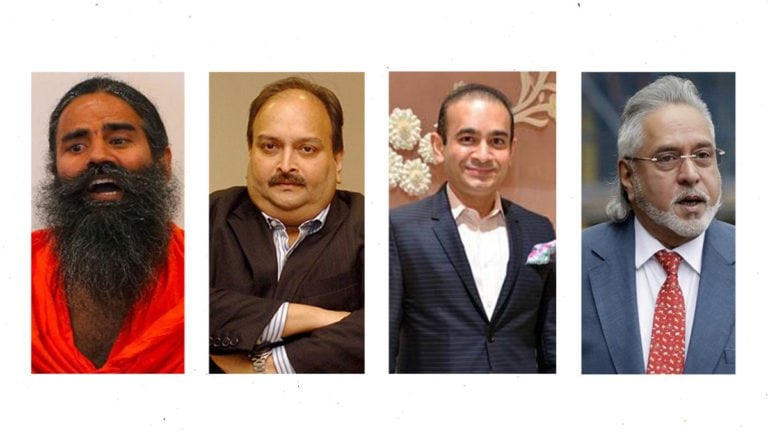
It was not at all shocking to hear that 68,607 Cr worth bank loans have been written off in India, which includes the debts of multi-billionaires like Mehul Choksi and Nirav Modi. Even though, the opposition leader Rahul Gandhi once asked to have the list of top 50 bank defaulters in India on March 16, 2016, that was refused by the ministry to disclose the names of willful defaulters. Despite the reiterating stories of writing off bad debts, what makes this special, is the way it treated in a pandemic period, where people face high economic problems.
Apart from being engaging in correcting Rahul Gandhi in his mistake on mentioning the matter as waived off instead of written off, it will be fame to disclose how much written bad debts have recovered by the reserve bank in Modi Regime. Apart from an auction story of nearly 400 Cr of Nirav Modi and a bitter legal action on Mallya, how much we have to believe in current proceedings
Moreover, it is important to notice the fiscal deficit of the nation rising to 4 and the GDP growth rate falling to 4. Here, it is also important to analyze the theoretical aspect of bad debts and how the BJP-led government has treated it in their ruling period.
संसद में मैंने एक सीधा सा प्रश्न पूछा था- मुझे देश के 50 सबसे बड़े बैंक चोरों के नाम बताइए।
वित्तमंत्री ने जवाब देने से मना कर दिया।
अब RBI ने नीरव मोदी, मेहुल चोकसी सहित भाजपा के ‘मित्रों’ के नाम बैंक चोरों की लिस्ट में डाले हैं।
It was in 2015, the former RBI governor Raghuram Rajan handed over a letter to the prime minister of India, stating the importance of handling bad debts in the nation. On 24th April, a detailed report was published by Hindustan Times, commenting on the matter inside the letter. By understanding its relevance, The Wire again provoked its importance in October 2018 through an article titled ‘Rajan Handover the letter to Modi’. The national media hardly questioned the way of the journal which named Narendra Modi as the receiver of the letter. Upholding the advice of the estimate committee that there are chances for having the letter to Manmohan Singh where he (Rajan) was the Governor of RBI during his regime, the Wire.in slightly changed the title as Prime minister instead of Modi. But after a month itself, the prime minister’s office declared that the letter was to Narendra Modi itself and it was in 2015. Thus, we have no way to get regret of government policies on bad debts, as it is their way of crony capitalism.
In the letter, Raghuram Rajan informed about the top ten defaulters, which further delineates the way banks and CBI dealt with looting scams. Moreover, the data well exemplifies that around 60 percent of bad debt belonged to 20 people. Even though the government was asked by the Reserve bank to have sufficient answers to this problem, till now it wasn’t given any sort of importance. Unjustly, the government has further endowed financial aid to the so-called culprits.
Former RBI Governor Raghuram Rajan
Bad debt is the cost that a business entity incurs when they went uncollectible for a credit which was previously extended to a customer. Bad debts are a contingency that should be accounted by all entities who engage in credit options, as there is a high risk for getting their payment not received. Thus it is important to a nation, who already relies on reserve bank for financial aid to meet their fiscal deficit, to think well about writing off the debts.
Bad debt is a natural result of the banking sector and it should be covered well by capitals and reserves. There are high chances of a financial crisis through rising bad debts as it belongs to the cyclical financial process. The rise in lending will create huge demand in the market and it will result in a hike in the production sector. But, whenever this demand was badly affected by some external factors, the extension of loss will be high.
During 2006-08, India marked a higher level of growth and the overestimation of RBI resulted in a huge amount of lending and this resulted in the great financial crisis. The prime cause of writing off bad debts is the inefficiency of banks and defaulters in managing the risk. But here, the notion is to imbue the bank to waive the debts for preventing the fusion of state and corporates. This model of crony capitalism is having its high execution during the Corona pandemic as it may not get noticed by the people.
Baba Ramdev, Mehul Chowski, Nirav Modi and Vijay Mallya
Sarcastically, it will be vital here to quote the words of former Reserve Bank governor VV Reddy. He said “I am happy as Reserve Bank is independent. Moreover I am also happy that the finance ministry has given me permission to pursue the so-called sentence”. The words demonstrate how far the Reserve bank is doing serfdom to the government. The resignation of Raghuram Rajan, which was followed by Urjit patel and that was highly due to their opposition to the government on treating the bad debts.
It’s good to conclude by the words of French renaissance writer, Francois Rabelias, who once said, “Debts and lies are generally mixed”. As the nation faces infinite number of farmer suicides in terms of debts, it’s quite disappointing to note the silliness that the government is giving to write off the debt of billionaires. Understanding ethics is always important to handle a financial principle, which is now lacking in the banking sector too. The Question of Rahul Gandhi on March 16, now yield much relevance as it was a strong message to the whole nation.
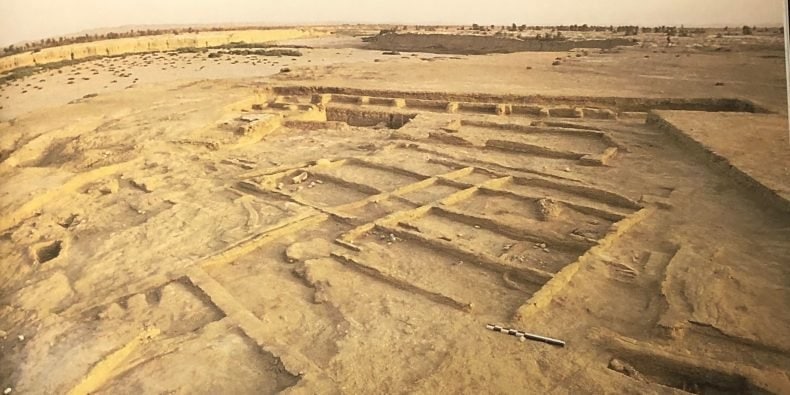
Balochistan is a habitat to the artefact of the earliest human civilisation found at Mehergarh. Nearly 2000 years before Indus Valley Civilisation, there was a civilisation in Mehergarh near Bolan. Archeologist considers Mehrgarh as one of the most important Neolithic sites. In native Balochi, “Mehar” stands for love and “Garh” for heaven, translating Mehrgarh into “the heaven for love”. Speaking of that, Baloch people are surely loveable people and Balochistan is truly heaven that is enriched with traditions and culture. It has beautiful places with archeological sites that have always been neglected due to the political crisis since its inception. Balochistan is a pivot of historic places, forts, and cultural heritage. Each place holds a historic tale within itself.
The fort of kharan is considered the heritage of a princely state which was built by Azad Khan Nosherwani. It is a two-storied fort and is spread on an area of 400 square yards.
Then there is Mir Chakar Fort which is situated in Sibi (a city at a distance of 160 km southeast of Quetta). It was built by Mir Chakar Khan Rind a well known Sardar of Baloch tribe. He is remembered as a Baloch Hero who defeated Lashari Tribe after the war which lasted thirty years. After that victory, he went to lead a war against King Sher Shah Suri of Afghanistan.
Godrani also is known as Shehr-e-Roghan or Purana Ghar is located near the city of Bella in Balochistan. There are a lot of myths associated with this place. One of the local myths is that King Solomon’s beautiful daughter was possessed by six demons. The king invited seven brave men to save his daughter. All of them failed but Prince Saiful Muluk rescued her from the demons.
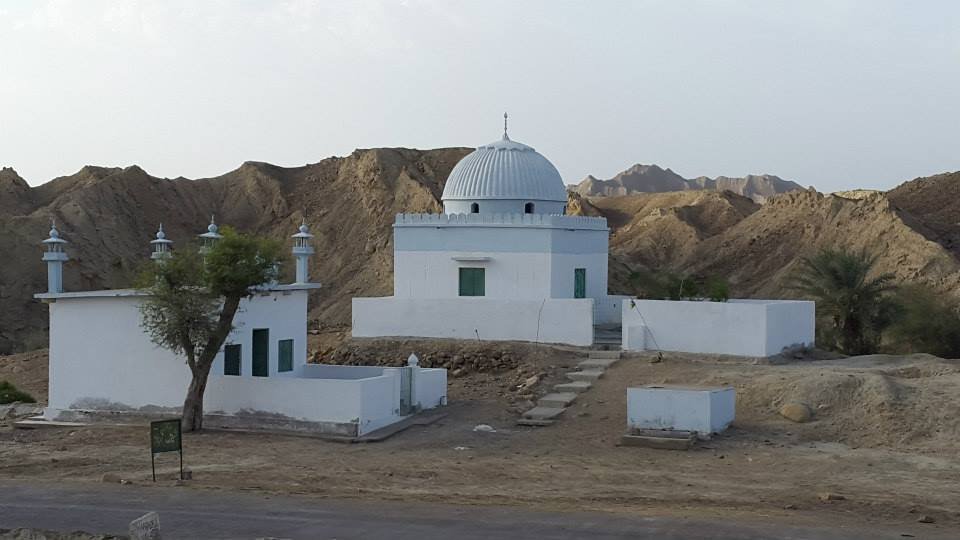
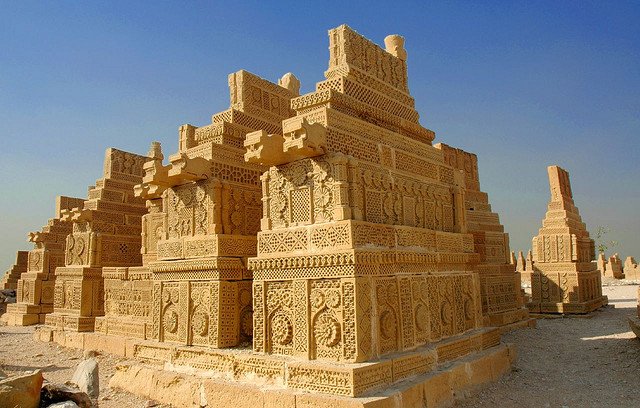
Mehergarh Archaeological siteTomb of Shireen FarhadChaukhandi tombs
Before Romeo and Juliet there was Shireen and Farhad, two lovers with a tragic ending. The tomb of Shireen is located in Balochistan, around 15 km from Bela City while going towards Awaran.
Then there are Chaukhandi tombs, attributed by Jokhio and Baloch tribes whose men were fond of horse riding and animal hunting, and whose women wore beautiful jewelry.
There are many exotic attractions on the land of Balochistan that adds glorification to its beauty.
Hingol National Park and Princess of Hope is a place that is surrounded by mountains and blue waters. Markhor, which is the national animal of Pakistan can be seen roaming in the valley of Hingol National Park. This valley has a delightful landscape of towering precipices, zeniths, and braces with the river turning between.
Kund Malir is a beach in Balochistan, Pakistan located in Hingol National Park, about 150 kilometres from Zero-Point on Makran Coastal Highway. The drive between Kund Malir and Ormara is considered to be scenic. The area is part of Hingol National Park.
Balochistan is also famous for its hill stations and its scenic beauty. Shaban valley, Pishin valley, and Ziarat are the famous ones.
Hannah Lake is located in Urak valley near Quetta. It is the most visited place in Balochistan due to the easy accessibility of water.
Moola Chotok is considered as a hidden paradise located in the Khuzdar district of Balochistan. In the Brahui and Balochi languages, the word ‘chotok’ is used for certain types of water falling from the top.
Hingol National ParkKund Malir beach
The two mountaintops with religious significance are Koh-e-Murad in Turbat which is considered sacred by the Zikri community among the Baloch who hold their religious observance there, especially during Ramzan and the shrine of Shah Noorani, who is said to be a descendent of Muslims Leader Prophet Muhammad.
Besides this there are a lot more eye-catching attractions in Balochistan than these. The geographical sketch of Balochistan is dotted with beautiful hills, mountains, and deserts which is paramount of this province other than being the largest one. It is the land of people who have always been misunderstood, people who have always been neglected, and deprived of their rights. Yet, Baloch people are significantly prominent among others due to their culture and traditions.
On asking a Baloch student of International Relations Saad Aalam Angaria, about their ethnic patterns of living and traditions he told an interesting side of Balochistan.
From which area of Balochistan you belong to tell something about it?
I’m from Lasbela, it is a coastal district of Balochistan with an extensive coastline on the Arabian Sea to the south. Lasbela was bordered by the princely states of Kalat and Makran to the north and west. The main ethnic groups are Baloch and Sindhis. Much of the population also speaks a language called Lasi, which is derived from Sindhi or Jadgali.
The principal Lasi tribes are only five in number, namely Jamot, Ranjha, Sheikh, Angaria, and Burraf. These are called the Panjraj or the five tribal confederacies
What do you feel the most important thing about your culture and Baloch people?
We, Baloch people are famous for our generosity and hospitality. Guest is considered as considered a blessing from God. Some people even slaughter sheep or goat for their guests to welcome them. Baloch culture is full of many social festivals like the Sibi festival which has folk music performance, cultural dances, handicrafts stalls, cattle shows. Buzkashi is another festival showing rather enhancing the bravery of Baloch people. The drum, the lute, and the shepherd’s flute are the most common instruments for accompanying the singing and dancing in Baloch culture. The dress that we wore is very unique. Turban is the common headwear of the men. Wide loose shalwar (a bit similar to loose trouser) and knee-long shirts are worn by all. The dress of the woman consists of the typical shirt having a big pocket in front. The shirt normally has embroidery work with embedded small round mirror pieces. A dupatta or chadar, long rectangular piece of cloth cascading down the shoulders and used to cover the head, are used by the women.
What are the gender roles in your culture?
Gender inequality and misogynistic behaviour of men are one of the barriers in the progress of Balochistan. Although men who get exposure to education and outside the province they let their women get an education, jobs, and other activities that can help them to move forward according to time. However, the women are skilled at embroidery and decorate their clothes with elaborate geometric and abstract designs. They make felt from sheep’s wool and also weave rugs for their own use and for sale.
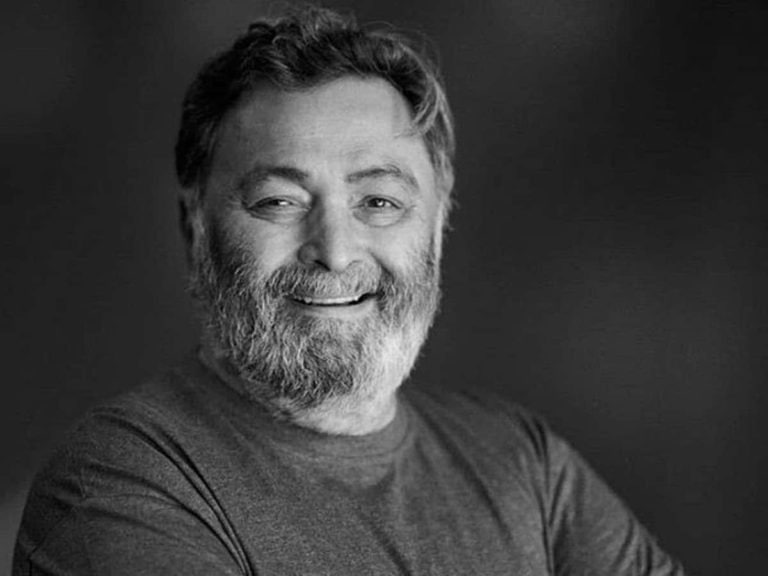
Rishi Kapoor passed away in a hospital in Mumbai at the age of 67. Kapoor fought a long battle with cancer.
The veteran actor, known for his work in films like Bobby and Chandni, was treated in New York for cancer and returned to Mumbai few months ago.
Kapoor is survived by his wife Neetu Kapoor, son Ranbir and daughter Riddhima.
In 2018, Rishi Kapoor was diagnosed with cancer for the first time, following which the actor was in New York for nearly a year to undergo treatment. He returned to India in September 2019 after recovering.
Post return to India, his health has frequently been in focus. The actor was admitted to hospital in quick succession in February. Amid speculations about his health, he had been hospitalised in New Delhi in early February, while on a visit to New Delhi.
Former Congress President Rahul Gandhi on Thursday condoled the death of veteran actor Rishi Kapoor and said that it has been a terrible week for the Indian cinema and the “Bobby” actor will be greatly missed.
“This is a terrible week for Indian cinema, with the passing of another legend, actor Rishi Kapoor. A wonderful actor, with a huge fan following across generations, he will be greatly missed. My condolences to his family, friends and fans all over the world, at this time of grief,” Rahul Gandhi tweeted.
How come a South Indian who usually never care about Bollywood at all fell in love with an actor who is not even a star, who hasn’t played lot of roles, who was not someone who will catch your attention with his page three appearance?
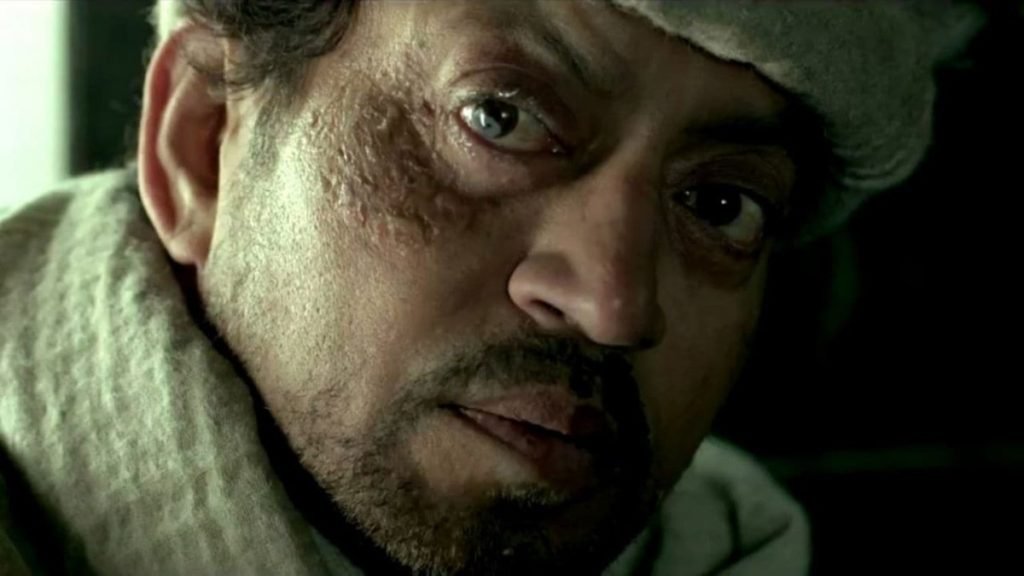
As far as I remember, my first experience of Irrfan was the Roohdar from Haider. What a powerful character- from that unfocused walking intro through snow to the scene in the underground of a torture room somewhere in Kashmir. Till date I cannot think of anyone else playing Roohdar.
Roohdar, Irrfan Khan (Haider)
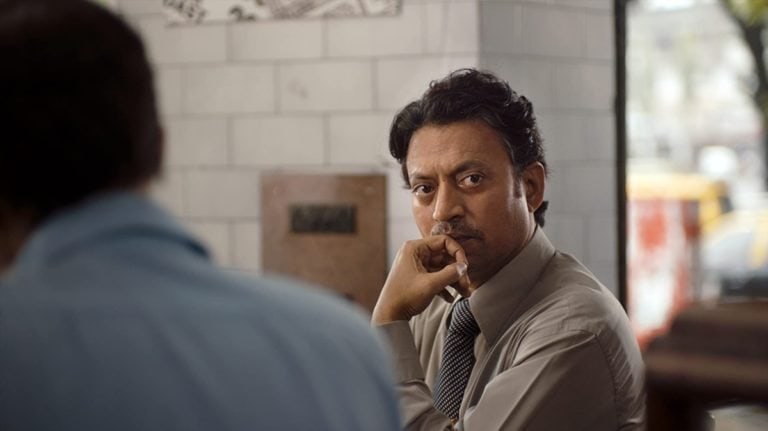
The dialogues, monologues of Irrfan are always so charming and those who follow his works have always fallen in love with his voice. But I have always fallen in love with his eyes. Saajan Fernandas was not a person who can go for a powerful monologue about life, he was an ordinary older person who was melted by the letters he received through a lunch box. Saajan didn’t speak much, but the eyes of Irrfan was enough to convey us a sea of emotions.
Saajan Fernandes, Irrfan Khan (Lunch Box)
The older self of pi has only very few screen presence in the Life of Pi movie, but those last few scenes was enough for Irrfan to steal the entire film. When the older self of pi was concluding the very challenging and unique life story, with the details only Irrfan’s eyes can deliver He was literally showing us the Life of Pi that unbelievable journey of the character was going through the eyes of Irrfan.
Pi Patel, Irrfan Khan (Life of Pi)
An actor becomes complete only when he can control each and every part of his body and move it in the context of different characters, I have always wondered about the way he acts with his eyes, a very melancholic pair of eyes, you feel something for him even when Saajan was silently going through the letters, the same way When Roohdar was saying ‘Dhariya bhi Mein Daarakht bhi main’ it was convincing for us because of the eyes of Roohdar, We could see in the dim light of that underground torture center.
Rana from Piku was a very lazy person. The character Rana was so easy, simply because of the screen presence of Irrfan. It was not easy to steal a scene when talented actors like Amitabh Batchan and Deepika Padukon were also sharing the screen.
It was always his eyes that have given the needed extra to all of his characters. Obviously all the physical and mental efforts he puts to each characters matters, but just with a look or a just a mid close or close shot which reveals those melancholic eyes have always connected me to each character he played.
I Will definitely miss that Irrfan touch on the screen forever.
Adieu dear Irrfan. You will definitely live by the eternal characters you played, you will be remembered till light creates life on the screens.
Darya bhi main, darakht bhi main … Jhelum bhi main, chinar bhi main … dair bhi hoon, haram bhi hoon … Shai bhi hoon, Sunni bhi hoon, main hoon pandit … main tha, main hoon aur main hi rahoonga – (Roohdar, Haider)
Actor Irrfan Khan passes away at 54. He was admitted to Mumbai’s Kokilaben Dhirubhai Ambani Hospital on Tuesday. He was kept under observation for colon infection. The actor in 2018 had announced that he’d been diagnosed with a neuroendocrine tumor.
The news of his death was shared on Twitter by filmmaker Shoojit Sircar. “My dear friend Irfaan. You fought and fought and fought. I will always be proud of you.. we shall meet again.. condolences to Sutapa and Babil.. you too fought, Sutapa you gave everything possible in this fight. Peace and Om shanti. Irfaan Khan salute,” he wrote.
Reacting to the news, senior film critic Bharti Dubey said, “He was very introvert, did not talk to media much, though responded on emails. He wrote poetry too and spoke very less whenever he had to talk to media.”
In early 2018, Irrfan had revealed his neuroendocrine tumour diagnosis. The actor stayed away from the public eye as he underwent treatment in the UK.
After his return in 2019, he shot for “Angrezi Medium”, the sequel to his 2017 hit “Hindi Medium”. However, his health condition prevented him from promoting the movie, which hit the theatres in March just before the lockdown that began on March 25.
Official statement on Irrfan Khan’s passing away
“I trust, I have surrendered”; These were the some of the many words that Irrfan expressed in a heartfelt note he wrote in 2018 opening up about his fight with cancer. And a man of few words and an actor of silent expressions with his deep eyes and his memorable actions on screen. It’s saddening that this day, we have to bring forward the news of him passing away. Irrfan was a strong soul, someone who fought till the very end and always inspired everyone who came close to him. After having been struck by lightning in 2018 with the news of arare cancer, he took life soon after as it came and he fought the many battles that came with it. Surrounded by his love, his family for whom he most cared about, he left for heavenly abode, leaving behind truly a legacy of his own. We all pray and hope that he is at peace. And to resonate and part with his words he had said, “As if I was tasting life for the first time, the magical side of it”.