Home Blog Page 4

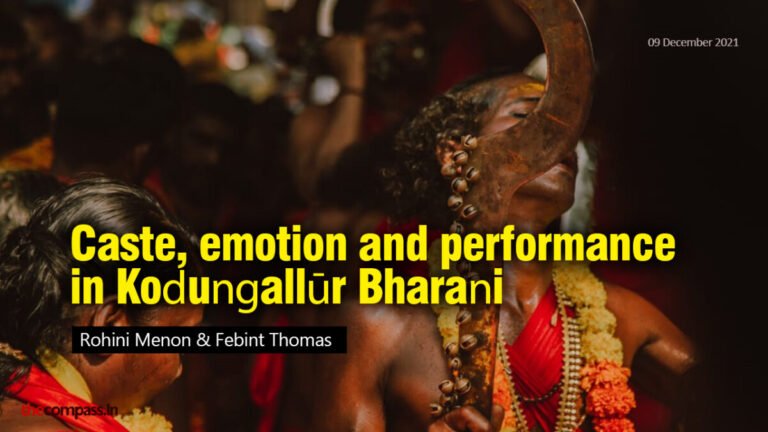
Caste, emotion and performance in Koṭuṅṅallūr Bharaṇi

For a long time in history, religious performances and songs were studied and analyzed within the framework of theology alone. In Kerala, as Rajan Gurukkal put forward, religious performances and theaters were entertained inside or around the temple which always maintained the sacred decorum of the upper caste hegemony, and the temple itself represented a solid spectrum of caste structure in a full-fledged institutional form. For some time now, there has been a major shift in the way historians and litterateurs focus on performance studies, especially in the fledgling field of religious performances and emotions. At this juncture of emotional and conceptual histories, it becomes important to move beyond the idea of analyzing religious performances as rituals alone.

Photo: Febint Thomas

Koṭuṅṅallūr Bharaṇi (കൊടുങ്ങല്ലൂർ ഭരണി), also known as Mīna Bharaṇi (മീന ഭരണി), is a religious gathering/festival celebrated annually in Koṭuṅṅallūr, a historically significant town situated on the Malabar Coast in Thrissur district of Kerala in India. Consistently, in the mid-year long periods of March/April, Koṭuṅṅallūr is colored yellow with turmeric and silk, and Bharaṇi pāṭṭu (ഭരണി പാട്ട്) is echoed here and there due to the presence of the performers who gather at the Koṭuṅṅallūr Goddess Temple to praise the Bharaṇi celebration. An integral part of Koṭuṅṅallūr Bharaṇi is the singing of Bharaṇi Pāṭṭu which consists of two strands: Dēvi stōtraṁ (ദേവി സ്തൊത്രം ) and Teṟi Pāṭṭu (തെറി പാട്ട് ) While the Dēvi stōtraṁ consists of well-structured recitals essentially praising the kindness and glory of the goddess, Teṟi Pāṭṭu refers to ritual songs that are well-dovetailed with obscene and sexually impulsive words conveyed through self-mortification and singing to worship the Koṭuṅṅallūr Bhagavati (കൊടുങ്ങല്ലൂർ ഭഗവതി) or Goddess. These songs are sung with the use of instruments, mainly sticks and anklets with loud-violent voices. They are spontaneous and lack a proper structure, as they are created by performers according to the situation.

Photo: Febint Thomas

Caste plays a major role in the production and performance of rituals and art forms in Kerala, like in any other part of India. Taking Sheldon Pollock’s idea of Literary Culture, performances like Bharaṇi can be considered as a different genre which hasn’t been into academic discourse and needs to be under close scrutiny as the genre itself has created a language of its own, a performative method and a social and cultural (sonic and emotional) atmosphere for the production of this performance in South Asia. The sensibilities of emotion, body and sound through a culturally and socially rooted performance called Bharaṇi is popularly known as the festival of the lower caste/Avarna.

Photo: Febint Thomas

As noted by C.Adarsh in his article śarīrattinṟe āghoṣaṅṅaḷ: koṭuṅṅallūr bharaṇiye munnirtti cila cintakaḷ (ശരീരത്തിന്റെ ആഘോഷങ്ങൾ: കൊടുങ്ങല്ലൂർ ഭരണിയെ മുൻനിർത്തി  ചില ചിന്തകൾ),Bharaṇi pāṭṭu or Teṟi pāṭṭu is a celebration of bodies where the performer creates a social situation in which gender discrimination is temporarily invisible or irrelevant within the public sphere of Koṭuṅṅallūr Kāv (കൊടുങ്ങല്ലൂർ കാവ്) with participation from men, women and transgender community. The intersection of caste, emotion and performance produces a space for resistance against the dominant upper caste behavioral codes, and the Bharaṇi Pāṭṭu, which appeared in the early modern and modern Kerala as a slur used for insulting people or communities, is moving towards the realm of popular culture and academic discourses.

Photo: Febint Thomas

Febint Thomas is an established photographer from Kerala who specializes on Emotions. Febint can be reached through tfebint90@gmail.com

CDS Gen. Bipin Rawat dies

0

Chief of Defence Staff General Bipin Rawat and his wife were among 13 killed in a helicopter crash in Tamil Nadu on Wednesday, the Air Force said. Sole survivor, Group Captain Varun Singh, is being treated for 90 per cent burn injuries.

Defence Minister Rajnath Singh condoled the death of the top defence official and said, “Deeply anguished by the sudden demise of Chief of Defence Staff Gen Bipin Rawat, his wife and 11 other Armed Forces personnel in an extremely unfortunate helicopter accident today in Tamil Nadu”.General Bipin Rawat’s Defence Assistant, security commandos and Indian Air Force personnel were also among the 14 on board in a Mi-17 V5 chopper that “met with an accident today near Coonoor, Tamil Nadu,” the air force said.  A meeting of the Cabinet Committee for Security is likely at PM’s house in some time.

CDS Gen. Bipin Rawat’s chopper crashes in Tamil Nadu; Rescue operations underway

0

An Indian Air Force helicopter with Chief of Defence Staff General Bipin Rawat on board crashed in Tamil Nadu’s Coonoor on Wednesday. Eleven people have been confirmed dead in the incident. There is no immediate information on the condition of General Rawat.

Two people with severe burn injuries were rescued and taken to the hospital at Wellington cantonment in Nilgiris district for treatment. There were a total of fourteen people on board, according to sources.

Rescue operations are still underway.

CDS Bipin Rawat, his wife, defence assistant, security commandos and an IAF pilot were on board the Mi-series chopper when it crashed between Coimbatore and Sulur in Tamil Nadu, ANI news agency reported. CDS Bipin Rawat was on his way to Defence Staff College in Wellington from the Indian Air Force base in Sulur near Coimbatore, as per sources. Along with eight others, he boarded a flight from Delhi to Sulur earlier on Wednesday.

Visuals from the site of the Indian Air Force helicopter crash showed massive flames and locals helping with the immediate rescue operations. Bodies were seen downhill, ANI news agency reported. Several teams, including local military officers, reached the site for search and rescue operations.

Meanwhile, Tamil Nadu CM MK Stalin has instructed the local administration to provide the best medical care possible to those injured in the incident. The affected will be treated at the Coonoor government hospital and doctors are being sent from Coimbatore to provide expert treatment.

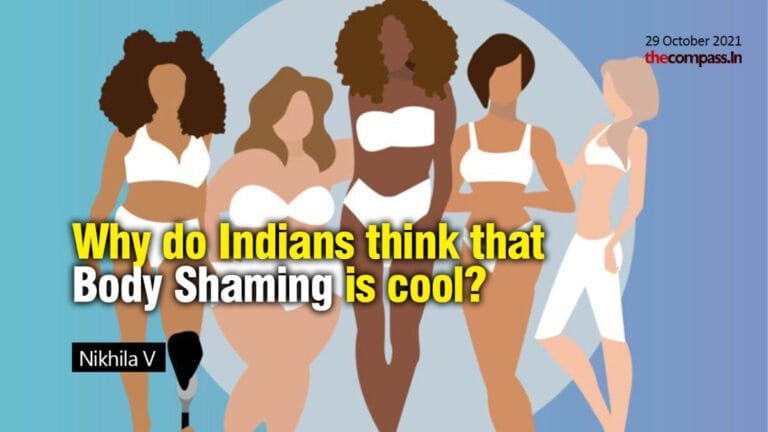
Why do Indians think that Body Shaming is cool?

“ You should eat more; you are too skinny!!!!”

“ ohh, you have become so fat!”

“ Doesn’t she look too fat, go on tell her, she will not listen to me.”

“ Eat something or you’ll blow away.”

These are a few among numerous comments that people are subjected to on a daily basis. The target can be anyone because no matter how they look, people will find faults. Talking about someone’s weight has long been normalised. In fact the topic comes up in everyday conversation as often as the weather. Body shaming starts from a young age, with every compliment or criticism connected to the body and it continues on at school, college and workplaces. Marriage, job opportunities and other endeavours all take our body into account. Nowadays everything depends on the body, its shape, weight, height. The societal pressure to be perfect no matter what does fall more on women than men but they don’t escape the shaming either. Men should have certain attributes to be considered masculine or like a “real man”. Women are constantly shown in the media through a male gaze; petite, fair, short, beautiful are all the necessary components to be seen as attractive. Lately there is a shift in the way the issue has been addressed, with the body positivity movement people are being educated. But there is still a long way to go to fully eradicate this malicious problem.

The normalisation of body shaming is mostly due to people believing that they have the right to comment on anyone’s body. This culture affects people on a molecular level and has severe consequences. It causes body image issues, eating disorders, mental health issues and even our physical health. Fat shaming can lead to severe diets and extreme exercises that strips the person of  their small happiness and peace. Thin shaming on the other hand is mostly meant as a compliment or as a joke to point out their “frailty. A very common question skinny people are asked is whether their parents feed them. The so-called joke gets old quickly with its constant presence. 

The educational system plays a huge role in developing the minds of children. Reprimanding a child by pointing out their weight or height is a common punishment seen in modern society. It has so much to do with the educational system, as it’s common that the teachers always have nicknames given to the students for fun and almost all of them will focus on their body.

Marriage is yet another social setting where body shaming is normalised. The first thing anyone looks for as the requirements for a bride are always the stereotypical  structures developed within the patriarchal framework of the society, wherein  the physical features ‘normally’ analyzed are; a slim body, fair skin, shorter than the groom, while men are chosen according to their height, body muscles, even body hair. The amount of disgusting comments thrown at a couple in the wedding hall by practical strangers is incredibly demeaning and disturbing.

The role of the media in propagating this is deeply unsettling. The various promotions of diet culture and tricks for the “ perfect body” are very upsetting. The social media with its various features turns the users into maniacs, always dissatisfied with their own body. Photos are critically examined under  microscopic lenses for any minor defect before they are posted on any social media platform. This toxic culture has grown so big that nobody is safe from the prying eyes of the perpetrators.

There are very serious consequences resulting from body shaming. Long exposure to it can cause body dysmorphia, eating disorders, extreme weight loss, over exercising, and even death. People go as far as to multiple plastic surgeries to get the perfect body. But the degrading comments never stop, people can find fault at everything and anything. One of the reasons for its chokehold on the people is that it’s a cycle, the victim can easily become the culprit to fit in or to take some attention away from them.

For the past few years there have been body positivity movements which focus on accepting people as they are. It helps in building good mental health and stops spreading hate. Eating healthy and exercising for fitness helps physical and mental health, while extreme diets make it worse. Everyone has a different body type and no matter what they do it will remain the same.

The promise of premier institutes! Remembering Fathima Latheef

It has been two years since IIT Madras lost Fathima Latheef, their brilliant and brightest first year student from the five year integrated MA program offered by the Department of Humanities and Social Sciences (HSS).  Fathima had topped the All India entrance examination of 2019, for admissions into the course. Also, she had consistently topped the class assessments until November 9th 2019, when she was found hanging in her room.

Fathima’s phone is said to have had notes citing the names of faculty and others of IITM, whom she indicted for religious harassment. As per the reports then, the prime accused had been Sudarsan Padmanabhan, Associate Professor in Philosophy. Despite being probed by the CBI, the investigation into her demise hasn’t yielded much progress even after two years. Neither the alleged harassment she faced at the campus on account of her religious identity has been responsibly addressed. The internal enquiry on Fathima’s death, taken up by IITM was wound up with a report that abstained from probing into ‘religious discrimination’ within the institution. (thePrint.in, 15/01/2020).

Staying consistent with the accusation that Fathima experienced discrimination, her sister Ayesha Latheef has also expressed doubts over her death being a suicide, pointing fingers at the probability of a homicide (Maktoob, 9/11/21).

***

Fathima’s death flared up into debates on the exclusionary experiences faced by the students from marginalised and minority communities in Indian centres of learning par excellence.

“At campus, there were instances which I failed to comprehend fully then. For example, I have seen students making terrorist attack pranks by randomly opening doors, throwing bags (symbolic of bombs), running away shouting Allahu Akbar, making a joke out of it and hurting the religious feelings of a community. I don’t know if the ones who did this really knew the gravity of what they were doing, but what worries is how casually these phobic ‘jokes’ circulated in our campus”, said an ex-student of IITM who didn’t wish to be named, to The Compass.

IIT Madras

Post Fathima’s death, the alleged majoritarian and upper class-caste spirited nature of India’s top institutes have increasingly come under scathing criticism. Video recordings of Prof Seema Singh, Associate Professor at IIT Kharagpur hurling abuses of filthiest standard at students and parents from most marginalised backgrounds in the online classes, recently came off as a shameless statement confirming the same. Despite being internationally recognised and qualified since his early twenties, Dr Vipin V Veettil, Assistant Professor at IITM, had resigned from the post in July 2021 citing the caste discrimination he faced at campus. On the same note, Fathima had apparently expressed to her dear ones that a Muslim name topping the score sheets was least appreciated among some of her faculties.

The said tendencies pervading the IITs, form part of the more general leanings that permeate social media platforms, public spaces, workplaces, and even sports grounds. The latest reports on an IIT graduate being arrested over rape threats posed at Virat Kohli’s baby daughter, in response to Kohli extending support to Mohammed Shami, seem to hint towards things complex than an isolated moment of criminal disgrace. Shami had faced virulent cyber bullying over India’s loss to Pakistan, on sheer account of his religious affiliation.

Statistics pertaining to the seats and vacancies remaining unfilled, dropouts, and suicides in campuses as that of IITs reveals that students from marginalised backgrounds are disproportionately disadvantaged in these spaces. As centres that intensely work with themes related to feminism, subaltern mentalities and marginalisation as a produced entity, it is utmost disappointing that the campus atmospheres fail to override such imbalances that their works seek to destabilise. The persisting reluctance of the institutes to recognise and take up measures to deal with these issues runs the danger of institutionalising the inequities. 

***

Students harming themselves and succumbing to death at the very spaces which have been ultimately constituted to empower them is terrific. The HRD minister Ramesh Pokhriyal Nishank stated in 2019 that the preceding five years witnessed around 60 suicides in India’s premier educational institutes, of which the IITs accounted for 50. More often than not, the subsequent discussions get hinged around academic pressure and mental health issues as individualistic problems to be dealt with. Beyond simply calling for isolated support systems, such seemingly neutral issues need to be contextualised. Inquiries that dare to look straight through the cobwebs of elitism and discrimination within the educational spaces need be set up.

It is high time that the kind of learning atmosphere offered by the premier educational spaces is reworked to be more inclusive and tolerant. Fathima’s words, ‘My name itself is a problem there, Vappacha’ resonates as a bleeding reminder of the same.

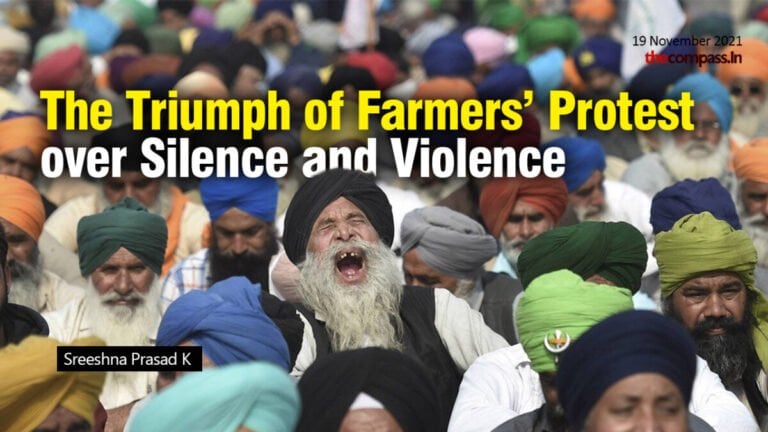
The triumph of farmers’ protest over silence and violence

The uneasy transition of the nation to an undemocratic one makes an insecurity feel on us. The recent events prove that men in power have lost their reason. If the state couldn’t ensure protection for the life, rights and properties of the people, who would provide it? Dear Legislative, Executive and Judicial wings, your intentional negligence towards farmers protest cannot stop the wild uproar of the crowd. It’s been one year they are on the streets to revolt against the three new Farm Laws that pretends to be helpful for them, but they are not. The only response to their revolt was a well-planned gruesome murder of farmers. And who will take the responsibility of these deaths? The state has to undertake. Not only the state, each and every individual who were against the farmers, those who put limitations to their revolt and the liberals are also responsible for their fate. Here, the basic architecture of the legal system is favorable to the haves and a threat to the have-nots. The deconstruction of the hegemonic society is still a dream even to this immediate generation. The twenty-first century intellectuals have to learn, unlearn and relearn the concept of democracy.

For the purpose of analysis, let us rewind the events related to farmer’s protest. The Farmer’s Produce Trade and Commerce (Promotion and Facilitation) Act, The Farmers (Empowerment and Protection) Agreement of Price Assurance and Farm Services Act, and The Essential Commodities (Amendment) Act are the three acts that the government has to withdraw. The economists argue that both farmers and the nation will get benefits from these rules. But through the close examination of these acts, it is clear that it will only lead to a miserable life for farmers. These theoretically good laws were passed on a Sunday without a genuine discussion. Majority of the farmers in India belong to a marginalized category. They depend on the local markets and agents to sell their product. But the new laws will help the cooperates enter into this field and gradually they will exploit the farmers. This will end the Mandi system and end their relationship with common agents. They are demanding the minimum support price (MSP) guarantee from the government. But the authority confirmed that the government will take the products by providing a small amount to the farmers as a sustainable price, not a profitable price, if their products were not sold out. The government’s supply chain plan is very complex and disastrous and should be criticized instead of admiration. The ideological leadership of bourgeoisie over the subordinate classes is happening here. Here the hegemonic class has taken interest over the proletariat class and done sacrifices to make equilibrium between them to meet their corporate interests. Hence, the farmers started to protest against these three laws. They conducted a march to Delhi; tractor parade and they chose different peaceful methods to mark their protest. But nothing went fruitful.

The Lakhimpur Kheri Massacre proved the collapse of the system. The law execution and adjudication body tried to rescue the convicts rather than punishing them. The system is still working in the colonial style and repressing the people by imposing laws. Why the reluctance and delay from the part of government and court? There is a proverb, ‘justice delayed is justice denied’. The inefficiency in admiration of justice can be best observed here. Sometimes power is a negative, coercive thing that forces us to do things against our wishes. Nowadays political power is superior to the constitution. A membership in the ruling party is the license you get to do whatever you want. You can murder someone, violate laws, rape women and so on. Nobody will interrogate or take action against you. The system has to improve its service and true potential. The pending cases and lack of transparency of the judiciary are some of its major drawbacks.

People under a corrupt system is an important issue we need to address. Like other organs of government, a corrupted judicial system will badly affect the justice seekers. The problems faced by the common man under a corrupt court system may not be sensational news to the public or media, but it is a matter of discussion. Many innocent people are spending their life in prison and waiting for their trials. The elite powerful people can bribe the executive wing so most of the time the innocent powerless people are sentenced to punishment. In the Lakhimpur Kheri incident the court delayed recording its dissatisfaction over the investigation done by the Uttar Pradesh Police on this case. And this same court had a different approach to the case at the beginning. The time has come to reform the judicial system. The coordination and cooperation between the executive and judiciary can resolve many pending problems. We need a perfect system to manage the state.

Today, the 19th of November 2021, should be remembered as a day of historic importance when the farmers of India defeated the violence and brutalities of the state. Yes, repeal of the farm laws can only be seen in the limelight of the upcoming UP and Punjab elections, yet it gives a lot of hope and spirit to the existing idea of ‘Democracy’ in India.

Farm laws to be repealed, says PM Modi amidst ongoing protest and in the wake of assembly elections

Prime Minister Narendra Modi said today in an announcement just months before elections in states like Uttar Pradesh and Punjab that three controversial farm laws at the heart of massive farmer protests across the country for over a year will be withdrawn,

The announcement came on the Guru Purab festival, when Sikhism founder Guru Nanak’s birthday is celebrated across India, mainly in Punjab, where elections will be held in three months.

“Maybe something was lacking in our tapasya (efforts), which is why we could not convince some farmers about the laws. But today is Prakash Parv, not the time to blame anyone. Today, I want to tell the country that we have decided to repeal the three farm laws,” PM Modi said in an address to the nation.

“In the Parliament session starting in the end of this month, we will complete the process of repealing the three laws,” he said.

The Prime Minister began with a defence of the laws saying they were meant as reforms, mainly for small and marginal farmers in the country. But some farmers were convinced, others were not, he admitted.

“Whatever I did was for farmers. What I am doing is for the country.”

Thousands of farmers from Punjab, Haryana, Uttar Pradesh and Rajasthan have been camping outside Delhi since November 2020, demanding that the “black laws” be withdrawn. The BJP has faced massive anger in northern states, something it cannot afford as it preps for big elections ahead, including the 2024 national polls.  

Rakesh Tikait, a top farmer leader, said the protests would not stop before the laws were repealed in the session starting on November 29.

The farmer protests were unrelenting through several rounds of talks between the government and farmers, disruptions in parliament and Supreme Court hearings.

“We haven’t been able to convince farmers. Only a section of them was opposing the laws, but we kept trying to educate and inform them,” PM Modi said.

Controversy on ‘Sunrise over Ayodhya’ turns intolerant; Salman Kurshid’s home vandalised

The Nainital home of Congress leader Salman Khurshid was attacked and set on fire on Monday, days after his new book on Ayodhya set a controversy by stating a similarity between “Hindutva” and radical Islamist groups.

Visuals shared by Mr Khurshid on Facebook show tall flames, burned doors and broken window panes at his Nainital home.

Sharing the visuals, the Congress leader said in a post, “I hoped to open these doors to my friends who have left this calling card. Am I still wrong to say this cannot be Hinduism?”

Later, Salman Khurshid described, ANI reports, this attack is ‘not on me but on Hindu religion’.

Salman Khurshid, a former Union Minister, has been under the spotlight ever since the launch of his new book, ”Sunrise Over Ayodhya: Nationhood in Our Times”. At the centre of the controversy is a passage that reads, “Sanatan Dharma and classical Hinduism known to sages and saints were being pushed aside by a robust version of Hindutva, by all standards a political version similar to the jihadist Islam of groups like ISIS and Boko Haram of recent years.”

Hitting out, the BJP said Mr Khurshid’s remark has hurt sentiments of Hindus and alleged that the Congress is resorting to “communal politics” to pursue Muslim votes.

Soon after, Congress former chief Rahul Gandhi differentiated Hindutva and Hinduism saying, both are two different ideologies. Beating or killing of Sikh and Muslim is Hindutva; Hinduism not.

Mr Khurshid also faced some criticism from within his party, surprisingly from the senior Muslim leader in the party, Gulam Nabi Azad stating drawing a parallel between Hindutva and Islamist groups is “exaggeration.”

Remembering Nehru and his legacy: A celebration of pluralism and socialism

The best and noblest gifts of humanity cannot be the monopoly of a particular race or country; its scope may not be limited nor may it be regarded as the miser’s hoard buried underground.

When Nehru became the President of the Congress for the third time in 1937, Modern Review, a Calcutta based magazine published an article, written by a ‘Chanakya’, which criticized the then Congress President. It described Nehru as someone having “all the makings of a dictator in him — vast popularity, a strong will directed to a well-defined purpose, energy, pride, organisational capacity, ability, hardness, and, with all his love of the crowd, an intolerance of others and a certain contempt for the weak and the inefficient.”  How often do you see the existence of a fearless political writer exposing the flaws, shortcomings and weaknesses of a national leader in the ‘2021 India? Nehru became the Prime Minister in 1947. The scepticism, doubts and the intuitions Chanakya put forward gradually proved wrong by Nehru. Later, it was revealed by Nehru himself that Chanakya was none but him. Perhaps, Nehru’s reflection of his own shortcomings to make a political space more capacious and inclusive.

Jawaharlal Nehru’s vision of life was free from an exclusivist ideology. It was largely influenced by his utmost belief in the fact that we exist because there is a mutual correlation of diverse cultures that complement each other in the country. Nehru’s view of life was more like a global understanding of what everything is all about. And one could say, without any question, that it was neither inclined to Europe nor Asia alone.

We live in a democratic space and are free to speak out what we feel or believe to be true and false( NB:India’s democracy Index falls to 53)  To play a blame game on Nehruvian legacy and the country’s future is totally acceptable. However, one should never cease to realize the fact that the standards set by Nehru are much more competent and compatible to the country we live in today. He kept the country together amid the horrors that engulfed the country during 1947 and the subsequent communal tensions that had the potential to rip the country apart. By upholding secular ideals and fueling it with the flair of science and modernity, he successfully healed the larger wounds inflicted on the masses by the partition. For Nehru, man was not a simple individual but a crowd of thoughts and ideas.  

When watched closely, a melodramatic stain was subtly visible in the personal misfortunes he was put to confront. However, a recurring element of morality never ceased itself from serving the purpose of his life. Democracy can afford two choices to a leader. He is always in a position to reassert his space by staking the whole process only to convince others and most importantly, himself that he is in the driver’s seat. And the next choice is to yield to the institutional needs of the country and submit to the traditions of the country he rules. Choosing the latter is all about keeping up the spirit, faith and responsibility inculcated inside him by the people. To make things work better, he ensured the existence of a strong opposition, thus eliciting the learning and unlearning process. Besides, Nehru was as broad to change, alter or jettison his policies to match the national interest. How often do you expect a Prime Minister to do this? The camaraderie shared between Nehru and cartoonist Krishna Shankar was exceptional and could never be imagined in tandem with the present scenario that exists between press and politics(NB: India’s press freedom index falls to 142). Cartoonist Shankar ruthlessly criticised Nehru in his cartoons despite the mutual admiration that existed between them. And Nehru was altruistic enough to say, ‘Don’t spare me Shankar”.

“The country must conduct itself through political principles, not through religious sentiments.”

Jawaharlal Nehru is not confined to memory and history. He is always out there in the democratic spaces of the country. Wiping out each and every fragment of the Nehruvian legacy is the new Sangh Parivar agenda. For them, Nehru’s spiritual existence is a threat to the Hindu Rashtra they are striving for.  Their obsession is quite understandable. The figure of Nehru-a liberal, secular and intellectual leader of the masses-is in extreme contrast with the conservative and communal politics underlined by fascism and autocracy perpetuated by the BJP and RSS. ‘If you can’t compete with Nehru’s greatness, attack and bring him down’- their theory is simple as it is.  They will keep trying to do so.

 The Nehruvian legacy stands sublime. Even amid the darkest of times, this legacy ignites the sparkles of hope which has the potential to resist tyranny and autocracy we are battling with.

Two years of amending the citizenship act

“We are going to drain the pond; the fishes need not be afraid,” the shrewd toads tell the unsuspecting fishes in a south-Indian folk tale. The Citizenship Amendment Act (CAA), coupled with the National Register of Citizens (NRC), meant the same test for Indian Muslims. To be impassive in the face of an existential crisis.

But this Act was a test that went beyond a crisis of existence for the largest minority of the country. It threatened the very foundation of the constitution by dividing citizens along the lines of religion. In moments that would have made Ambedkar proud, many people cutting across religion, including the old, the women and their children, raised their voice against this discriminatory law.

Yet, even after months of protests, public pressure and international condemnation, it seems the CAA is here to stay. Passed by an unforgiving majority in the Parliament, the act came effective on 10 Jan 2020. Even when the country was reeling in a pandemic, the central government arrested the act’s dissenters, who were mainly students, its work-from-home priority. Addressing the NRC, forced eviction has already started even amidst explicit UN body recommendations to postpone these procedures during the pandemic on humanitarian considerations. If everything goes as per the central government’s whim, millions of Muslims face the threat of eviction.

By seeking to give refuge to the minority communities of neighbouring countries from Pakistan, Afghanistan and Bangladesh, the government is defying its own logic. For instance, Afghanistan is the latest country to prove that one extremist ideology (Taliban) is fed up with an even more extremist ideology (ISKP), both of which are adherents of the Islamic faith trying to rule over an overwhelmingly Muslim population. Also, by ignoring the plight of Srilankan Hindus (and Christians) and the Rohingyan Muslims, it is clear that the CAA has agendas, which includes intimidating the Muslim population of India and stepping closer to the BJP government’s goal of realising a Hindu Rashtra.

The photo was taken by the author during an all women’s protest gathering against CAA and NRC held at Marine Drive, Ernakulam, in Jan 2020.