Home Blog Page 40

“Rise Up and Walk”; Remembering Wangari Maathai

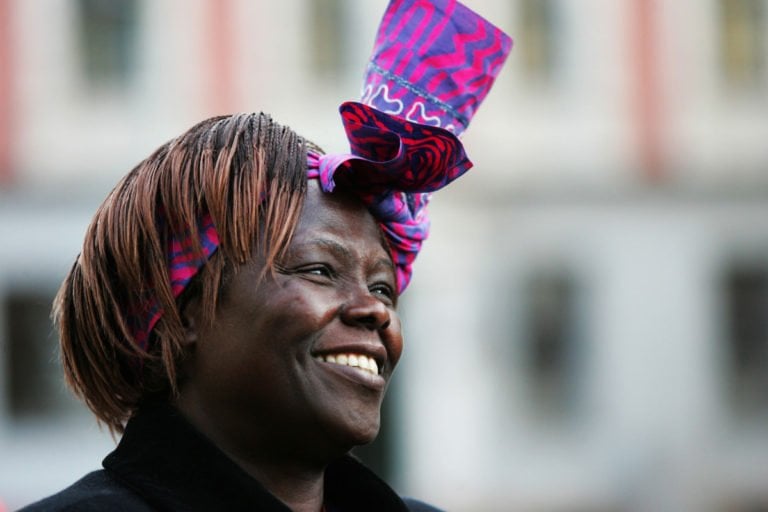
On the occassion of International Black Women History Month, April, we remember Wangari Maathai, the first African Woman to win Nobel Prize. She won Nobel Prize for Peace on her incredible contribution towards the humanity and the universe through The Green Belt movement which she established in 1977. Her life long mission was to achieve the stability of nature and acquire dignity for womanhood.

Wangari was awarded Right Livelihood Award in 1984, “converting the Kenyan ecological debate into mass action for reforestation.” She was an elected member in Kenyan parliament and served as a deputy minister for environment between January 2003 and November 2005.

Wangari became one of the most influencing leader in Africa. Her fights for the environmental rights and gender justice will be remembered throughout the history of mankind. Wangari died on 25 September 2011, aged 71.

Here it is Wangari’s one of the most noted speech, during The Third Annual Nelson Mandela Lecture in Johannesburg, South Africa in 19th July, 2005.

Bill Clinton, Nelson Mandela and Wangari Maathai

Your Excellencies, Presidents Nelson Mandela and Bill Clinton, Your Grace the Archbishop Desmond Tutu, Her Excellency Graca Machel, Ministers, Excellencies, Distinguished guests, Ladies and Gentlemen,

Allow me to thank the Nelson Mandela Foundation for inviting me to share these unforgettable days with South Africa. It is both a privilege and an honour to be in your midst and to give this year’s Nelson Mandela Lecture.

This is a very special time when we are celebrating Madiba’s birthday. Madiba, you are a source of great joy and pride for all of us in Africa and indeed in the whole world. Thank you for your dedication and commitment for the cause of freedom and human dignity.

We thank God for the gift that is Nelson Mandela. We salute you Madiba, we love you and we shall remain forever grateful to you. It is a privilege to be here to say, Happy Birthday, and may you have many more.

I am very aware of the extraordinary speakers of previous Mandela lectures. Both President Bill Clinton and the Archbishop Desmond Tutu have set very high standards for these lectures. I am deeply honored to share this platform with them.

In the last few weeks the world and G8 leaders have focused on Africa. In Gleneagles, Scotland, G8 leaders were joined by African statesmen, among them Presidents Thabo Mbeki of South Africa, Olesegun Obasanjo of Nigeria, Benjamin Mkapa of Tanzania and Prime Minister Meles Zenawi of Ethiopia.

Leading up to the G8 meeting, another global campaign was picking up: Live8. Inspired by Geldof, Bono and other concerned artists around the world, the concerts were organised in support of Africa, attracting millions of ordinary citizens in industrialised countries. They went to enjoy the music but they also went to be informed and educated about Africa. They used that forum to express their support for Africa. The G8 leaders listened and watched as their citizens gathered to support the call to make dehumanising poverty unacceptable.

But even as I appreciated and was encouraged by the efforts at Gleneagles and around the world I had some concerns. This is because I knew that the G8 leaders had their own concerns and constraints. I also knew that they had some doubts about leadership and governance in Africa. They were therefore unlikely to, for example, cancel all the unpayable debts. Yet they knew that in some countries like Kenya, essential services are denied citizens so that debt obligations can be met. In other countries, the average income used to determine eligibility for debt cancellation is misleading. This is because of inequitable distribution of resources, which has created large disparities between the few very rich and many citizens who are very poor. When such countries are denied debt relief, it is the many poor people who are punished.

The G8 leaders had their reasons for their doubts. It was reported that some of these reasons included the fact that some African governments do not respect the rule of law and human rights, that some leaders are corrupt and often siphon the same money into personal accounts, that some governments spend funds inefficiently and excessively. It is important to realise, however, that those who may be guilty do not suffer; it is the poor who suffer.

Despite the challenges, there has been much progress in Africa. There are already good indications of good governance in many countries. In many others, civil society continues to grow with moral support from governments and the African Union. For example, the African Union is currently overseeing the formation of a civil society organ (ECOSOCC), to advise it on issues related to the African people and to ensure that they participate in the affairs of the Union. I have the honor of presiding over this process and I consider it an important window of opportunity.

Further, many countries in the region are resolving their conflicts and are working for peace and stability. For sure, much remains to be done. But we must appreciate and encourage those who are making bold decisions.

Nevertheless, as I stated earlier, it is the ordinary citizens who suffer when debts are not cancelled, when financial assistance is not forthcoming or when trade barriers are raised.

It is on their behalf that the African leaders traveled to Gleneagles to meet G8 leaders. It is on their behalf that the Live8 concerts were held. It is for them that the Jubilee 2000 campaign was carried out by global citizens. Yet many ordinary citizens in Africa had no idea that such discussions and concerts were taking place on their behalf.

I wonder how many consultations and concerts will be held before a sustainable solution is found not only by the G8 leaders but also by the African leadership and people. What will it take for a solution to be found?

I ask these questions because the poor people the world is concerned about come from Africa, which is one of the richest continents on the planet. It is endowed with a large number of men and women; it has a lot of sunshine, oil, precious stones, forests, water, wildlife, soil, land and agricultural products. So, why are her people so poor?

The problem is that many Africans lack knowledge, skills and tools to create wealth from their resources. They are unable to add value to their raw materials so that they can take processed goods into the local and international markets and negotiate better prices and better trade rules. Without that capacity, opportunities will continue to slip by or others will continue to take advantage of them without the benefits reaching the people in whose name these negotiations take place.

What can be done to prepare Africa so that she benefits from the concessions and opportunities that surely lie ahead?

During the last thirty years of working with the Green Belt Movement I saw the need to give our people values. The man whose birthday we celebrate today exemplifies these values. For example, the value of service for the common good. How shall we motivate our men and women in the region, willing to sacrifice and volunteer so that others may have it better? The values of commitment, persistence and patience, to stay with it until the goal is realised.

The love for the land and desire to protect it from desertification and other destructive processes. Perhaps it is due to lack of information and ignorance, or perhaps it is due to poverty, but we need people who love Africa so much that they want to protect her from destructive processes. Some that are threatening the entire continent include desertification due to deforestation, encroachment into forests for subsistence farming, overgrazing and loss of biodiversity and soil. Of particular importance for Africa and the world is the protection of the Congo Basin Forest Ecosystem.

These two values are important for African leaders, who should govern and serve for the benefit of the people, rather than themselves. Working at the grassroots level and with the poor people, it was depressing to see those in power fail to provide necessary services and protect the land. Instead they facilitated the exploitation of the people and their resources. Because I have experienced irresponsible governance in the course of my work for the environment, it is difficult to dismiss the reservations and concerns expressed by the G8 leaders.

Another value we must espouse is the love and concern for the youth. One of the most devastating experiences at the grassroots level today is to see the youth wasting away because they are unemployed, even after they have completed secondary and tertiary education. Governments should prioritise the youth and their health. This should involve investments in technical education, HIV and AIDS prevention, treatment and care/support programs.

One of the constraints, even for the government, is that we have not invested enough in education and especially in technical education. Technical education would give citizens knowledge, skills and experience, which would make them competent, confident and competitive. Such personnel would create opportunities for entrepreneurship and wealth creation. Such investments in Asia have contributed significantly to the economic growth and alleviation of poverty in the region.

Without skills, people will always find themselves locked out of productive, rewarding economic activities that would give them a better share of their national wealth. They find themselves unemployed or underemployed and they are certainly underpaid. They may wish to secure a well-paid job, but if they do not have the skills and the tools, nobody will hire them. Consequently they will not be able to meet their needs for housing, healthcare, nutrition, and other family and personal needs. They get trapped in a vicious cycle of poverty and sometimes crime.

Besides these values Africa needs to prepare herself by deliberately working for peace and security. I believe much of the poverty in Africa has been fuelled by conflicts. In the course of my work I learnt that whether it is at the national or regional level, most conflicts between communities are over resources: who will access, control and utilise them; who will be included or excluded.

Often, those in power invent excuses to justify the exclusion and other injustices against those perceived to be weak and vulnerable. But when resources are scarce, so degraded that they can no longer sustain livelihoods, or when they are not equitably distributed, conflicts will invariably ensue.

Equitable distribution of resources cannot be effected unless there is democratic space, which respects the rule of law and human rights. Such democratic space gives citizens an enabling environment to be creative and productive. What is clear is that there is a close linkage between sustainable management of resources and equitable distribution of the same on the one hand and democratic governance and peace on the other. These are the pillars of any stable and secure state. Such a state has the enabling environment for development. People who are denied the three pillars eventually become angry and frustrated, and undermine peace and security in their neighborhoods and beyond.

For that reason, we need to manage our resources sustainably, accountably and responsibly. We need to share those resources equitably. Otherwise, we shall continue to invest in wars and conflicts, fighting crime and domestic instability, rather than promoting development and thereby eliminating poverty.

Over the past thirty years of work in Kenya I discovered something that is still not very clear to me. It is perhaps the most unrecognised problem in Africa today, especially at the grassroots level. It is the level of disempowerment of our people. Wherever it comes from, it manifests itself in the form of fear, lack of confidence, low self-esteem, apathy and lack of enthusiasm to take charge of one’s life and destiny. To the disempowered, it seems much easier and acceptable to leave their lives completely in the hands of third parties, especially governments.

At the Green Belt Movement, to assist community members understand the need to take charge of their destiny and overcome apathy, we initiated education seminars to identify problems, their sources and solutions. This became a process of self-discovery and self-empowerment. It would take a long time but eventually participants believed in themselves and became more independent and self-reliant. They embraced some of these values mentioned above and developed a deep desire to better themselves and their immediate environments. Eventually they were even willing to work for the common resources like forests and public parks.

For Africa to benefit from the opportunities which come her way, she must empower her people. Education will help, peace and security are important, and sustainable management of resources is essential. But the people must be allowed to gain confidence, dignity and a sense of self-worth. Ultimately, they must also be empowered with knowledge, skills and tools to take action. This is why debt relief is very important. It allows governments additional resources to invest in initiatives that empower.

The phenomenon of disempowerment is very common and perhaps that is why it is not addressed. But I believe that it is one of the main reasons why so many people are unable to take advantage of the many opportunities available in Africa today. Such disempowerment and the triumph over it remind me of a story in the Bible that I love. (It is in Acts 3:1–10.) It’s the story where Peter and John went to the temple for prayer. As they approached, they came across a beggar, who was crippled since birth. The beggar must have had all the characteristics of a disempowered person: poor, self-effacing, dejected, low self-esteem, no self-pride and no sense of well-being. He did not even dare to look up to the people from whom he was begging. He was too ashamed of his status. The Bible says that he bowed his head, hid his face and stretched his hand for alms.

Peter and John, upon seeing him in that dehumanised and humiliated state, said to him “Look up”! That must have been a bit startling, because people did not usually talk to him. Peter went on, “Silver and gold we do not have, but what we have we give to you.” And, taking him by the right hand Peter helped the lame man stand up saying, “In the name of Jesus Christ of Nazareth, Rise up and walk!”

And much to his surprise, he felt his limbs get strong and he rose up and walked forward with confidence and pride. The Bible says he went with Peter and John into the temple “jumping and praising God.” He was an empowered man: no longer a beggar, no longer dehumanised. Now he could go and take care of himself with dignity, self-respect and confidence.

There must have been many worshippers who had given him a few coins many times but never thought of doing anything different. But Peter and John reacted differently and decided to empower him, to give him wholeness. They encouraged him to believe in himself and walk with them into the temple.

Friends and leaders of Africa should be like Peter and John. They should strive to empower Africa and not only give her alms. African governments should be responsible and accountable to their people, lifting them from ignorance, diseases and poverty, which cripple them.

In closing, we must remember that Peter and John called on the beggar to rise up and walk. It was not Peter and John who had to do the rising and the walking. It was the beggar. On his part, the beggar made a choice to respond to the call. He could have preferred to stay put and continue to beg the rich worshippers. But he decided to respond to an opportunity which presented itself, he was ready for it and his life was changed for the better.

With African leaders like those here today, President Nelson Mandela, Archbishop Desmond Tutu and many friends like President Bill Clinton we have the “Peters” and “Johns” we need. They call on all of us to “Rise up and walk.” Walk away from ignorance, inertia, apathy and fatalism. Walk towards the temple of economic and political freedom. An Africa free of dehumanising poverty.

There are simple actions we can take. Start by planting ten trees we each need to absorb the carbon dioxide we exhale. Practice the 3R campaign (reduce, re-use, repair and re-use, which is mottainai in Japanese), get involved in local initiatives and volunteer your time for services in your community. Governments should prioritise technical schools and give people knowledge and skills for self-employment.

Madiba, I know this is the dream you have for Africa. An Africa free of poverty. An Africa with economic and political freedom. An empowered Africa.

So my fellow Africans. Let’s heed the call of Madiba: “Rise Up and Walk!” 

Thank you.

(Courtesy for speech: The Green Belt Movement)

‘Modi government allowed violence against minorities,’ points USCIRF

A US government panel has called for India to be put on a religious freedom blacklist over a “drastic” downturn under the prime minister, Narendra Modi, triggering a sharp response from New Delhi. The US commission on international religious freedom recommends but does not set policy, and there is virtually no chance the state department will follow its lead on India, an increasingly close US ally.

In an annual report, the bipartisan panel said that India should join the ranks of “countries of particular concern” that would be subject to sanctions if they do not improve their records.

“In 2019, religious freedom conditions in India experienced a drastic turn downward, with religious minorities under increasing assault,” the report said.

It called on the US to impose punitive measures, including visa bans, on Indian officials believed responsible and grant funding to civil society groups that monitor hate speech.

The commission said that Modi’s Hindu nationalist government, which won a convincing election victory last year, “allowed violence against minorities and their houses of worship to continue with impunity, and also engaged in and tolerated hate speech and incitement to violence”.

The commission recommended that the State Department designate India as a “country of particular concern,” or CPC, said Nadine Maenza, its vice chair, because it “tolerated particularly severe violations of religious freedom.” The most “startling and disturbing,” she said, was India’s passage of a citizenship amendment act that fast-tracks citizenship for newcomers who belong to six religions but excludes Muslims.

India last received a similar rating from the watchdog in 2004, also a period of heightened concern over a Hindu nationalist government’s treatment of religious minorities, especially Muslims and Christians. In 2002, more than 1,000 people, mostly Muslims, were killed in three days of riots in the state of Gujarat.

It also highlighted the abrogation of article 370, which was India’s only Muslim-majority state, and allegations that Delhi police turned a blind eye to mobs who attacked Muslim neighborhoods in February this year.

The Indian government, which has long been irritated by the commission’s comments, quickly rejected the report. “Its biased and tendentious comments against India are not new. But on this new occasion, its misrepresentation has reached new levels,” a foreign ministry spokesman, Anurag Srivastava, said.

Featured photo: Sreekanth Sivadasan

(With the inputs from AFP)

Central Govt under fire for importing overpriced, faulty test kits from China

The Indian Council of Medical Research (ICMR), has decided to cancel all further orders of ‘faulty’ rapid testing kits from China. The Indian government had placed orders with two Chinese companies for rapid testing kits. These testing kits were meant to test the presence of antibodies in blood samples in order to determine if the tested person was previously infected by the novel coronavirus.

The first batch of kits arrived last week, however, many states claimed that the kits were highly ‘faulty’ because they failed to detect antibodies from blood samples that were known to be infected. ICMR has reported that the kits also showed ‘wide variation’ in their sensitivity. ICMR has issued a statement claiming that all further orders have been cancelled from the two Chinese biomedical companies- Guangzhou Wondfo Biotech and Zhuhai Livzon Diagnostics. ICMR has also claimed that it has asked all states to stop using the kits that were provided by these two companies so far.

However, Chinese authorities have claimed that ICMR did in fact approve the testing kits provided by these two companies, and the kits were only exported after the Indian government issued its approval.

“The quality of medical products exported from China is prioritised. It is unfair and irresponsible for certain individuals to label Chinese products as ‘faulty’ and look at issues with pre-emptive prejudice,” Chinese embassy spokesperson Ji Rong said today.

The ICMR is also in soup for procuring these testing kits at an exorbitantly high price.

A case in the Delhi High Court has revealed that the Indian government paid twice the price of the testing kits. NDTV had earlier reported that the Indian distributor-Real Metabolics which has been distributing the kits in India sold the kits at an exorbitantly higher price. The case came to the forefront following a legal dispute filed by Real Metabolics claiming they had the sole right to sell these kits that were imported by Matrix following information that the Tamil Nadu government had bought them from another distributer.  

According to a report by Moneycontrol, over 5 lakh kits that were ordered from Wondfo Biotech were bought at a price of Rs 245 per piece by the company that imported them. However, it was revealed that the distributers—Real Metabolics and Aark Pharmaceuticals sold each piece for Rs 600 to the government. This is 60% higher than what was paid to import the kits.

The government has come under fire by various opposition leaders. Congress leader Shashi Tharoor in a scathing attack on the government has questioned not just the government’s decision to but these kits for twice their value but also the decision to buy them from China in the first place when many countries all over the world reported an accuracy level of less than 30% from Chinese imported kits.

As early as March, Spain had decided to send back the testing kits it imported from China claiming that they were unreliable since they had an accuracy rate of less than 30 per cent. Apart from China, U.K., Turkey, Czech Republic and Philippines also reported that the kits imported from China were inaccurate.  

In an article on The Print, Tharoor questions the government’s decision to buy these kits from the same Chinese companies which had been rejected by other countries.

“India went ahead and ordered from the same Chinese company — Guangzhou Wondfo — with which the UK government had a bad experience. Whether this reflects ineptitude or collusion – or worse – it is difficult to say a kind word about this decision. If the orders had already been placed before the bad news started coming in from abroad – a possible next line of defence for Modi government – why weren’t the orders cancelled, especially when it was anyway delayed? Why couldn’t we refuse delivery until China proved their test kits worked?”, Tharoor asked the government.

However defending ICMR’s decision, The Ministry of Health and Family Welfare (MoHFW) issued a statement explaining the government’s decision to go ahead and buy the kits from the above mentioned Chinese companies.

“For Wondfo, evaluation committee got 4 bids and the corresponding quotes received were Rs. 1,204, Rs. 1,200, Rs. 844 and Rs. 600. Accordingly, bid offer of  Rs. 600 was considered as L-1,” the statement read. Also, MoHFW claimed that IMR went ahead and placed orders with Wondfo since the company apparently had “the requisite international certifications.”

The statement also says that ICMR did try to procure the kits directly from Wondfo without a middle-man but encountered ‘logistical issues’ and so went ahead with procuring them from Real Metabolics, since they placed the cheapest bid.  

India has been severely criticised for not carrying out enough tests and as more reports surface of people being asymptomatic to the virus, leading international experts have claimed that massive random testing is the only way to flatten the curve. With ICMR putting testing on hold because of the inaccuracy of the Chinese kits, India finds itself on the backfoot.

China reopens schools, students made to follow strict social distancing guidelines

China, which observed a 3-month long lockdown as it battled Coronavirus is slowly returning to normalcy. Wuhan, one of the worst hit provinces celebrated the end of lockdown early in April and on Sunday, the Chinese news agency, Xinhua reported that all COVID-19 cases have been cleared from the city’s hospitals. This has been closely followed by many provinces reopening schools in the country following strict social distancing guidelines.

It is reported that the Chinese Ministry of Education (MOE) has ordered different class schedules for primary and secondary classes throughout the country. Schools have also been asked to design emergency plans to deal with students showing COVID-19 symptoms. However, Wang Dengfeng, director, MOE, did admit that the country’s schools will face their real challenge in May when intensive classes are scheduled to resume throughout the country.

Eileen Chengyin Chow, a professor at Duke University shared pictures on Twitter of Chinese school students attending classes wearing handmade social distancing headgears.

“First graders back to school in Hangzhou, with social distancing headgear The long horizontal plumes on Song Dynasty toppers were supposedly to prevent officials from conspiring sotto voce with one another while at court—so social distancing was in fact their original function!,” Chow tweeted.

In the country’s Hunan province students at Changjun Xiangfu High School found themselves having lunch at the school’s gymnasium with desks placed 1.5 meters apart in order to maintain social distance. “With 480 single desks spaced 1.5 meters apart and the floor covered with waterproof nylon cloth, the 800-square-meter gymnasium has been converted into a large canteen,” the Chinese news agency reported.

A video posted by the South China Morning Post has gone viral showing a 10-year-old boy in the Hunan province showing off his Kung Fu moves as he returned to school.

Apart from schools, China also claims to be carrying out numerous construction projects in order to get the country’s industries back on their feet. This week, Xinhua also reported that complete construction has resumed in the Shenzhen-Zhongshan cross-sea link in South China’s Guangdong.

“The economy is a dynamic circulating system that cannot afford a long-term disruption,” Chinese President Xi Jinping said earlier in February. The country is looking to restart its manufacturing and production activities at the earliest with the Chinese President personally inspecting major production plants.  

Just one exam center allocated for South out of 28 centers by The Indira Gandhi National Tribal University, MP; students concerned

The Indira Gandhi National Tribal University in Madhya Pradesh has announced only one center in southern India in Chennai for its 2020-2021 admissions entrance examinations out of 28 exam centers across India.

According to the latest notification from the University, it excludes entrance examination centres in Kerala (Wayanad), Telengana (Adilabad), Andhra Pradesh (Srikakulam), and Karnataka (Karwar).

This comes as a blow to students from southern states at the lack of opportunity provided as there has been a steady increase in number of south Indian students enrolling themselves to this university. In 2019, after Madhya Pradesh which having 7 examination centres, the most number of students attended for entrance examination of the University were from Kerela which had only one centre in Wayanad.

Congress leader Rahul Gandhi who is also representing Wayanad constituency in LokSabha has written to Union HRD Minister Ramesh Pokhriyal Nishank demanding to amend the admission notification to include an entrance examination centre in Wayanad. Rahul writes that the Wayanad is home to the largest tribal population and urging students to opt for examination far away from home is a denial of opportunity.

T.N. Prathapan, Member of Parliament has written to the Union HRD Minister demanding an immediate intervention. He says, “It will badly effect the mission and vision of a Varsity like IGNTU which was established for the betterment of segregated sections of the society, especially Adivasi communities”. He further urged to review the decision taken by the university and that the center must continue to entertain the spirit of plurality which consists of different cultures from all parts of the country. “This issue of negligence towards South is becoming a regular issue with many central universities.” He added.

Students expressed their concerns and said that it would put many students in an extremely difficult situation financially and cause great inconvenience considering the risk of COVID19 in the country.

Rajmohan Unnithan, PK Kunhalikutty, and Elamaram Kareem, Members of Parliament as well as National Student’s Union India (NSUI) have also written to Union HRD Minister asking to review the decision as it puts south Indian students at a disadvantage.

According to the admission notification, the entrance exam is scheduled to be held in June. Out of the total 28 exam centers, seven are in Madhya Pradesh, three in Chhattisgarh, two each in Odisha, Uttar Pradesh and Uttarakhand, while one each in Manipur, Bihar, Assam, Gujrat, Delhi, Chandigarh, Jammu, Jharkhand, Maharashtra, Rajasthan, Tamil Nadu and West Bengal. The online application started on 23 April and will be open until 10 June.

This decision of excluding allocation of exam centers in other southern states defeats the purpose of establishment of the University, which is to promote improvement of social, educational and economic conditions and welfare of scheduled tribes thereby providing more opportunity for the tribes.

‘Football of resistance’; Johan Cruyff and the Catalonian struggle

Sarfras Sainudheen

On 9th February 1975, Barcelona was playing an away game against Malaga. Barcelona was denied two clear penalties and a goal was disallowed for offside. Johan Cruyff who was the captain of Barcelona was sent off for protesting against the referee and was taken outside the football pitch forcefully by the police of the then Spanish dictator General Franco. But while leaving the pitch, Cruyff took out the captain’s red and yellow striped armband which resembles the Catalonian banner ‘La Senyera’ and he kissed it before the spectators. That was a gesture of the Catalonian resistance against the Spanish dictatorship.

Spain and the states of Catalonia and Basque were under the dictatorship of general Fransisco Franco from 1939. Both the Basque and the Catalonian states were highly oppressed under him. He banned the regional cultural events of theirs and promoted Spanish bullfight and the flamenco dance. Franco also banned the regional languages of Catalonia and Basque and imposed the Castillan language. As Madrid was the center of the dictatorship, General Franco used the football club Real Madrid which was then the biggest team in Europe as a political tool to suppress those states even more. The matches of football club Barcelona, a Catalan club was the last resort of the Catalan people to raise their voice against the Spanish dictatorship and Camp Nou, the home stadium of Barcelona was the only place to do that. Hence, Barcelona has become more than a club for the Catalans.

Real Madrid was a dominant footballing force in Europe during the 1950s and 60s  and they used to thrash Barcelona which was a team already under suppression. All the good players available were never allowed to go to Barcelona, instead, they went to Real Madrid, and also there weren’t many resources to support the club as the owners of the club were a group comprised of Catalan locals only. Just like the club, Catalans also became voiceless and hopeless. Barcelona really needed someone to give a hand and then entered Johan Cruyff. Cruyff, a Dutchman was the best footballer in the world at that time. His total football with the Netherlands National team and AFC Ajax Amsterdam redefined modern football.

In 1973, Cruyff was invited to Real Madrid by General Franco and Ajax also wanted him to go there. But Cruyff refused the offer by saying that he won’t play for the dictator’s team and went  to join the Barcelona which was under the second last spot in the league. With Cruyff, Barcelona sensed a new hope and a spirit to fight. He led the team to the Spanish title after 14 years and to a historic 5-0 win against Real Madrid in their own stadium, the Santiago Bernabeu. Barcelona fans took on the streets to celebrate the win with the Catalan flags and songs. A New York Times journalist said “ What the political leaders could not do in decades, Cruyff did in 90 minutes”. Historian Jimmy Burns wrote “ Cruyff brought a sense of themselves to the people, with Cruyff, they believed they would never lose”. Cruyff was a source of courage for the Catalans whose minds were dead with the ruthless civil war and years of suppression.Cruyff adopted the Catalan resistance as his own. When the Catalan names were banned, he named his newborn son Jordi after the patron saint of Catalonia. He faced grave opposition from the authorities for doing so. The stubbornness of Cruyff endeared him to Catalonians.

In a documentary about him, he said “I didn’t know that the name Jordi is prohibited, but when I realized, I became adamant”. And his stubbornness paid off in the end. Cruyff refused to play in the 1978 world cup in Argentina which was then under a military dictatorship. When asked about that, he responded: “ how can you play football a  thousand meters away from a torture center?”. Cruyff had a great impact on the Catalan culture both as a player and manager of FC Barcelona. He gave them a sense of pride and hope for the people who were ruthlessly suppressed for decades. After his death, the Spanish newspaper Sport published a picture making Cruyff look like Che-Guevara. As this week would have marked his 73rd birthday, the football fans around the world remember him for his philosophy of modern football but the Catalonian folklore celebrates him as one of their greatest heroes.

While the world is focusing on the pandemic, the fascists in India are busy hunting down dissent

“The autocrat, the despot, has always wished, whenever he was bankrupt of any other argument, just to shut up those who did not agree with him.”- K.T Shah in Constituent Assembly

It is trying times for Indian Muslims, may be, it always has been. While in the last few weeks we were defending against the demonization of Tablighi Jamaat, this week we have the nightmare of UAPA. The UAPA has once again came into headlines, and as always, is being used to persecute the minorities and human rights activists in India. Jamia students Meeran Haider and Safoora Zargar, JNU student leader Umar Khalid, Kashmir based journalists Masrat Zahra, Peerzada Ashiq and Gowhar Geelani and the AAP leader Tahir Hussain are the latest to be hunt down by UAPA.  The right wing has become explicitly Islamophobic in its actions as the country witnessed an anti-fascist movement recently, which was initially spurred by the protests against the discriminatory Citizenship Amendment Act in 2019.

Unlawful Activities (Prevention) Act, 1967 (UAPA) with its amendments has been a major tool of the government to criminalise dissent and target ideological opponents. While it surpasses judicial scrutiny and general procedure of arrest and bailment, the provisions which makes this a stringent and draconian law should be of concern. In this write up, I have tried to figure out the major problematic provisions of the UAPA, how it violates basic human rights and how it is used as a tool by the government to create a ‘regime of thought crimes’, as Ghautam Bhatia says.

Meeran Haider, Masrat Zahra, Umar Khalid, Gowhar Geelani, Sharjeel Imam, Safoora Zargar and Peerzada Ashiq (Clockwise)

UAPA was brought in 1967 as a legislation to put a few restrictions to Fundamental Rights under Article 19 relating to Freedom of Speech in view of National Security, Sovereignty and Integrity. In itself a stringent law, however, the law has been amended several times, making it more draconian and vesting in the state disproportionate and unfettered power to persecute opposing voices. The last amendment brought in 2019, by the NDA government being the most repressive.

UAPA subordinates international and constitutional laws

Like the repealed TADA  and POTA , UAPA also grounds for huge human rights violations and subordinates the constitutional laws as well as stands against India’s obligation under International human rights law. Through these laws, under the provision for national security, the state is trying to onslaught the rights and liberties of people and to deal with criticism in a colonial strategy. During the pre-independence era, the British used the term ‘unlawful activities’ to criminalise the Indian National movement. 

Although the state claims that the UAPA adheres to international effort to counter terrorism, the provisions completely violate the discourse of International human rights laws which protects against torture, cruel and inhuman treatment in custody. The definition of ‘terrorist act’ under UAPA is very ambiguous and differs from the definition by United Nations Special Rapporteur on the Protection of Human Rights and Fundamental Freedoms while Countering Terrorism.  Further, India being a party of the International Covenant On Civil and Political Rights(ICCPR) should adhere in providing fair trial as well as uphold the presumption of innocence of the accused. However, UAPA blatantly violates all these provisions and reverses the burden of proof on the accused, on ground of presumption of guilt. It further allows police a period of 180 days for investigation as well as to detain for 6 months, without any evidence, including police custody up to 30 days. However, International Law prescribes preventive detention only as a last resort.

Coming to the Rights under the Indian Constitution, the right to fairly criticize the government or hold protests against government policies comes under the ambit of Freedom of Speech and Expression, which is protected under Article 19 which in itself is a Fundamental Right. However, these special laws fall under the ‘reasonable restrictions.’ Under the myth of safeguarding sovereignty and integrity, these special laws, thus favour the state in placing ‘national security’ as they call it, over Rule of Law and allow the state propaganda to reign unchecked. 

A Delhi Police officer fires inside the university campus of Jamia Millia Islamia during an anti CAA protest of varsity students. Photo: Sreekanth Sivadasan

The vague definitions give state absolute discretionary powers

It is the vague definitions under the UAPA that primarily allows the state to unleash its political vendetta and delegitimize the critics of the government. The terms ‘Unlawful Activity’, ‘terrorist acts’, ‘disaffection against India’ etc are defined ambiguous and vague enough to place state in an arbitrary position to decide what falls under these and what doesn’t. Moreover, under its ambit could be included intentional and unintentional acts as well as acts not yet committed. Thus, the state decides who is a terrorist/ anti- national / urban- Naxal. In this way, as we see in the recent case of the Delhi pogrom and the current arrests, Muslims are persecuted even when they are the victims and evidences points out to Pro- Hindu groups. 

Dissenting voices and activists are tortured and held in custody with almost no evidence against them or even without charges for long periods and then finally acquitted. That too, subject to torture and inhuman treatment. This is the scenario of all the anti-terror legislations in India including UAPA and NIA  as well as its predecessors, TADA and POTA.

Moreover, there is neither a provision for anticipatory bail nor is bail easily available as there is presumption of guilt as opposed to presumption of innocence in normal procedure. Thus, burden of proof lies in the accused to prove that there is prima facie no offence , which becomes a difficult task owing to a wide ambit of the vague terms used in the Act.

Unfortunately, unlike TADA and POTA, UAPA doesn’t have a sunset provision which allows review in a specific time. Moreover, there is no provision holding officials accountable for malicious prosecution. Further on, the 2019 amendment took away the power of the state authority to grant permission or not for seizure of property, giving absolute power to the centre and thus misbalancing the federal structure.

A matter of concern is that, like every other anti-terror legislation, this affects the weakest of the society, in the Indian context, the minorities including Muslims. Possessing the least social capital and political space, the youth, scholars and institutions of the minorities are specifically targeted and suppressed using these laws. While anti- Muslim pogroms enjoy absolute impunity for adhering to achieve the majority nationalism, these laws are used to impeach and push critics into deeper vulnerability. 

Parvesh Sharma, Anurag Thakur, Kapil Mishra

In the context of Hindu majoritarianism and islamophobia, it is pretty evident that the govt has used the UAPA to specifically hunt the dissenting voices of the Muslim community. The common factors about all those recently booked under UAPA are that they are young Muslim activists who are standing in staunch opposition against the repressive state.

From where I began, indeed it’s a tough time for Indian Muslims. In a country where ‘Desh Ki Gaddaron ko’ by a minister of State is retorted with ‘Goli maaron Salon Ko’, while “We won’t respond to violence with violence, we won’t respond to hatred with hatred, we will respond with love, If they thrash us with lathis, we keep holding the tricolour” by Umar Khalid is treated with UAPA, there are reasons for the Muslims to fear as it is identity that differentiates both. It’s a hard time for us focusing, from Kashmir to the unjust Babri Masjid Verdict, then to CAA and Delhi Pogrom, to targeting Tablighi Jamat to UAPA, we stand, still and strong, resisting. Indeed, Dissent is the highest form of patriotism. Viva Revolution!

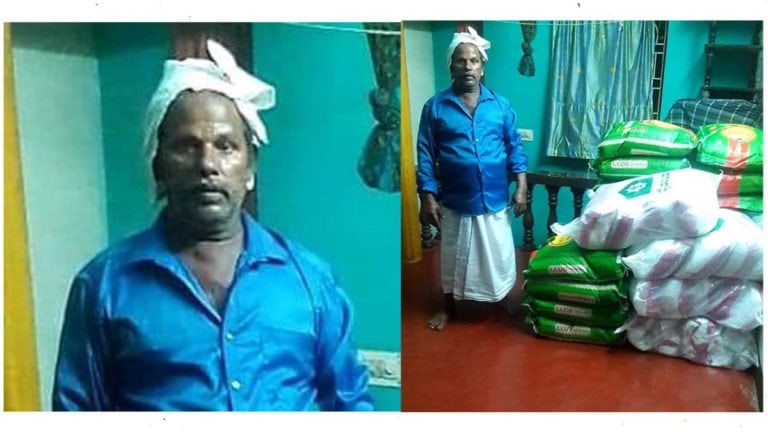
Daily wage worker spends savings for Hajj, helps lockdown victims

A Muslim Daily wage worker, Abdul Rahman of Bantwal Taluk in Mangaluru, Karnataka spent all his lifetime’s savings meant for pilgrimage to Mecca for Hajj to feed the needy during the lockdown.

What is Hajj?The word Hajj means “to attend a journey”, which signifies both the outward act of a journey and the inward act of intentions. It is expected of all Muslims at least once in a lifetime. It is a physically demanding journey that Muslims believe offers a chance to wipe clean past sins and start afresh.

Abdul Rahman says, “Hajj is performed to clean yourself from your sins, if I did not help people who are suffering due to this lockdown, I would be indebted to them. I consider my Hajj has been done now.”He has worked very hard throughout his life to support his family and to fulfill his dream of going on the pilgrimage.

While Karnataka has reported numerous anti-Muslim incidents during Covid19, this Muslim man tells a different story. It is true that people who have very little for themselves often turn out to be the most generous.

World came to know about this story of hope and humanity after Savad Rahman, a Malayali journalist, shared about Abdu Rahman in his facebook post on Saturday morning.

Covid 19: NYC streets in Silence and Helplessness; US in the scariest crisis

New York City |

The sound of emergency siren can be heard at a distance. I looked outside my window to an Empty street. The sound of the siren gets louder as an ambulance passes by with a few police cars following it. This happens 20 times a day, the siren sound is a constant, reminder about the situation I am living in right now. One might think it’s easy to stay home, but believe me when you hear the emergency sirens all day and night, news reports of increasing death tolls and no good development in curing the virus, it really gets in your head and affects you a lot.

COVID-19 started as something, which was scary but far away. But nobody ever thought that it could make the whole wide world stop. 

I remember March 12th was the last ‘Normal’ day, when I took the train to my college. We had a class with very few students in an empty campus. Everyone was scared and clueless of what was going to happen in the upcoming days. I started wearing masks and gloves quite early, filled up my bottle of sanitizer. I was the only one with all things prepared at that point of time. People looked at me as if I came from some other land.

Photo: Roshni
Photo: Roshni

I live in Jersey City, 15 mins away from New York City. I used to travel everyday through the World trade centre. My college is near Wall street, I am used to the crowd and people running over each other. That is what happens on a normal NYC street. But on my last day, wall street closed out, it was silent. The kind of silence which gives chills down your body.

We saw trucks of the military going north of New York State for sealing the borders of the epicentre district, New Rochelle. It is 45 minutes away from where I live. The city came to a standstill since then. But the number of Positive cases was still under a thousand, so everyone was relaxed and still doing their daily work. It was the end of the first week of my quarantine. The Numbers kept on increasing day by day and suddenly it jumped up high into lakhs. Gradually, I stopped watching the numbers. This is where it started impacting my mental health.

One week after the lockdown. I remember receiving an Email stating that two of my Professors were tested positive and two other students. And I met my professor on the last day of my college. So I was practically exposed to the Virus and it was possible that I might also get infected. It was a very stressful time for me. I was scared and alone. I was not prepared for this when I left India 6 months ago. I thought to myself If I get sick I might recover from the symptoms but not the stressful impact it will create on my mind. Thankfully, I passed two weeks of quarantine without any symptoms. 

Once the two week of quarantine ended, I went out for grocery shopping. People were still not taking social distancing seriously. The government cannot force people to do certain things here. Everyone has a choice whether to follow or not. I remember the nursery school was open in my neighbourhood till the end of March. Everyone thought that it is not such a serious thing. I have a Deli right next door and a liquor shop around the corner. People gathered around the shop every day in groups of 5-10. It was risky even going out of my door for getting a post as well. Eventually, things changed within few weeks when the number came up to 2-3 lakhs and New York became the new epicentre. Everyone panicked by the end of March but I am lucky that I stocked everything at the right time. Soon stores started closing and there were strict rules and regulation if you are going out. It was too late by that time. I just watched the graph going up. At one point, reports started saying that the whole NY city has been exposed to the virus some way or the other. 

Photo: Roshni

I think the main reason for this extreme spread was not doing a proper lockdown at the right time. Only a night curfew was declared, and some restrictions for social gatherings, but nobody took it seriously. The federal government and State government were fighting and blaming each other. Majority of working class here are daily wagers, who cannot sit at home and expect to get paid. They have to go to work to get food and survive. The rise of unemployment, the risk of suicides and increasing number of crimes were also something the government was concerned about. The government started testing vaccines but was unable to succeed. Relief funds were soon declared and the police patrolling started near my locality. Things started to get in control but the numbers were still increasing.

All Colleges declared remote learning till further notice. I am a Filmmaker and it is not easy learning creative skills via online classes. Everything completely changed within a few weeks. The banks in India closed and I was going through some financial problems and I was planning to leave the US but then it was possible that my student status gets in danger. As you all already know, the president here doesn’t like people coming to the US. So practically I was stuck here I couldn’t leave even if the lockdown uplifted. Luckily, I was guided and helped by my Professor and Counsellor. I was awarded with a financial aid. We also had meditation and yoga practices in the morning. Karaoke and dance in the evening. This helped all of us in maintaining our mental health at peace during this time. What I appreciate a lot about the education system here is that there are people who are ready to help you even if you are going through a personal problem. I cannot thank my college enough for being with me and helping me out at this time.

Photo: Roshni

We are still going through a tough situation, the numbers are still increasing and people are dying. We will be having online classes for the next semester as well. I miss home but sadly I will not be able to come back anytime soon. I think I have to fight this thing alone. And I am sure there are many like me, stuck away from their family. I would specially like to thank all medical health care providers and front line workers who are still working and providing us with basic needs. Everyone is taking things seriously now, following government orders, staying home, wearing masks while going out.

As an international student who is graduating this year, I have to land a job by September and return the student loan that I have taken back in India. I cannot go back; I will lose my visa status. Also, it is risky and stressful to stay here as there will be no jobs in the upcoming months. It is a stressful time for sure but I believe it will pass and we will come out of it with much strength.

Iran sees slowing down of Covid 19 cases; returns to ‘normalcy’

Alex Shams  

After 7 weeks of partial lock-down, shops and markets across Iran re-open this week. The Coronavirus “curve” has flattened and there’s a sense that the worst is over – or at least, the first “peak.”

Theaters, cinemas, restaurants, cafes, gyms, schools, universities, mosques, shrines are all closed, but ordinary shops and enclosed shopping areas (bazaars and malls) are open. In Iran, schools have been shut since late February – more than double as long as in the US – and they remain shut. Iran joins Italy and Spain, which were hit around the same time way before the US, in beginning partially lifting restrictions this week.

Things were coming to a point where either the lockdown continues and people begin starving at home, or the lockdown ends and the numbers of infected go up again. This will be a problem confronting cash-strapped countries around the world very soon; after a few weeks of telling people to stay home, if you can’t pay them enough to live and get food to them, large numbers of people will start getting sick and dying in lockdown. They’ll run out of food and money to buy new food.

In Iran the government has promised (and delivered) some degree of cash payments and an interest-free loan to people; because of crippling US sanctions Trump imposed in 2018, the government was severely cash-strapped before the crisis. 

Iran applied to the IMF for $5 billion last week for coronavirus relief – and Trump, in an absolutely inhumane move, pushed the fund to deny them the money. Iran is also having trouble getting medical supplies, ventilators, test kits due to US sanctions.

So far the virus has mostly ravaged Europe and the US; but as it hits other parts of South America, Africa, and Asia, money will become a bigger issue. These countries will desperately need relief from IMF loan repayments. Even in the US, they haven’t managed to properly ensure sufficient monthly payments to help people survive. Now imagine elsewhere.

My sense of the future is that there might be numerous peaks; every few weeks, quarantine measures might be re-introduced to bring the numbers back down, and then when they’ve come down far enough, the lock down is relaxed again.

In the new “normal,” people will be permanently discouraged from socializing and hanging out, at least until a vaccine is invented and spread and medical professionals figure out treatment.
Just some observations from the future. This is a long road we’re going down…

(Alex is an Iranian- American writer and a PhD student of Anthropology based in Tehran, Iran)