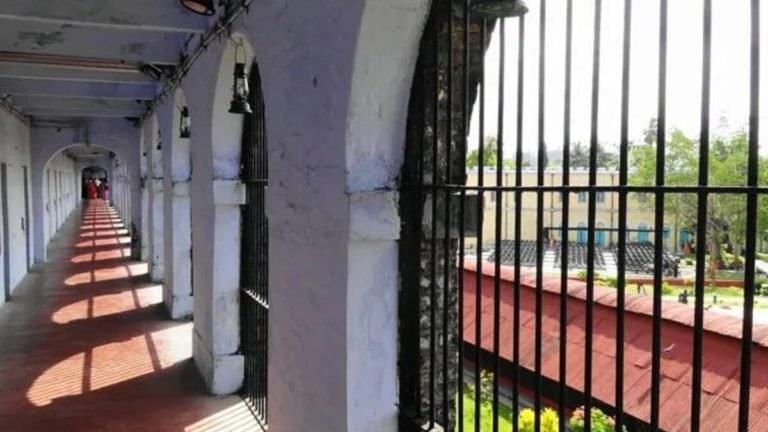
The Maharashtra Home Department has issued orders for the complete lockdown of five prisons situated in Mumbai and Pune region, till further orders, to combat COVID-19. The five prisons are — Mumbai Central Jail, Thane Jail, Yerawada Jail, Byculla Jail and Kalyan Jail. As per the order, no new inmates would be admitted and no one would be let out of these jails.
According to the Ministry of Health and Family Welfare, Maharashtra has recorded 1,364 positive cases of coronavirus so far. Out of the total, 125 people have recovered and 97 have died due to the virus.
With 547 new positive COVID-19 cases reported in the last 12 hours, India’s tally of positive coronavirus cases crossed the 6,000 mark, with the number of cases rising to 6,412. Out of the 6,412 cases, 5,709 are active patients and 504 people have been cured/discharged and migrated. With 30 new deaths reported in the last 12 hours, the death toll stands at 199.
Amidst the coronavirus pandemic, a bipartisan group of top US lawmakers have urged China to urgently shut down all of its operating wet markets as that have a potential to expose humans to health risks through the introduction of zoonotic disease.
A wet market sells fresh meat, fish, produce, and other perishable goods as distinguished from “dry markets”. It gets its name from the floors being constantly wet from the spraying
of fresh produce and cleaning of meat and seafood stalls.
“We write to urgently request that China immediately close all operating wet markets that have a potential to expose humans to health risks through the introduction of zoonotic disease into the human population,” wrote the senators, in a letter to Chinese Ambassador to the United States Cui Tiankai.
Gao Fu, the director of China’s Center for Disease Control and Prevention, has acknowledged that “the origin of the new coronavirus is the wildlife sold illegally in a Wuhan (China) seafood market,” they said.
A wet market in the central Chinese city of Wuhan is believed to be the source of the coronavirus pandemic that began in December last year, crossing from animals to humans.
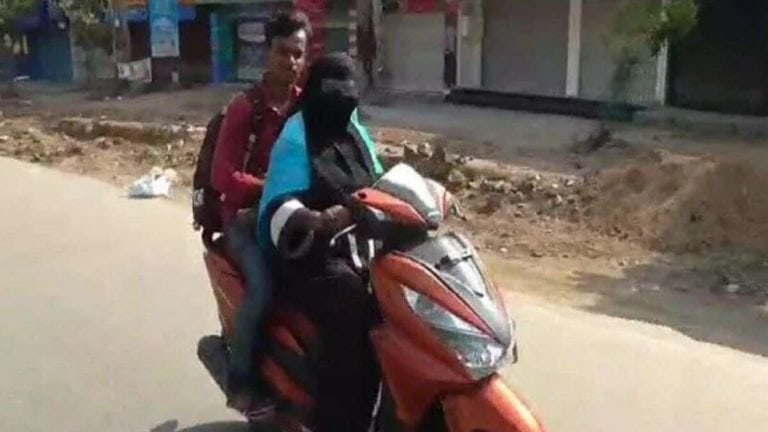
A 48-year-old woman in Telangana rode on a scooty for three days for bringing her son back home amid the nationwide lockdown. As per reports, Razia Begum rode on her scooty for nearly 1400 km from Telangana to bring back her 19-year-old son from Nellore. Her son Nizamuddin had gone to Rahamatabad in Nellore on March 12 to drop his friend and stayed back there. After the nationwide lockdown was announced, Nizamuddin could not come back to his home and called for his mother’s help.
Hearing from her son who was desperate to return home, Razia’s motherly love, courage and determination prompted her to bring him back using her two-wheeler. Although the mother-of-two decided to send her elder son first to bring back his younger brother, she later decided against the idea since she feared police might mistake him for a joy rider and detain him.
After discarding the idea of taking a car for bringing her son back, Razia later choose her scooter and set out from her home on April 6 armed with local police permission. She reached Nellore the next day afternoon and left for home town on the same day along with her son and reached Bodhan on Wednesday evening. Razia, who is a headmistress of a government school, had taken chappatis for her long journey making stops at fuel stations and quenching her thirst at certain points along the way.
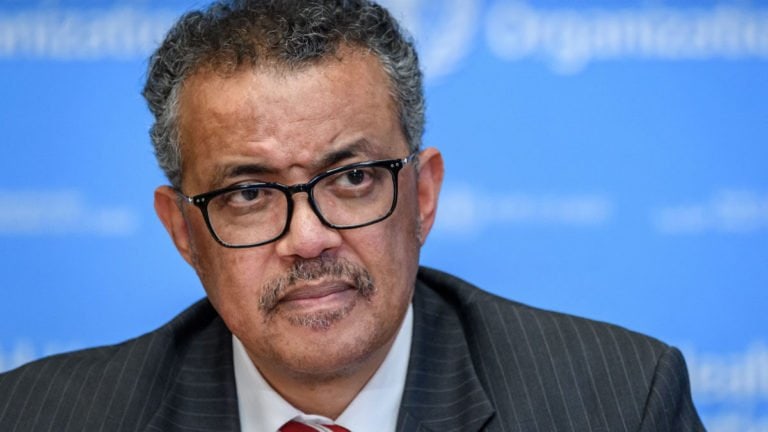
On Wednesday, World Health Organization Director-General Tedros Adhanom Ghebreyesus defended the WHO’s work and called for an end to the politicisation of Covid-19. The Ethiopian also said that he had received deaths threats and has been subjected to racist abuse.
Dr Tedros has now dismissed the comments, insisting: “We are close to every nation, we are colour-blind.”
US President Donald Trump has attacked the World Health Organization (WHO) for being too “China-centric” in its tackling of the coronavirus pandemic.
“The WHO really blew it,” the president said, adding that he was considering withdrawing funding to the UN agency.
After first attacking the WHO the previous day, President Trump renewed his criticism at his news briefing on Wednesday, saying the organisation must “get its priorities right”. He said the US would conduct a study to decide whether it would continue paying contributions,
Also answering questions at the briefing on Wednesday, US Secretary of State Mike Pompeo said the administration was “re-evaluating our funding” of the WHO, adding; “Organisations have to work. They have to deliver the outcomes for which they were intended”.
Even though the center has imposed long-term repo operations and 2 billion swaps for six months, it is not compatible to stand stable in the aftermath of the global currency crisis. International Monetary Fund has described the period as the ‘Humanity’s darkest hour’ and has delineated its anxiousness that things are getting worse than the world financial crisis of 2008-09.
Being engaged in the Musolian mode of fascism, doing serfdom to corporates for enhancing fascist agendas, it is now the turn for the central government to have its prime attention on economic stabilization and upliftment of the entire community. It was Benito Musolini who defined fascism as a fusion of state and corporates. Last 6 years, the country was decisively accepting the way that the NDA-led government had disrupted the welfare outlook of an economy. As we are facing the ideal panic scenario of COVID-19, it will be better to analyze the possibilities of refocusing the government’s attention to economic stability than abounding in political agendas.
Graphical Presentation of proposed Central Vista Project
As the global economy is facing its gravest situation of supply chain crisis, it will simultaneously affect the amplification of the demand side of goods. Further, the US dollar crunch will also add more fuel to fire in the case of the Indian Economy, as its rupee is weakening at the record level. Even though the center has imposed long-term repo operations and 2 billion swaps for six months, it is not compatible to stand stable in the aftermath of the global currency crisis. International Monetary Fund has described the period as the ‘Humanity’s darkest hour’ and has delineated its anxiousness that things are getting worse than the world financial crisis of 2008-09. Asian Development Bank (ADB) has estimated a global loss of $4 trillion due to COVID-19 which is a historical benchmark. Moreover, the US-China trade war will also negatively disrupt the supply chain of India and it will add more problems in maintaining the private consumption of the nation. Indeed, these events will jolt the entire economic system and what in need is to have an analytical study of past and present ways of economic out looking of the nation.
PM Modi with Business leaders. Photo: TOI
After the financial crisis of 2008-09, India has still not able to overcome the balance sheet crisis of Banks. During the first stages of the Modi regime, the NPA (Non-performing Assets) was a matter of question. The then RBI governor had strictly warned the government to have necessary actions to handle the problem and has listed the name of more than 50 personals to have legal action. Despite negating this need, the government forwarded the demonetization, at a time where the country had an 8 percent growth in GDP. It flattened the GDP rate to 5.8, because of the severe liquidity crisis. Even though the country managed to tackle the short-term problems, it rolled out the GST at the same juncture. The GDP strike added more liquidity problems with the long-term results of demonetization. GDP again started to fall down to a historic mark of 4.5 in the last quarter.
It is vital to understand the measure of India in COVID-19 from its current economic status. Meanwhile, the center has adopted many policies, which all traced the fascist mode of corporate submission. The last report of Economic advisor Subramania Swami says that country is facing another balance sheet crisis in the real estate sector which may further convulse economic stability. Still, now, the government has not done anything to discuss this crisis. What we are facing now, is actually the drawback of government policies which was falsely established in the state to seek the praising of corporates. It was interesting to note the report of the Association of Democratic reforms (ADR), saying the BJP alone has 742 crores of rupees from the public as party fund in the last year and 698 was from the corporates. Primarily, we need to break this chain. Then only we can expect some inclusive economic policies from the government part.
Now, the question is how to deal with the COVID-19 panic in tandem with the economic sector? India is now facing serious problems in private consumption, investment and external trade, where all have a prior contribution to the GDP of the nation. The said problem was also revealed in the report of KPMG. As the center has enhanced 21 days of lockdown in the nation, which makes the economy in a standstill mode, private consumption will be severely affected. Moreover, the supply chain disruption will result in having low demand. The low demand will further reduce private consumption.
Migrant workers flee on foot during Covid 19 lockdown.
The lockdown may also bring a domestic supply chain crisis that may result in a lack of essential goods. Similarly, the cash flow gap to corporates will strike the investment hike that may further flatten the flow in external trade. This will clearly affect the GDP growth of the nation. Meanwhile, the Asian Development Bank (ADB) has estimated a fall in India’s GDP to 4, while Fitch calculates a slash of 30-year low loss of 2 percent growth in FY21. Until this time, the government has not initiated any remedy measures, unless having some hogwash to the public for mental happiness. Even though the government has initiated many relief measures, it is important to know how much the so-called relief has informed in rural areas of the nation. The cut in interest rates of small savings and providing a three-month moratorium on all term loans seems to be a trap to poor and backward people. Apart from cutting the income that may receive from small savings, it is important to raise the income of the people.
What all matters is the priority that the center is giving to discuss this panic. The prime consideration needed to be in the health sector. The neoclassical welfare economics tools also give emphasis on health economics. Being in lockdown, it is important to have relief measures for the poor who have don’t even a regular job to meet their daily needs. Moreover, it is important to have rapid testing options as the Panic has high chances to reiterate in the country after an interval. Despite these needs, the government is now having some pre-recorded video conferences, that don’t even add any further relief than fear. The prime thing is the right to get informed. Even the loss of life of an individual needs to get attention and need to be well addressed. But it’s all the priority that matters the policies which stickily abide the intentions of high-class people. The Nation will not survive unless we continuously question this fascist mode of economic engagement and strive to have better financial inclusive measures. It’s all about ideas than remedies. And the question begins from the ideology of the NDA-led government.
As the number of confirmed Coronavirus cases in India reached 1,900, the religious gathering of preachers since early March at the building known as the headquarters of Tablighi Jamaat in India’s capital Delhi suddenly turned into Corona Jihad, leaving a trail of infection and death from Kashmir to the Andamans.
On March 31, the administration of Andaman and Nicobar Islands said 10 people had tested positive for Coronavirus. On March 30, six deaths related to Coronavirus were reported from South Indian state Telangana. A few days before this, on March 26, a businessman died in Srinagar after battling with Coronavirus for many days. 29 out of 32 positive cases are linked with Tabligi jamat conference, the health minister of the Government of Delhi Satyendar Kumar said.
The common thread binding all these otherwise unrelated incidents, apart from the virus, is that all the victims had recently attended prayer gatherings organized by the Tablighi Jamaat – a global Islamic evangelical movement of Indian origin promoting the ideology of Wahhabism – at a six-story building in South Delhi’s Nizamuddin West area. The event has been attended by foreign nationals from Indonesia, Saudi Arabia, Kyrgyzstan, and Malaysia as well.
Markaz popularly called for the headquarters of Tablighi Jamaat founded in 1926, organized a religious congregational programme from 13th to 15th March 2020 even when there was a ban from the Delhi government for mass gatherings due to COVID-19 outbreak in the city. There were also other violations of rules by foreign speakers including misuse of tourist visas for missionary activities and not taking 14-day home quarantine for travelers from abroad. Many participants had traveled back to their states and also eventually started local transmissions especially in Tamil Nadu, Telengana, Karnataka, Kerala, Jammu and Kashmir, and Assam. The congregation resulted in the spread of COVID-19 among many people who attended it who have already departed to many states of India.
A medical worker sprays disinfectant on a Member of Tabligi Jamat who leaves Banglawali Masjid, Nizamuddin. Photo: PTI
The Delhi police have evocated more than 2000 devotees from the building and Banglewali Masjid inside on Thursday morning. Authorities in the Indian capital sealed off the premises of Tablighi Jamaat, accusing it of organizing the controversial religious gathering and ignoring the threat of the COVID-19 outbreak. Delhi Chief Minister Arvind Kejriwal has asked for a police complaint to be registered against the head of the mosque as well. Delhi police on Tuesday said they have filed cases, including criminal conspiracy, against the organizers.
However, the event’s organizers have issued a statement, saying they had suspended the event and asked everyone to leave as soon as Prime Minister Narendra Modi announced that there would be a day-long national curfew on 22 March. While many were able to leave, they say, others were stranded because states began to seal their borders the following day, and two days later, India imposed a 21-day lockdown, suspending buses and trains. The mosque’s premises include dormitories that can house hundreds of people. The organizers say they informed the local police about all of this and continued to cooperate with medical officers who came to inspect the premises.
The Grand Mufti of India Sheikh Abubakr Ahmed, whose office is nearby Tablighi Jamaat headquarters, appealed to strictly adhere to the lockdown and follow the government instructions. Everybody should behave responsibly and stay at home ahead of the COVID-19 outbreak.
Soon after reports of the gathering hit the headlines, the hashtag #CoronaJihad trended on Twitter, with many tweets blaming Muslims for the spread of coronavirus in India. News channels in English and Hindi languages broadcasted in India have come with primetime discussions on Corona Jihad as the virus has deliberately been made spread by the Muslims. The editor in chief of Republic TV Arnab Goswami said they made fun of our national effort. They have compromised us all; we were just winning when they did everything to defeat us.” Goswami again fumed “They have been spreading hate against the lockdown and told their followers to do everything possible to defy the lockdown”. Many politicians participated in the prime-time discussions in different Hindi news channels demanded that the possibility of the Muslim generated virus attack should be investigated. Navika Kumar, editor of Time Now, also mentioned Tablighi Jamaat headquarters in Delhi as a primary source of COVID-19. Like many others, one of the popular TV anchors Bhupendra Chaubey of News 18 had been shouting at a similar Islamophobic discussion on Tuesday overnight at the newsroom calling the controversial issue as Corona Jihad. BJP leaders such as Gautam Gambhir, B.L. Santhosh, and Sambit Patra fuelled the denunciation parade, warning of a “disaster of gigantic proportions” from the “criminal negligence”. Obviously, ‘Coronajihad’ was one of the top trending topics on Twitter Tuesday.
At the same time, senior TV journalist Rajdeep Sardesai added that the Nizamuddin incident was a “one-day tragic breaking news story” and that the migrants’ crisis will “sustain for an extended period”. The ruling Bharatiya Janata Party (BJP) government had previously been criticized for how Modi announced the lockdown just hours ahead of it being imposed. The lockdown has been announced by the Prime Minister Narendra Modi without having adequate preparations that left hundreds of thousands of migrant workers stranded in cities, forcing many to attempt to walk hundreds of kilometers to their villages. This showed Modi’s government in a poor light. Amid of lockdown, many such challenges faced by the common people in India have never been addressed by the home ministry as well. The political editor of Media One Delhi bureau said that the Tablighi incident has given the right-wing government and the media a diversion from the difficulties thousands of migrant workers had been facing since the lockdown began on March 25.
Dr. Abdul Khadir, Islamic Studies department of Jamia Millia Islamia University, Delhi said the on-going controversy is another version of Islamophobic attempt by the ruling Bharatiya Janata Party. The main threat is incalculably dangerous effects of communalizing this coronavirus would long outlast the pandemic itself. Though the organizers managed it irresponsibly, religious gatherings should never be organized like this, he added.
“Between Corona Jihad and defending Tablighi Jamaat, there is a stand about the health concerns of the public.” Muhammed Shameem, a research fellow at Jawaharlal Nehru University, Delhi takes a different drive, “Of course, Muslims in India have always been discriminated against and faced Islamophobia. But, this does not mean that you should not speak up against crimes committed by a group of people like Tablighi Jamaat. This congregation is probably the worst thing that these 3,000 Muslims and thousands of others could have ever inflicted on humanity in the name of preaching Islam. Ultimately, the brokers of Islam have added to this coronavirus mess.”
Members of Tabligi Jamat are been consulted with Medical workers before leaving Nizamuddin
The controversy has negatively affected the on-going fight against Coronavirus in India. It has slowed people’s attention off safety measures and social distancing. Apart from this, the hatred messages and fake news have already been started circulating in social media groups and it, after all, resulted in a communal divide. Despite its size, worldwide presence, and tremendous importance, Tablighi Jamaat remains largely unknown outside the Muslim community, even to many Muslims in India due to remain outside of both media and governmental notice. Tablighi Jamaat neither has formal organizational structure nor does it publish details about the scope of its regular activities, its membership, or its finances. By eschewing open discussion of politics and portraying itself only as a pietistic movement, Tablighi Jamaat works to project a non-threatening image even it has encouraged to avoid all references to politics and asked to devote themselves for what is called struggle to consolidate faith. This extreme fraction encourages believers not to obey the worldly authorities like politicians and the police. Because of the movement’s secrecy, one often has no choice but to rely on explanations from Tablighi Jamaat acolytes.
This is not the first time religious congregations have been blamed for the spread of coronavirus. Tablighi Jamaat events have also been blamed for spreading cases in Indonesia and Malaysia. And in South Korea, many positive cases were linked to the Shincheonji church, a secretive religious sect that has since apologized for its role in the outbreak. It was in February when about 16,000 Tablighi devotees gathered at a mosque in Malaysia from across the region. The New York Times reported that the participants in the 16,000-strong gathering of this missionary movement had spread the coronavirus to half a dozen nations, creating the “largest known viral vector in Southeast Asia”.
Members of Tabligi Jamat leave Nizamuddin after Delhi government seal the Tablig Headquarters
“More than 620 people connected to the four-day conclave have tested positive in Malaysia, prompting the country to seal its borders until the end of the month. Most of the 73 coronavirus cases in Brunei are tied to the gathering, as are 10 cases in Thailand,” the daily reported. On 18 March, Al Jazeera, quoting Malaysian Health Minister Dr. Adham Baba, reported that only half of the Malaysian participants who attended have come forward for tests, raising fears that the outbreak from the mosque could be more far-reaching. Even in Pakistan, 27 members of Tablighi Jamaat, out of the 35 screened at their headquarters in Raiwind, tested positive for coronavirus Sunday.
However, Indian security agencies have alerted state governments to strict inquiries in the religious institutions across the nation. The controversial incident has triggered the tension among the Muslims in the outbreak of Coronavirus as well.
The Enforcement, Vigilance & Disaster Management (EV&DM) team of Greater Hyderabad Municipal Corporation (GHMC) has identified and checked 36 pet stores in Hyderabad and Secunderabad in Telangana and has rescued and evacuated 14 alive animals locked in one shut pet shop in view of a nationwide lockdown.
According to Alokparna Sengupta, Managing Director of Humane Society International India, one of her colleagues saw one such store with alive animals inside, with no ventilation, pets roaming inside, and a puppy locked in a cage which was too small for it. They immediately alerted the police, and reached out to EV&DM wing of GHMC, and the owner of the store was notified. The owner of the store gave a written assurance that all necessary measures will be followed to ensure safety and wellbeing of the animals inside.
“You cannot treat pets in stores like objects. When they are there, they are your responsibility. You have to ensure their safety and wellbeing. Apart from feeding and water, they need attention, ventilation, exercise, otherwise these animals are going to be traumatized.” she said.
People reported many cases of live trapped animals inside closed pet shops across India during the lockdown and the authorities have promptly responded and rescued the trapped animals.
In a tweet on 23rd March, Lok Sabha member and animal rights activist Maneka Gandhi said, “Pet shops are locking up with their animals and birds inside. These will die in two days. If you see a pet shop and hear animals inside call the police or let me know at gandhim@nic.in.”
Pet shops are locking up with their animals and birds inside. These will die in two days. If you see a pet shop and hear animals inside call the police or let me know at gandhim@nic.in.
— Maneka Sanjay Gandhi (@Manekagandhibjp) March 23, 2020
A day before the national lockdown was announced by the Prime Minister of India to curb transmission of Corona virus, the Animal Welfare Board of India (AWBI) issued an advisory on 24th March stating to ensure no animal is stranded in pet shops without food, water, controlled temperature and other necessities.
It urged State Welfare Boards and District administrations to take necessary steps to check and evacuate all animals, if any, from all such pet shops to avoid pain and suffering to those animals.
Utenzi or utend̠i is a form of poetic-musical narrations in Swahili language. It is a ‘mimesis’ of Arabic historical texts (of holy battles and encounters in Islamic history of Arabia) into a local genre, meant to perform in religious ritual life-cycle events. As a ‘sensual’ Malabari, I have stuck by the similarity of it to the Padapattu sub-genre of Mappila Songs -historically, aesthetically, linguistically and sonically.
Later, these aforesaid genres have adapted and musicalized everyday encounters in Mappila or Swahili Muslims political and social ethnic life. Recently, other than war songs these genres/ communities have keenly addressed the developments like CAA-NRC (in Indian case) and Corona problems through NRC-Pattus and Corona-Pattus.
Semantically, both of the songs make a general awareness of Corona outbreak along with its religious outlook, finding idiosyncratic causes, giving an ideology to counter, and finally seeking the ultimate refuge in God. Here I share two Corona songs from the Indian Ocean soundscapes of Malabar and Zanzibar Coasts.
To restrict and control the transmission of Coronavirus, the Prime Minister of India had urged citizens to self-impose themselves from 07:00am until 09:00pm on 22 March, 2020. In continuation to that, the Chief Minister of Telangana, K Chandrashekhar Rao also declared that the state follows a 24 hour Janta Curfew from 22 March 06:00 am until 23 March 06:00 am.
The government of Telangana has also implemented a complete state lockdown beginning from 23 March until 31 March. It issued the following orders in light of the lockdown.
As of 23 March, 30 people have been infected by the virus, of whom 3 tested positive in Telangana, and 471 people have been tested positive in the country. Samples from 19,817 individuals were tested.
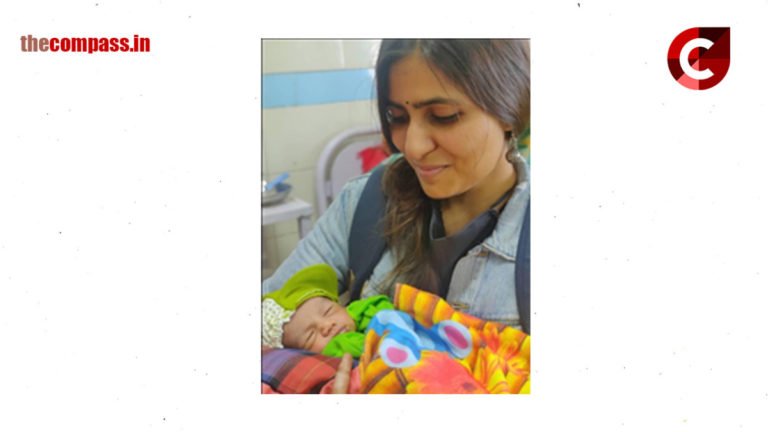
Amidst the Corona virus outbreak in Delhi, Nayla, a first year Masters student from Jamia Milia Islamia University went against all odds to reach out and help a heavily pregnant Noor Bi (19y) through her delivery who is a victim of the Delhi riots.
On Monday (16.03.2020) Nayla got to know about Noor Bi’s appeal for help through a support group on WhatsApp and volunteered to immediately reach Jag Pravesh Chandra government hospital where Noor Bi was admitted in.
Upon asking what motivated her to rush there in such drastic times, she said, “The situation was such that I could not stop myself from going out to help her despite the threat of Corona. I just went there knowing that there is a lady there who needs help and is alone.”
Noor Bi’s husband, Waaris, who is a tools mechanic was not let inside the ward where his wife was admitted in labor. When Nayla reached the hospital and met Noor Bi, she said that Noor Bi was very scared and confused and was relieved to see another woman being there for her and did not let go of her. Nayla said, “Since it was Noor Bi’s first pregnancy, she had a lot of questions, to which I unfortunately did not have answers to, as I have never been in a pregnancy ward before. This was a new experience for me. I don’t know how I did it but my presence gave her relief.”
Nayla, with the help of another student, raised INR 10,000 for the medical expenses.
Nayla; Photo: Sreekanth Sivadasan | The Compass
When the baby was born, Waaris insisted that Nayla see the baby first. Upon asking how she felt holding the newborn, she said, “It was like a miracle holding a new life in your arms.” Noor Bi and Nayla both shared an emotional moment together.
The couple named their daughter after Nayla, and call her Choti Nayla. Nayla and her friends then distributed sweets in the ward in celebration of Choti Nayla being born.
Noor Bi and Waaris fled their home to save themselves during the North East Delhi riots. Their house has been burnt and all their livelihood has been destroyed. Since then, they have been living at their relatives place. Nayla has now taken it upon herself to help reestablish this new family.
She said, “Sometimes it’s not about what you can do, it’s about your presence”.