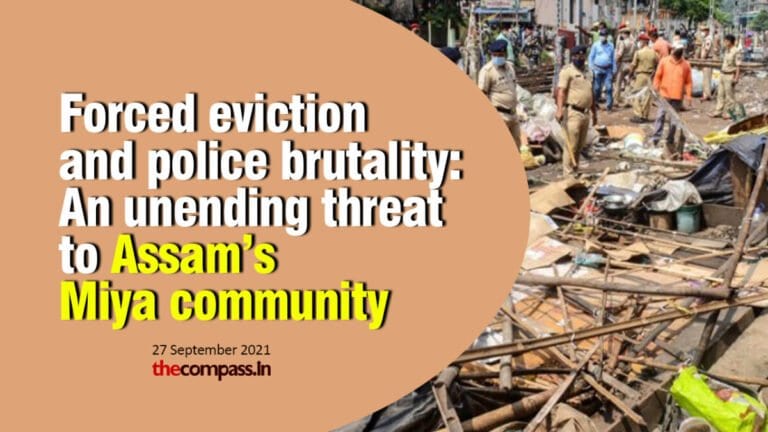
On 23 Sep, Thursday, two Bengali Muslims were shot dead by the police in a clash that followed the forceful eviction of Bengali Muslims in Sipajhar in Assam’s Darrang district.
The event unfurled in Assam was evidently state terrorism unleashed on villagers for ethnic cleansing and land-grabbing. The police claim the villagers had attacked them with machetes and sticks during the forced eviction. They claim that it was in self-defence that they had employed gunshots and lathi-charged the locals.
The locals claim they have been living in the area since the 1970s and had valid government documents to prove their ownership of the plots. Most of them think they are being targeted because they belong to the Miya community, primarily composed of Bengali Muslim immigrants. They had appealed against the eviction in the High Court and were awaiting the judgement. Despite the odds, they say all they asked was a better rehabilitation plan as the land allotted to the displaced people was low lying and flood-prone.
The hashtag #IStandWithAssamPolice, which topped the trending hashtags’ chart on the day of the incident, is not justified on the following grounds:
According to the UN Human Rights Commission, forced eviction constitutes gross violation of human rights. By forcibly evicting people, the Assam police was involved in denying many universally recognised human rights, including the right to housing, security of the individual and family, and the right to freedom from cruel, inhuman and degrading treatment.
Employing armed state machinery on villagers fighting for their right to land and life makes the self-defence argument moot.
As asked by CPI(M-L) member Kavita Krishnan on Twitter, “What protocol orders firing to the chest of a lone man coming running with a stick?”.
On the day of eviction, thousands had gathered in protest of the eviction drive, demanding better rehabilitation. Multiple sources told the Indian Express and Hindustan Times that the protest was a peaceful one. A local told the Indian Express that the authorities had promised them a better rehabilitation plan and had even agreed to postpone the eviction.
The eviction drive was the last of several stringent measures and regulations to weed out ‘infiltrators’ from the indigenous population in Assam. In Nov 2019, a federal US commission on international religious freedom had alleged that the Assam National Register of Citizens (NRC) is a tool to “target religious minorities and to render Muslims stateless”. Despite being biased, the eviction drive amidst the pandemic was acutely inhumane and goes against the Indian government’s own laws to eliminate homelessness by 2022. It was only in July this year the United Nations Human Rights Office of the High Commissioner (OHCHR) had asked the Indian government to postpone the eviction drives. “Lockdowns imposed during the pandemic have made it difficult for settlement residents to earn a living, and they are suffering psychologically because of the eviction threat”, said a UN human rights expert.
The unexpected outbreak of the COVID-19 virus shattered human lives. It affected all the fields especially it sabotaged the tourism field. We hodophiles celebrate September 27th as World Tourism Day to remind its importance in a hireling life. ‘Tourism for Inclusive Growth’ is the theme of 2021 World Tourism Day.
The past and future of any subject is closely related to its present. Hence, we should discuss it. So, the annals of history say that Thomas Cook, a man from the Western Europe invented modern tourism and later he came to be known as the father of tourism. There are different types of tourism like International tourism, Domestic tourism, Long distance tourism and Short distance tourism. Till the last decade people were ready to spend their money on traveling, entertainment, exploring etc. so this particular industry really helped in the economic growth of countries and it offered new jobs for the people.
Tourism improved the social, political and cultural understanding of people and personal international relations. From the expert research it has proven that the majority of the workers in this field were women. Developed, underdeveloped and developing countries competed in this field. But everything changed in a split second of time.
Coronavirus outbreak shook everyone in the world and affected all sectors. The change that the COVID-19 brought in the world contributed a disastrous effect on the tourism sector. People lost their jobs and the sudden fall of the sector made economic loss. The global restrictions on travel, fear of disease and complete lockdown paved the way for the decline of the tourism sector. It was the worst of times for the government, tour operators, travel agencies, craft workers and to the people who earned through tourism. Even the top tourist destinations like France, United States, China, Thailand etc. became a victim of covid-19 attack.
According to the reports, by 24 March 2020, the government of India suspended all tourist activities all over the country. Unfortunately, this decision had affected the third largest foreign exchange and the financial stability of the nation. In India it is Kerala tourism that affected the most. Other states in India reopened their tourist spots by undertaking all the measures. Kerala tourism is picking up itself from the great loss. Domestic tourism has almost revived its pre-corona stage.
The travelers are oppressing their temptation to go outbound and they are limiting their visits to the nearby spots. It’s because of their trust issues and financial problems. People have to show their vaccination certificates in many places and that itself is a boring procedure for the travelers. But the domestic solo travelers say that it was a comfortable time for them. They really enjoyed the new face of nature and the peaceful atmosphere. The students who completed and opted travel and tourism courses were also affected by the collapse of the tourism sector. The current situation of the tourism industry shows that both international and domestic tourism is in an unhealthy condition.
The government and the respected organizations have to take serious steps for the revival of this sector. There is a huge employment loss in this sector and we have to find an alternative job for those people. Through valid recovery strategies we can revive this sector. Like the authorities, let us hope for the inclusive growth of the tourism sector and the trauma created by the COVID-19 outbreak to end soon.
(from the poem, “Because I am a Girl, I Must Study” by Kamla Bhasin)
These lines show the vigour and eloquence of a poet, a feminist, and a protester in Kamla Bhasin, who emerged as one of the most inspirational and prominent leaders of the women’s movement in India. Simple but profound, her poetry speaks volumes. Her influence on the feminist movement, her powerful writing, and her commitment to justice will withstand time. Bhasin’s contribution to literature is more than the thirty-something books she has published; her speeches and interviews incite ripples among the audience. She is an outstanding orator and singer, whose slogans are piercing and potent. Her criticism of patriarchy, rape culture, and the everyday abuse women face are intended to be provocative. She does not hold back from calling out the abuse women go through in their life, which is why she is one of the foremost feminist activists in India.
Before working for women’s rights, Bhasin focused on the alleviation of poverty and illiteracy while working at Seva Mandir. Bhasin’s experience with women from various villages in India helped in forming her opinions on women’s rights. She advocated for the rights of women no matter their caste, religion or status. She co-founded Jagori, a women’s resource and training centre, which focused on publishing books, conducting workshops and networking. She founded Sangat, a feminist network, to conduct workshops on understanding feminism and its need for the improvement of women’s rights.
Bhasin has given the world her poetry which is akin to a safe space for women. The poems written by her resonate with the people and her legacy will live through the words she left behind.
Her rewritten poem Azadi talks about being free from the shackles of patriarchy and violence and humiliation that women face. She improvised on the slogans by Pakistani feminists in protest of a political party. Bhasin originally used it as a protest against patriarchy but later added that it is for labourers, Dalits, and Adivasis alike. A live recital of the poem at ‘One Billion Rising from South Asia’ is a surreal experience, with the crowd chanting “Azadi” along with her.
Another powerful poem of hers is Because I Am A Girl, I Must Study, written as a reply to a father’s question on why should his daughter study when he has sons. Bhasin writes on the importance of education for girls, the need to teach them to stand up for themselves against the various problems they face because of their gender. These lines are like a dream come true, it speaks to the girls fighting for their rights starting at their own home. These lines perfectly portray how education opens the door to freedom for women.
While talking about her poetry, her nursery rhymes requires a special mention. Rewriting old children’s rhymes to make them more gender-neutral, Bhasin reverses the traditional roles of a mother and father. In her book Housework Is Everyone’s Work: Rhymes for Just and Happy Families, she attempted to change the family dynamics, with the father helping out with the housework and taking care of the children while the mother gets adequate rest. A father changing his child’s diaper or bathing them should be normalised, it is his duty as a father to do so. The poet also depicts the mother as an educated and working woman, who is not demonised for wanting space and rest.
Kamala Bhasin’s death is a shocking loss, but her words will keep her immortal in our memories. She will forever be known as a person who made a significant difference in the lives of the women in India. Although she will be missed, she will never be forgotten.
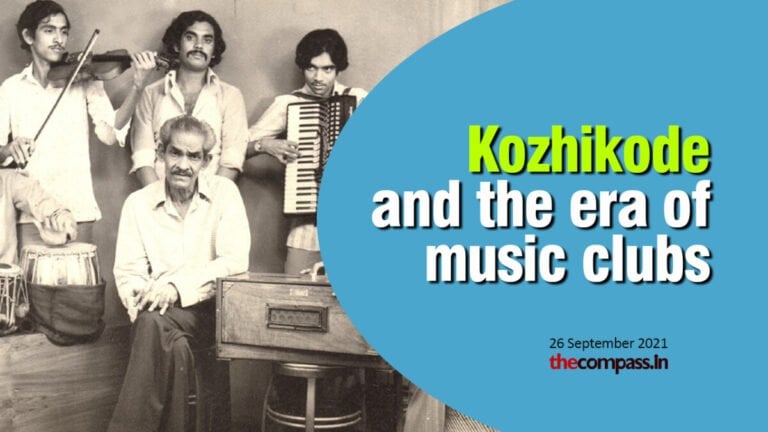
The city of Kozhikode has a long history of music festivities. There is a vibrant community of music lovers here who enjoy all kinds of music from Hindustani classical to theatrical songs. The salient features of this community include its members’ interest in divergent types of music and songs. Music clubs became popular in Kozhikode at the beginning of the twentieth century. During the evenings, music and drama were performed on the empty upper floors in the commercial buildings while the shops functioned downstairs. The main centres of the clubs were in the south areas like Kuttichira, Parappil, Kundungal, Thekkumthala, Idiyangara and Haluwa Bazaar are included in this region. These bestowed the cultural impetus for the city.
Trade activities in Kozhikode are concentrated at SM Street, Silk Street and Big Bazar and in those places, the trade ends at two in the afternoon. Then there is this gathering of those who are interested in music as the city provided the music lovers with plenty of time and opportunities to enjoy music. Concerts in Kozhikode were a thing when other cities in Kerala have rarely discovered the idea of concerts and gatherings, hence the city was awake for a long night life.
Clubs began to appear as early as in the 1920s. The most popular among the music clubs included Brothers Music Club, founded by Constable Kunju Mohammad and dramatist KT Mohammad. Salt Muhammed Koya’s Everest Music Club, Postman Syed Bhai’s Evening Club, Chembukandi Hassan Bhai’s Hindustan Club and Archie Hutton’s Hutton’s Orchestra. The Brothers Music Club and the Hutton’s Orchestra held friendly competitions called Music Evening at the YMCA. When the two clubs contested against each other, fans were left confused because they had to choose one. Every year these clubs held concerts at the town hall.
Photo: From Kozhikode Abdul Khadar’s family
The clubs invited not only local singers but also singers from North India. Their concerts were well attended. It was a good learning experience for the local singers. Among those sitting on the grass mat listening to music which included people from all walks of life such as labourers, goldsmiths, writers, coolies, theatre workers and businessmen. The boundary lines between labourers and employers disappeared among the venues of musical programmes.
The night Mehfils of Kozhikode were called the ‘darbar’ of the common people. The sound of the harmonium and the rhythm of the tabla and the smoke from the beedi filled the air. They wowed the audience with their superb singing and it brought out hysterical cries from the enthusiasts.
Photo: From Kozhikode Abdul Khadar’s family Photo: From Kozhikode Abdul Khadar’s family
The music clubs of Kozhikode were instrumental in nurturing the musical talents of many singers from the city in those days. M S Baburaj, noted music director of Malayalam film industry of the 1950s and 1960s, Kozhikode Abdul Khader, Playback singer of 1950s, Nallalam Beeran and SM Koya (both Mappilapattu singers) are some of the prominent singers who have grown up through the clubs. The tabla and harmonium were the most important musical instruments in Clubs. There were also Sitar, Sarangi and Dilrupa brought in by musicians who came from outside Kerala. Among the tablists were Abu Ustad, Bichamu, Lawrence and Usman, Nohan on the violin, Vincent’s Master and S M Koya on the harmonium also performed with their magical talent . Every club had such instruments and small stages for singing.
The singers came from Mangalore, Mumbai and Kolkata. Their expenses were borne by wealthy merchants who had a strong passion for music. Jan Mohammad from Kolkata, Mangeshkar Rao from Mangalore and Sarath Chandra Marata from Mumbai reached Kozhikode. The merchants of that time who loved the art sincerely provided all the facilities for the singers. Many settled in Kozhikode due to good accommodation, good food and good manners. The Mehfil culture of Kozhikode started from them
Photo: From Gazal Dhara
During this time many famous North Indian singers used to come to Kozhikode in search of clubs. At least one person a month came to the city. Shyamji Sunderlal was an eminent businessman who took care of North Indian singers whenever they appeared in the narrow streets of Kozhikode. He used to invite all the club singers to his home concert. During the concert in the light of Petrol Max, there will be Sulaimani and Kochikoya dessert (a special dessert made by mixing rice flakes, coconut and jaggery). When duets were sung, the male voices were sung by the female voice. C A Aboobacker, a popular singer, made his debut as a female voice in the club. Singers are able to dedicate themselves to the song with the enthusiasm and interest of the admirers who sit on the grass mat holding the rhythm on their lap. Singers returning home with satisfaction and hands full of money were the eternal sights of the day. Ustad Sadaqatullah, Bangalore Abdul Razak, Gul Mohammad, and Jan Mohammad sang ghazals, qawwalis and thumris. In those days these clubs bathed in light and sound during the whole night. It was followed by the debut of many Malayalee singers. Vellayil Ayamottika, Nallalam Beeran, SM Koya and Ustad Mammu sang in the club which lasted till dawn.
Photo: From Gazal Dhara
Clubs began to decline in the 1980s. With the rise of Gulf immigration, tape recordings came to most homes, making music enjoyment a personal experience. It significantly affected the music community led by the clubs. Over time, these clubs later became carrom clubs and tuition centres. Four decades later, we have come to an era where it is more convenient to collect as many songs as you like on each person’s mobile phone and computer and listen to them over and over again. During the old days, singers who used to sit and sing in clubs were only interested in entertaining the audience, but today they are reduced to the sole aim of making money. If in the days of clubs the singers used to sit and sing among the people, today the singer would sit and sing within the distance of a decorated stage. The distance between the singer and the listener has increased drastically. In today’s times we can see singers sharing their screen image just like film actors. It seems that singers’ lives are in a mysterious world inaccessible to the common man. Music lovers look in amazement and despair at the change that has taken place over the past four or five decades from the time they spent drinking tea with the singer and enjoy music sitting beside them.
Orthodox priests meeting a Catholic priest and offering solidarity emphasizes the contours of solidarity in the narco jihad issue, which always followed a clear and unnoticed path. It pitted the Christian and Christian-allied community of the Kottayam-Idukki mountainside belt against a bunch of pan-Kerala intellectuals and leaders.
When you are drawn too much into the grand narrative of Hindutva vs Secularism, you tend to see every mention of Arabic words as a negative reference to Muslims. You do not notice that not everyone in the world believes in your grand narrative, especially not in the minority-heavy mountainsides. The mountainsides of south-central Kerala are dominated by Christian politics, and Hindutva has no opening there, apart from a discontented Nair-Ezhava business class and their affiliate organs. BJP actually has negligible support among Christians.
One of the more relevant grand narratives of the mountainsides is the day to day encounters between Christians and Muslims. Erattupetta, quite close to Pala, especially is known to be a place with Salafi and Islamist influence among ordinary Muslims. That’s why an actual protest happened on ground against the Pala Bishop – something that is not possible against a Mujahid Balussery, MM Akbar, Shamsuddin Palath, Sathar Panthaloor (for his comment against missionary Christianity) or Rahmathullah Qasimi (for his demonization of Jews) or even against Vellapalli Natesan mainly due to demographic constraints.
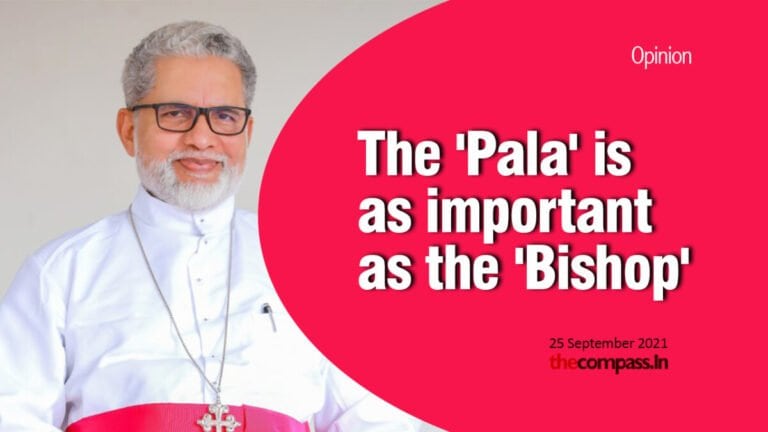
The awareness against global Islamism is a defensive strategy of these mountainside Christians against that growing influence of Islamism. That’s why Mar Joseph Kallarangatt spoke about global Islamist strategy to his believers, and framed it as an attack on the Holy Family of the Catholics.
When a theologian speaks to his believers, it must be read in the context of their theology. What the Bishop said contained no call to arms, no bay for blood, no hate towards other communities. It was a theologically framed warning about the effect of Islamists on Christians, deduced from real examples of Christians elsewhere in the world who came into contact with Islamists.
Who understood this? Only the Christians and Christian-allied communities of the mountainside. That’s why the Pala Youth Congress, Jose K Mani, Mani C Kappan, VN Vasavan, local Catholic and Orthodox priests all supported the Pala Bishop; and that’s why Congress, Left, Catholic, Orthodox leaders elsewhere tended to be against the Bishop. The division between the camps was regional, not political. The only exceptions to this was the BJP, who were simply trying to capitalise on the mention of Jihad, and the quite significant demography of anti-Church Christian thinkers.
And that’s why intellectuals who framed it as the Church’s capitulation to Hindutva could not understand what’s going on. These are not things you learn from The Hindu or The Indian Express. You just have to touch the life of a community to understand it.
Trust is the basis where all kinds of relationships are built on. A review by Goudge and his team suggests that trust is generally understood to be “judgement in a situation of risk that the trustee will act in best interests of the truster, or at least in ways that will not be harmful to the truster”. According to Hall et. al, it is, “the optimistic acceptance of a vulnerable situation in which the truster believes that the trustee will care for the truster’s interests”. The key terms of the two definitions are truster’s interests and optimistic acceptance. Both of them have major significance in the pharmacy profession.
Trust plays a crucial role in healthcare settings. Though a direct relationship between trust and healing is not yet established, trust in the healthcare provider makes the patient obey him/her and hence adhere to the therapy. From the reports of FIP, patients marked greater satisfaction with treatment, showed more beneficial health behaviors and symptoms, and experienced improved quality of life when they had higher trust in their healthcare professionals.
Also, an optimistic thought of someone helping her/him recover will enhance the process of healing. Obviously, establishing this bedrock of trust is the first and foremost step that a pharmacist has to take in a healthcare setting. This broad and general fact can be scientifically explained by the ‘Placebo effect’.
What is the Placebo Effect?
The Placebo effect is actually a process of tricking the patient with a fake treatment and watching the outcome. A placebo is a therapeutically inactive drug that resembles the actual one in sight. The person here believes that he/she is receiving the real treatment rather than an inactive drug and the health professional can measure the psychological impact over trust of the patient in treatment.
According to some estimates, approximately 30 to 60 percent of people feel their pain diminished after taking a placebo pill. This is considered as the output of positive thoughts of patients, produced from their trust in treatment and its providers.
Is there a Scientific basis for ‘Trust favours Treatment’?
Oxytocin is produced in hypothalamus, and acts on areas of the brain responsible for social behaviours. Scientists hypothesize that oxytocin stimulates a trust response by encouraging “approach behaviour,” or reducing the natural suspicion we have to the social proximity of others. That is, a trust once established makes the people change their approach. This makes the difference between the treatment results of a patient with trust and a patient without considerable trust in pharmacists. A more favourable result can be expected from the first.
Trust is a Mutual Process
Trust can’t be a one-way philosophy. Patients should feel we trust them too. There are situations when we have to accept what the patient says, whether we believe it or not. Maybe, we can make them feel that we believe what they say, though we are not. Only choosing a way that favours their thoughts, that are impossible to correct, will work in such instances, especially in psychiatric patients.
Quoting an example from my experience, I can prove this. Years before, during a palliative care visit I had an opportunity to volunteer with a widow whose husband died a few years before. She was the first of the husband’s two wives. She was a psychiatric patient and lived with her husband in a small house. Over The days, her illness became complicated. Unfortunately, she had a severe fracture in a fall during this period and became bedridden. Husband married another woman and they three stayed together in the same home. The second wife took care of the first though it was a tough task to manage her. Even after the death of husband, they stayed together and the second wife continued looking after the first wife.
During our palliative care rounds, I met this patient and was going through the patient profile along with the nurse in our team. When asking about having medicines, our patient shocked me saying “My husband loved me more than his new wife, and hence he shared his food and medicines with me, not with her” I had a sudden paralysis from top to bottom and cried like “what are you saying, how can one share their medicine with other?” Our patient expressed her irritation by staring at me. I was new in the team, but the nurse, who already knew them, told me to keep calm. Though I acted calm, there was a storm passing inside me till we were leaving them. When I came outside, our nurse told me ‘It’s actually her husband’s trick to say it is his medicine, so that she will have it happily’. Trying to correct her will be no beneficial and accepting her the way she is found to show good results. Making the patient believe that we trust them is also a key factor.
An example of not trusting a patient, with untreated postpartum depression, by her husband who is also a physician, is narrated beautifully in the short story ‘The Yellow Wallpaper’ by great American novelist Charlotte Perkins Gilman. Disbelieving her and denying proper treatment eventually made her condition worse.
Do people really trust us?
According to FIP, pharmacists have consistently been named among the top five most trusted professionals. In the UK and Turkey, pharmacists stand second after scientists in people’s trust. But when it comes to India the place is around tenth. That’s why this article is approaching FIP’s statement in a critical way. The situation in India is different from the world scenario. People are not much interested in pharmacists, rather they look for doctors. Obeying doctors is their primary concern and they even negotiate with pharmacists for changing brands, higher costs and even for unclear prescriptions. Pharmacists in India have no role in medicine prescribing, and patient rounds in many health settings, even in tertiary care. Only a few hospitals have proper patient counselling units and drug information centres. All these were the things that give pharmacists a professional face and improve patients’ perspective.
Why does this happen in India?
Our modern medicine history begins with the British conquering of India. Since then, and more clearly, after independence, there has been marked growth in the pharma industry. India became the ‘Pharmacy of the world’. But still, the healthcare face of the Pharmacy profession which is regarded as less profitable (compared to industrial face) to the government but more favourable to the public stayed undergrown. Even the public couldn’t recognize the real healthcare heroes living among them. They never knew pharmacists were much more than a group of merchants, or chemical sellers. The pharmacists were also unaware of the suppression they were facing for long.
Even when the government and public are talking about health professionals, they keep the pharmacists outside and talk about doctors and nurses. No records of pharmacists recruited to Covid brigade are available. There was a crying foul of pharmacists many times to recruit sufficient pharmacists to covid centres, to avail vaccines for these frontline workers on time, to get paid favourable salaries…etc. No vaccination centres in Kerala (other states also) have a pharmacist. Asha workers are distributing medicines in communities and vaccination centres. Teachers have been distributing iron supplements and other tablets in schools since day immemorial. Media invites no pharmacists to discuss vaccines or medicines. From all these scenarios, it’s evident that even the Government here doesn’t trust their pharmacists, or they don’t have any idea about this health profession.
What can we do?
Installing patient counselling facilities to every smaller setting of pharmacy is the immediate step we have to take. Only a good interaction can make people realize what we really are. Communicating in a professional way will be more appreciable. Pharmacists, especially of community pharmacies should grow themselves to peoples’ expectations of a healthcare professional. For which they should stay updated in knowledge. Verbal, behavioural and social cues can contribute to a person’s expectations of whether medication and communication will have an influence.
Pharmacists with talent can also take chances to popularize this profession in social media which is the best medium to reach people nowadays. Talking continuously through useful videos and writings about us will catch attention.
The major step should come from the rulers and leaders to recognize these professionals wherever they deserve. They should be included in every discussion where medicines and health are the topics. They should be paid favourably.
Many of the rules and regulations regarding this sector are outdated. Steps should come from the responsible ones to update them to the time.
And every one of us should trust the pharmacist in us before anyone else.
Reference
Sachiko Ozawa, University of North Carolina – 2008
‘The role of Trust in Healthcare Settings – Does trust matter?’
Women’s rights activist Kamla Bhasin, 75 years old, died today. The noted feminist and author was also known for being a part of ‘One Billion Rising’ campaign in South Asia among other important movements. She had been working on issues related to gender, development, peace and human rights for over three decades in India and other South Asian countries.
She identified herself as a “social scientist by training” and wrote multiple books – a large number of them on feminism and women’s issues – since she started working on developmental issues in the 1970s.
Two civilians were reportedly killed in brutal police action on Thursday in Sipajhar area of Assam’s Darrang district. The Assam government has ordered an inquiry by a retired judge of the Gauhati High Court into the killings and the circumstances leading to the incident.
Scroll.in reported that at leastthree people were feared dead in the incident in which police opened fire on those protesting against an eviction drive.
As per NDTV’s reports, Darrang Superintendent of Police Sushanta Biswa Sarma has said that nine police personnelhad also been injured in the incident.
Assam CM says “the action will continue”
Meanwhile, Assam Chief Minister Himanta Biswa Sarma told journalists on Thursday evening that the eviction drive will continue, the Hindustan Times reported. “Police are doing their duty…As per my information, people attacked the police with machetes, spears and other things,” Sarma said. “Eviction has restarted [after the violence] and will continue tomorrow as well.”
According to local accounts, late on Wednesday night, the administration served an eviction notice to residents of Kirakota Char. Protests erupted on Thursday morning. After this, the administration reportedly promised that the villagers will be rehabilitated before the eviction. Once activists left the area, the police opened fire on the protestors, residents alleged.
What protocol orders firing to the chest of a lone man coming running with a stick @DGPAssamPolice @assampolice ? Who is the man in civil clothes with a camera who repeatedly jumps with bloodthirsty hate on the body of the fallen (probably dead) man? pic.twitter.com/gqt9pMbXDq
A video widely shared on social media platforms after the incident shows policemen opening fire and then falling upon a protestor who was running towards them with a stick. A few seconds later, he lies motionless on the ground, apparently shot in the chest. A photographer accompanying the police is seen repeatedly assaulting the man as he lies on the ground and police personnel stay spectating it.
Assam Special Director General of Police GP Singh defended police firing. The Photographer is reportedly arrested later.
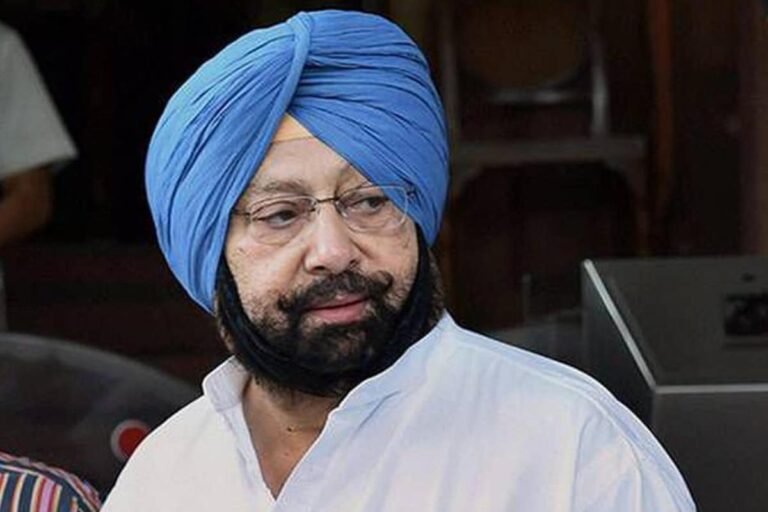
Amarinder Singh, under pressure from the Congress, resigned as Punjab Chief Minister this afternoon. He met the state Governor at the Raj Bhawan and handed over his resignation. Captain Amarinder Singh said that he felt humiliated and the Congress is free to “appoint whoever they trust”. He added that he would “exercise his options when the time comes”.
The Chief Minister has called a news conference, where he is expected to make the official announcement. Sources close to Amarinder Singh said he would “live to fight another day”.
Madhya Pradesh government has decided to include the epics of Ramayana, Ramcharitmanas and Mahabharat in the Engineering syllabus for the first-year graduate students, as per New Education Policy, 2020.
Speaking on this decision, Higher Education Minister Mohan Yadav said, “Whoever wants to learn about Lord Ram’s character & contemporary works can do so in engineering courses.” He further added, Teachers of our study board have prepared the syllabus under the NEP 2020… If we can bring our glorious history forward, no one should have any issue with it.”
As per the new syllabus introduced under NEP 2020, ‘Applied Philosphy of Shri Ramcharitmanas’ has been introduced as an optional subject in the Humanities stream. Chapters of APSR will include topics like Spirituality and Religion in root sources of Indian culture; Four ages in Vedas, Upanishads and Puranas; Difference between Ramayana and Shri Ramcharitmans; and Incarnation of Divine Existence.
Mahabharat by C Rajagopalchari has been included in the first-year engineering syllabus, besides this, the state government has also introduced Yoga and meditation as the third foundation course. Also, students will be taught Lord Ram’s engineering qualities through the topic ‘Construction of the Ram Setu bridge’.
“We learn a lot from Ramcharitmanas and Mahabharata. The students will bring inspiration from it to live a life with dignity and values. Now, we just don’t want to educate the students but we want to develop them as great human beings,” Higher Education Minister Mohan Yadav said.
Madhya Pradesh is one of the first states to introduce NEP 2020 in the school as well as in the college syllabus. Meanwhile, the state schools and colleges will resume physical classes after a year of closure due to the outbreak of the COVID-19 pandemic. The classes will resume from tomorrow, September 15 with 50 per cent strength.