United Nations Secretary-General Antonio Guterres has expressed concern over “grave violations” in Indian-administered Kashmir and has asked the Indian government to end the use of shotgun pellets against children.
“I call upon the government to take preventive measures to protect children, including by ending the use of pellets against children, ensuring that children are not associated in any way to security forces, and endorsing the Safe Schools Declaration and the Vancouver Principles,” he said in the UN Report on Children 2021.
“A total of 39 children (33 boys, 6 girls) were killed (9) and maimed (30) by pellet guns (11) and torture (2) by unidentified perpetrators (13) (including resulting from explosive remnants of war (7), crossfire between unidentified armed groups and Indian security forces (3), crossfire between unidentified armed groups, and grenade attacks (3), Indian security forces (13), and crossfire and shelling across the Line of Control (13),” said the UN report, referring to the de facto border that divides Kashmir region between India and Pakistan.
The UN report said at least seven schools were used by the Indian security forces for months. It added that four children were detained by the Indian forces in Indian-administered Kashmir for their alleged association with the armed groups.
“I am alarmed at the detention and torture of children and concerned by the military use of schools,” Guterres said.
The UN chief said he welcomed the positive engagement of the Indian government with the UN’s special representative to implement preventive and accountability measures.
“I urge the (Indian) government to ensure that children are detained as a measure of last resort and for the shortest appropriate period of time, and to prevent all forms of ill-treatment in detention,” he said.
“I also urge the (Indian) government to ensure the implementation of the Juvenile Justice (Care and Protection of Children) Act, 2015 to address the use of children for illegal activities and the situation of detained children.”
Indian security forces and police have been using shotgun pellets to subdue Kashmiri protesters, many of them young men and teenagers.
Dozens of reporters in Istanbul and Ankara rallied on Tuesday (Jun 29) demanding protection from the police following the violent arrest of an AFP photographer during a banned Istanbul Pride event.
Award-winning photographer Bulent Kilic filed a “violent arrest” complaint against police officers who pinned him to the ground with their legs against his neck and back while he was covering the march on Saturday.
He was released without charges after being taken to a police station for questioning. Dozens of Pride event protesters were also briefly detained.
AFP chief executive Fabrice Fries “strongly protested” the detention in a letter urging Turkish officials to “swiftly investigate this incident and take the necessary measures so that the involved officers are held accountable”.
Journalists and protesters hold an image of AFP photographer Bulent Kilic and signs reading ‘we can’t breath’ during a demonstration in front of the Governor’s Mansion in Istanbul, on June 29, 2021, held to demand protection for journalists – as the photographer was arrested by police officers while covering a Pride march in the city on June 26. (Photo by Yasin AKGUL / AFP)
The European Union’s ambassador to Turkey also expressed support for Kilic at a media awards ceremony in the capital Ankara.
“Of course the use of violence against journalists is not acceptable. I need to say this here today,” EU ambassador Nikolaus Meyer-Landrut said.
Dozens of journalists rallied near the Istanbul governor’s mansion holding photos of Kilic’s head pinned to the ground and signs saying: “We can’t breathe”.
“Press freedoms cannot be silenced,” they chanted while some hung their cameras to the fence surrounding the governor’s mansion in protest.
A Turkish journalists’ union said Istanbul governor Ali Yerlikaya told them during a subsequent meeting that an administrative investigation had been launched against the arresting officer.
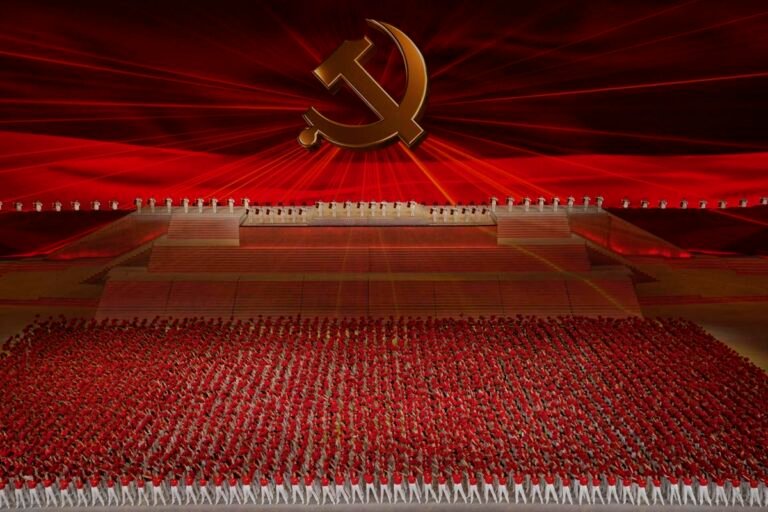
China is is gearing up for a patriotic extravaganza, in preparation to celebrate the centenary of its ruling party. The Chinese Communist Party (CCP), the de facto sole governing party in China since 1949, completes 100 years on July 1.
The current leader of CCP, Xi Jinping will attend a series of events starting Thursday to mark the momentous occasion. The events will highlight the achievements of the party over the years, and how it steered China through years of struggle to being a major world power today.
China’s economic transformation, poverty alleviation, technological advances including successful space missions will be a focus area. Building a high-tech military, modern cities and an emerging entrepreneurial middle class, all achieved under the CCP, will be narrated through various mediums. China’s ambition to become the world’s No. 1 economy from the current No. 2 will be showcased.
The Chinese media has been showcasing the battle against poverty and corruption throughout the last month. Television networks are releasing documentaries and dramas related to CCP’s centenary celebrations. However the country’s achievements under current President Xi Jinping is expected to find a disproportionately high representation in the celebrations. The occasion will provide Xi an opportunity to project himself as a strong and capable leader to the country and the world. The CCP has never taken kindly to criticism.
Warnings of consequences have been issued for those who defame communist heroes. The cyber cell of China has shared a website for citizens to report any historical pessimism.
A woman, who had wilfully converted her religion from Hinduism to Islam, has approached the Delhi High Court seeking protection for herself and her family claiming that they are facing life threats and being witch-hunted by the Uttar Pradesh police, media and vigilante groups.
Renu Gangwar, in her petition, said on May 27, she converted to Islam with her “own free will and without any threat or coercion from anyone”. Following this, she changed her name to Ayesha Alvi, which was published in a few newspapers.
Ms. Alvi, who is a resident of Tilhar, Shahjahanpur in Uttar Pradesh and working in Delhi, subsequently started getting calls from different media persons requesting for a meeting. However, even after her refusal, the media person came to her place in Tilhar, and against her wishes took photographs and videos without her permission.
One particular media person demanded money while threatening to publish the news about her conversion. “When she denied, he threatened again. Thereafter, he forcefully took ₹20,000 from her,” the petition, filed through advocate Kamlesh Kumar Mishra and Nitin Kumar Nayak, said.
Following the incident, Ms. Alvi made a complaint to the Delhi police chief on June 24, seeking immediate intervention for her protection.
“Thereafter, certain other media persons also came and they started making similar demands. Some other people and organisations also started threatening me and my family to force me to reconvert to Hinduism. Feeling threatened, I came back to Delhi today [June 24],” she said in her police complaint.
“On June 26, the petitioner [Ms Alvi] has been informed that her father has been taken away by the Uttar Pradesh police and they are coming to Delhi and would take her back to Uttar Pradesh where she would be forced to file a false complaint/FIR,” the petition stated.
It stated that Ms. Alvi is “under immediate threat of being taken away by force or coercion to Uttar Pradesh by the agencies of the State or any other person”.
Ms. Alvi said she is “an adult and she is protected by the Constitution to choose her own faith and she cannot be targeted and harassed for the choice she makes with regard to the religion she follows”.
She has urged the court to protect her from being taken away from its jurisdiction “by force or coercion and or by way of any other illegal means by the agencies of the State or any other person”.
The petition which is listed for hearing on Wednesday also urged the court “to ensure protection of life, liberty, safety and security of the petitioner, her family member and friends and they be not harassed and interrogated with regard to the conversion of the petitioner”.
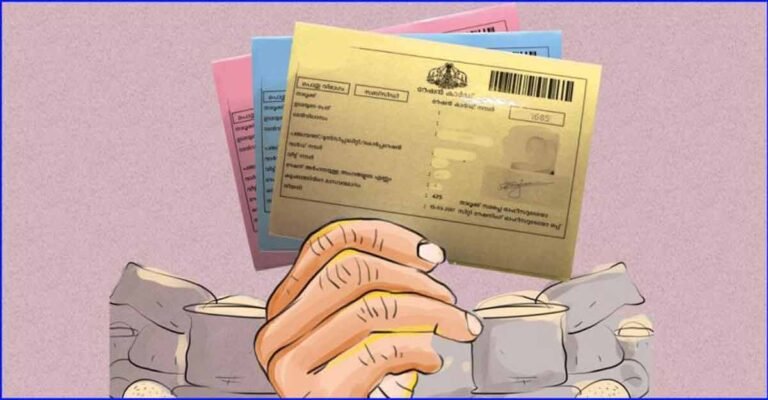
The Supreme Court on Tuesday asked states and Union territories to implement the “One Nation, One Ration card” (ONORC) scheme by July 31 even as it pulled up the Centre over “unpardonable delay” in registration of migrant workers.
The “One Nation, One Ration card” scheme allows migrant workers to get ration at the place of their work in other states as well where their ration cards are not registered.
Taking note of the delay in development of software meant to register workers of the unorganised sector to create a national database, the Supreme Court directed the Centre to complete the process by July 31 with the help of the National Informatics Centre (NIC).
“When unorganised workers are waiting to reap the benefit of various welfare schemes of the states and Centre, the apathy and lackadaisical attitude by the Ministry of Labour and Employment is unpardonable,” said a bench of Justices Ashok Bhushan and MR Shah said.
“Unless the registration is complete, tall claims by all the states and the Union that they have implemented various welfare schemes for the migrant workers and unorganised workers remain only on paper,” the Supreme Court said.
It also asked the states and UTs to register all contractors as soon as possible and ensure registration of workers.
The bench also issued a slew of directions to the Centre and state governments relating to the welfare of migrant workers affected due to Covid-19.
The Supreme Court also directed state governments to provide dry ration and continue community kitchens for migrant workers till the pandemic continues.
The bench also asked the Centre to keep allocating food grains to the states for distribution among migrant workers for free till the pandemic situation exists.
The court was hearing a PIL filed by activists seeking directions to the Centre and states to ensure food security, cash transfers, transport facilities and other welfare measures for the migrant workers. The PIL was filed by activists Anjali Bharadwaj, Harsh Mander and Jagdeep Chhokar.
“I MEASURE THE PROGRESS OF A COMMUNITY WITH THE DEGREE OF PROGRESS WOMEN HAVE ACHIEVED”- Dr.B.R Ambedkar
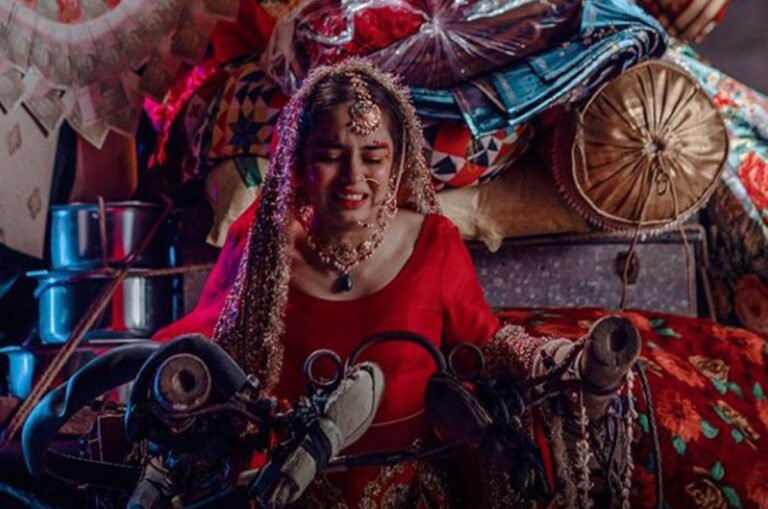
On 20th june, Keralites woke up hearing the tragic death of a 22 year old BAMS student, Vismaya V Nair, a native of Kollam who was found dead at her spouse’s residence. Two days before her demise, she had sent a whatsapp message to her cousin stating the atrocities she had to face from her husband, Kiran Kumar, a motor vehicle officer with regard to dowry. Since the issue came into limelight, social media platforms and news channels have been auditing the case on several grounds. However one has to realise that this is not an isolated case of dowry harassment, as there have been several dowry related deaths in the past and many women are still vulnerable to such harassments. Despite the number of legislations passed, let it be the dowry prohibition act of 1961 and the domestic violence act of 2005, women in India are still victims of harassment in the name of dowry.
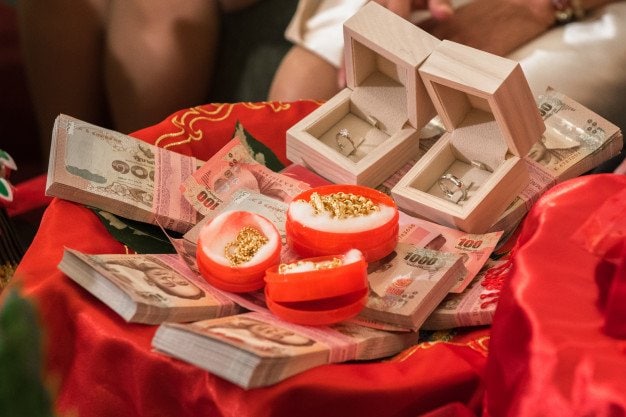
There are several social evils which originated in the past and continues to take shape upto the present day and dowry system is one among them. The institution of dowry developed as a practice of returning all that was received by the bride to the bridegroom and since then, dowry has become deeply entrenched in the Indian society, thus making it an inevitable factor in Indian marriages. Marriages in India are no longer the union of two souls, but a business transaction to show off one’s status and prestige. The prevalence of dowry has led to the exploitation of the middle and lower middle class as they cannot afford to ‘pay’ a price for their daughters. Many such families save all the penny they earn merely for the sake of getting their daughters married as per the conditions laid down by society. There are innumerable instances in which families were shattered due to bankruptcy as they had to borrow loans to pay a huge amount as dowry.
The practise of dowry is also a factor in increasing the preference for being a male child, thus leading to practises like female infanticide and female foeticide as the girl child is many a times seen as a burden for the family. The girl child is often deprived of education and adequate nutrition as the only task assigned to them is that of performing the household chores because of which they get married at a very young age against their wishes. Though Indian society has achieved remarkable strides in manifold areas, not all mindsets are progressive in nature and many are still under the whims of conservative customs and traditions.
With the substantial growth of the Indian economy and society, the present trends with regard to dowry are such that the dowry price has increased manifold and as a result, there has been a proportionate increase in dowry harassment cases. In a recent study conducted among several Indian states, it was revealed that approximately 70% of the women who experienced physical violence are suffering in silence as they did not seek help or tell anyone about it and among the 20% who sought help, only a handful had approached the relevant authorities. Estimates provided by the National Commission for Women are certainly more depressing as more than 2300 complaints were filed from January to May 2021, hence suggesting that the pandemic has further aggravated the condition of women in Indian households. Home, which is often regarded as a safe haven, is turning out to be a prison for many.
Violence against women is not a recent phenomena and cases of dowry harassment are one among the many offences committed against women. Since time immemorial, women have been the subject of sexual harassment perpetuated by men who consider sexual harrasmment as a tool to supress the dissenting voices of women. The patriarchal nature of the society we live in has indeed reduced the status of women to that of the “second sex” as coined by Simone de Beauvoir and they are not treated in par with the male counterparts. Any kind of violence perpetrated against women is a violation of the fundamental rights enshrined in the constitution of India and numerous legislations have been enacted to safeguard women from offences.According to the Indian law, the offences related to dowry finds mention in four places as follows-
Cruelty to married women (section 498A IPC)
Dowry death (section 304B IPC)
Dowry prohibition act of 1961
Protection of women against domestic violence act of 2005
Under the dowry prohibition act, giving, taking or demanding dowry is an offence and under the 1983 amendment to the act, made for keeping a list of articles given in relation to marriage. Besides this, provision for inquest was made in the CrPC in case a woman died in unnatural circumstances within seven years of marriage and presumption of causing death was laid down in the Indian Evidence Act against the husband and his relatives or if a woman committed suicide or died within seven years of marriage and there was a demand for dowry soon before her death. If found guilty, the prescribed punishment can be imprisonment for minimum seven years or upto life.
Coming back to the case of Vismaya, if an educated person like her, hailing from a dominant caste (Nairs of Kerala) was not able to call out her abuser and seek help, is it even possible to imagine the plight of several thousands who belong to the weaker strata of this society? Apart from the legislations aforementioned, is there any possible panacea which exists to curb dowry related domestic violence and abuse?
A change can be brought in the existing perceptions conceived by society via scrutiny and correction. It is high time that the age old practises which deny women of their basic rights come to an end. Domestic abuse is often normalized in such a way it is often regarded as a right of the husband to abuse the partner physically, sexually, emotionally(mentally) and economically. The stigma and slut shaming associated with women who call out their abusers are even more daunting and the fear of being targeted often restricts them from seeking help. The sheer insensitivity in dealing with sexual harassment related issues has resulted in the ongoing subjugation faced by women. Since childhood, women are conditioned to be polite and docile, which has further curtailed their freedom. Purushasuktha in Manusmriti has explicitly laid down how women are expected to be obedient and live their lives as per the wishes of the father in the childhood, husband in the teenage and son in the old age. If you are someone who still expects women to be subservient to men, hey there did you miss your bus to the 21st century?
Dear parents, instead of saving money to marry off your daughters, please invest it on their education. Let them study as much as they wish to. Do not let society decide the deadline for your daughter’s marriage. Allow your children to explore the world, the opportunities that lay ahead and let them lead a life of their choice. Teach them to be financially independent and be self-sufficient at all times. Provide them the liberty to choose their partners, in case they wish to marry, instead of paying a dowry for a prospective groom. Make your children realise their worth and provide them the strength to walk away from toxic relationships and forget not to remember that divorced daughters are often better off than living daughters. Be aware of the rights that are guaranteed to each one living in this country and be an empowered citizen.
(P.S: Do not be that someone who speaks progressiveness in social media, but refuses to follow them within the household).
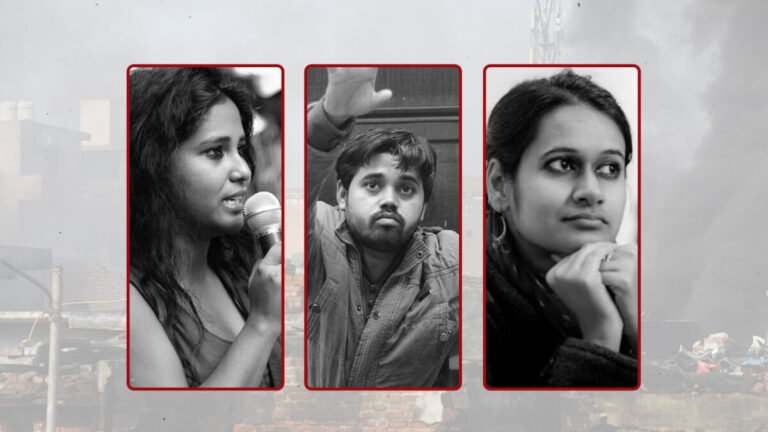
The Delhi High Court Tuesday granted bail to student activists Natasha Narwal, Devanagana Kalita and Asif Iqbal Tanha in the main northeast Delhi riots conspiracy case filed under the stringent anti-terror law, the Unlawful Activities Prevention Act (UAPA).
The court observed that in the mind of the State, the “line between the constitutionally guaranteed right to protest and terrorist activity seems to be getting somewhat blurred.”
A bench of Justices Siddharth Mridul and Anup Jairam Bhambani granted bail to the accused noting that the allegations against them do not prima facie disclose the commission of any offence under Sections 15 (Terrorist act), 17 (Punishment for raising funds for terrorist act) and 18 (Punishment for conspiracy) of the UAPA. The High Court held that therefore, the additional conditions, limitations and restrictions on grant of bail under Section 43D(5) UAPA do not apply.
The High Court noted in Iqbal’s order that in the chargesheet, there were no specific allegations other than “those sought to be spun by mere grandiloquence”.
“We are constrained to express that it seems, that in its anxiety to suppress dissent, in the mind of the State, the line between the constitutionally guaranteed right to protest and terrorist activity seems to be getting somewhat blurred. If this mindset gains traction, it would be a sad day for democracy,” the order read.
The three accused have to furnish a personal bond of Rs 50,000 each with two sureties of the like amount. They have been directed not to leave the country; share their mobile numbers with the local SHO; and not to contact prosecution witnesses or tamper with evidence.
This is not the first time bail has been granted to an accused in the northeast Delhi riots UAPA case. In 2020, the Delhi High Court granted bail to Jamia Millia Islamia University student Safoora Zargar on humanitarian grounds, considering her pregnancy at the time. Faizan Khan, a SIM card provider, was the first accused to be granted bail on merits in the case after the police added provisions of UAPA to the FIR being investigated by Delhi Police’s Special Cell.
Kalita and Narwal, both pursuing their M Phil-PHD programmes at JNU, will be released from jail, their lawyer, Adit Pujari said. Kalita is facing trial in four cases and Narwal in three. They have now been granted bail in all cases.
Tanha, a Jamia Millia Islamia University student, was recently granted a two-week interim custody bail to attend his backlog examinations at the university. His lawyer, Sowjhanya Shankaran said he has been accused in the present case and a Jamia riots case, and has been granted bail in both cases.
While discussing the merits on which Narwal and Kalita were granted bail, the High Court said the allegations relating to inflammatory speeches, organising of ‘chakka jaam’, instigating women to protest and to stock-pile various articles, and other similar allegations, “in our view, at worst, are evidence that the appellant participated in organising protests, but we can discern no specific or particularised allegation, much less any material to bear out the allegation, that the appellant incited violence…”
Relying on a slew of Supreme Court judgments, the High Court observed that “protests against Governmental and Parliamentary actions are legitimate; and though such protests are expected to be peaceful and non-violent, it is not uncommon for protesters to push the limits permissible in law.”
While deciding Tanha’s bail, the High Court noted that “apart from militating against the presumption of innocence, pre-trial detention would lead to needless psychological and physical deprivations.”
The High Court said this would seriously hamper Tanha from participating in and contributing to the preparation of his defence at the trial.
The High Court observed that Tanha has also been granted bail by a sessions court in the Jamia riots case in 2020, and stated that in its view, “there also appears to be an overlap between the so-called larger conspiracy, acts and omissions alleged against the appellant in the said other FIR”.
In the court’s view, the fact that the definition of ‘terrorist act’ in Section 15 UAPA is wide and even somewhat vague.
The police in Lakshadweep on Thursday filed a sedition case against activist and filmmaker Aisha Sultana for saying that the Centre was using administrator Praful Khoda Patel as a “bio-weapon” against the people of the Union Territory, The Indian Express reported.
The Lakshadweep unit of the Bharatiya Janata Party filed a complaint, alleging that Sultana made a seditious comment during a debate on a Malayalam news channel. Reports said she was discussing the controversial regulation introduced by Patel and the rise in coronavirus cases in the island since he took charge in December.
Sultana, who has actively campaigned against the proposed regulations, has been booked under Sections 124 A (sedition) and 153 B (hate speech). BJP workers in Kerala have also filed complaints against the activist.
“I had used the word bio-weapon in the TV channel debate,” Sultana wrote on Facebook, according to The Indian Express. “I have felt Patel as well as his policies [have acted] as a bio-weapon. It was through Patel and his entourage that Covid-19 spread in Lakshadweep. I have compared Patel as a bio-weapon, not the government or the country…You should understand. What else should I call him?”
Lakshadweep Sahitya Pravarthaka Sangam criticised the move to file sedition case against Sultana, saying she was only reacting to the “inhuman” measures undertaken by Patel. “It was Patel’s interventions that made Lakshadweep a Covid-affected area,” said K Bahir, the organisation’s spokesperson. “The cultural community in Lakshadweep would stand with her.”
The Supreme Court on Thursday quashed the first information report with sedition and other charges against journalist Vinod Dua for criticising Prime Minister Narendra Modi and his administration, reported Live Law.
BJP leader in Himachal Pradesh Ajay Shyam had filed a complaint against Dua, accusing him of spreading rumours and misinformation about the communal violence in Delhi in February through his YouTube show.
“We have quashed the proceedings and FIR,” a bench of Justice UU Lalit and Vineet Saran said, reported Bar and Bench. “Every journalist will be entitled to the protection under Kedar Nath Singh [sedition] judgment.”
However, the court rejected Dua’s request to direct that no FIR should be registered against any mediaperson with 10 years of experience unless it is cleared by an expert committee.
“We have rejected the committee formation prayer since it will be directly encroaching upon the legislative domain,” the court said. “However, the FIR against Vinod Dua stands quashed.”
In August, Dua had told the Supreme Court that criticism of the government was not in itself seditious unless it instigates violence. “Moreover, if I criticise the prime minister, that does not come under criticism of the government,” he had then said.
Dua had approached the Supreme Court after the Himachal Pradesh Police appeared at his residence on June 12 and ordered him to be present at the remote Kumarsain Police Station – at least a 20-hour drive from Delhi – the very next day at 10 am.
The Supreme Court had urgently convened a virtual hearing on June 14 and granted him protection from arrest till July 6. The next day, the court extended his protection till July 15.
The police action against Dua was widely criticised by journalists. The Editors Guild of India had called it a brazen attack on free speech. The Indian Journalists’ Union said that the FIRs against Dua were an attempt to intimidate and stifle the media.
Palestine, a beautiful historic land, enriched in culture and famous for its peaceful resistance. People there still waiting for many unanswered questions to be answered, striving hard to live, looking upon the international guardians, champion of Human Rights to bring them justice.
Palestine, the word has been prompted from the Greek word, Philistia, which depicts to Ancient Greek writers’ cataloging of the region in the 12th century B.C. Palestine has been ruled by various groups, including the Assyrians, Babylonians, Persians, Greeks, Romans, Arabs, Fatimids, Seljuk Turks, Crusaders, Egyptians and Mameluke and Ottoman Empire.
In 1918, after the World War I was ended the British took control of Palestine. The League of Nations declared a British mandate for Palestine, that let the Britain to control administratively over the region, and included requisites for founding a Jewish national state in Palestine, which became effect in 1923. the United Nations proposed a scheme to divide Palestine into two sections: an independent Jewish state and an independent Arab state. The city of Jerusalem, which was labelled as a capital by both Jews and Palestinian Arabs, was to be an international territory with a significant status.
According to the stats of worldometer the current population of the State of Palestine is 5,207,201. The State Of Palestine population is equivalent to 0.07% of the total world population. The State Of Palestine ranks number 121 in the list of countries by population. Palestine is constituted with Arabs, Jews, Samaritans and Palestinians ( people who have been living on the land since its inception)
Palestine has been known for its cultural enrichment and noble heritage that attracts tourists from all over the world. Its ancient monuments, ancestral towns, traces back to the historical legacy of religious leaders and their events where you can learn about the glorious past of Palestine.
Hisham’s palace
Hisham’s Palace also known as Hirbet al-Mafja.
An aesthetic desert palace, and an important islamic arechealogical site. It was built in 720 and 750 AD. It is consist of 3 main parts: a palace, an ornate bath complex, and an agricultural estate.
Abraham Mosque
Abraham Mosque is known as worlds oldest holiest place.
The importance of place is due to the believe that its a burial place of Abraham, Sarah, Isaac, Jacob, Rebecca, and Leah. This makes it a sacred place for Jews, Muslims and Christians.
Church of the Holy Sepulchre also known as the site of crucifixion of Jesus of Nazareth.
The specificion of this place is stone of Golgotha, where the cross is believed to have been placed and people come here to caress and weep.
Gethsemane garden
A beautiful garden with lush green grass and olive trees, where Jesus is believed to have been praying before being arrested and take for crucifixion.
Mar Saba Monastery
An architectural wonder of the Byzantine age. Female travelers aren’t allowed to enter this place. One of the holy historic cliff is beautifully made between the rocks.
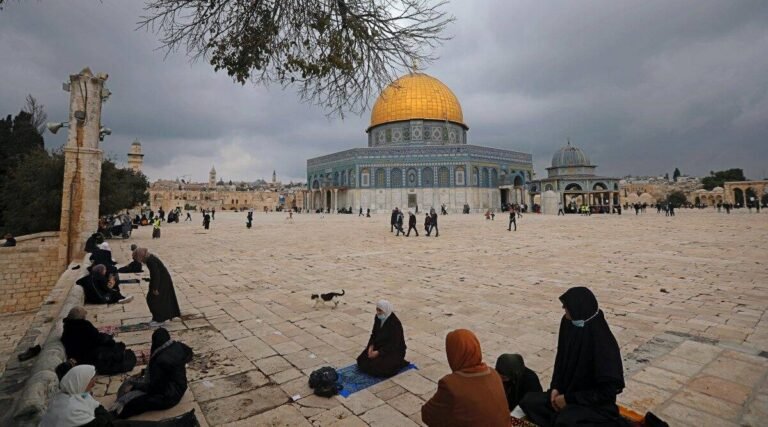
Al Aqsa Mosque
It was established in 705 B. It is also one of the holiest places of Muslims after Mecca and Medinah. The two Islamic legend names Hussein bin Ali Sharif Mecca and Abdullah I ibn al-Hussein were buried here, which prominents its significance for muslims all around the world.
The Dome of the Rock
It is part of one of the most important Islamic mosques in Jerusalem, Palestine, and the Islamic History, Al Aqsa. it was built in 691 B. The Ministry of Awqaf Islamic Affairs and Holy Places take care of this holy site The architectural styles of this building are Islamic architecture, Byzantine architecture, Ottoman architecture, Abbasid architecture, and Umayyad building.
Agriculture plays a dominant role in the Palestinian economy as its the epicentre of foreign exchange, generating over 22% of the Gross Domestic Product of the West Bank and Gaza. By giving employment opportunities to jobless people to the 15 % of the population the Palestinian agricultural sector supports and uplift the financial strength of people.The Palestine’s Mediterranean climate has made it favourable for the growth of citrus crops and olives. dry onions, tomatoes, okra, snake cucumber, squash, cauliflower, and potatoes are planted under rain-fed conditions. Grape trees are the prominent ones, women make Dibis, a fruit juice by gathering grapes which are later crushed by men. Dates, apricots, pomegranates, raisins and other sweet citrus fruits are grown on the agricultural belt of Palestine.Food is considered as a cultural uniqueness and identity. Traditional dishes and national cuisine of Palestine operates as a unifier of different communities present in Palestine.The culture of Palestine revolves around the food, they are too much into food that making an event out of ordinary is what they do for the love of food.
Freekh is a cereal food which is made by roasting and rubbing green durum wheat. Freekeh is rich in minerals and vitamins,and in both fiber and protein. It has a nutty taste and after roasting Fareekeh savory and smoky taste develops.It can also be cooked like rice or barley.
Musakhan is a Palestinian Arab dish that has roasted chicken baked with onions, sumac, allspice, saffron, fried pine served with roasted almonds and taboon bread. This dish is also famous in Syria, Lebanon and Jordan.On April 20, 2010, the largest ever dish of Musakhan was prepared in Ramallah, Palestine and registered it into the Guinness Book of World Records.
Humus is a saucy dip. when chickpeas are mashed, cooked and blended with tahini, lemon juice, oilve oil and garlic humus is made, eaten with pita bread.
Kanefah
Kanefah is a delicate, creamy, and subtly sweet desert made with syrup. By shredding semolina dough, soaking in sweet, sugar-based syrup, and layering with cheese, nuts or clotted cream, and sprinkled with bright green ground pistachios kanefah is made. It’s recipe was invented by Palestinian Arabs in about the 10th century AD and passed to the Turkey a long time ago.
Shish barak are the little dumplings filled with seasoned lamb, boiled, fried or baked pine nuts and onions and served in a warm yogurt sauce with melted butter, mint, sumac. They are made in Lebanon, Iraq, Syria, Jordan, and Palestine.
Falafel
Falafel are delicious balls of chickpea and herbs. Can be made by frying and baking. ground chickpeas or fava beans, herbs and spices are mixed together to make balls or patties and deep fried for the crisp on the outside and soft on the inside.
Clothing is a reflection of culture and a symbolic factor for the preservation of cultural heritage. The Palestinian traditional attire is a combination of cultural diversity raging from syrian customs to Jordan due to their proximity. Palestinian embroidery embedded with motifs reflects ancestry and feminine beauty which is called Tatriz. Earlier Palestinian women used to wrap-around cloth, a cloak, a scarf, and a shawl. However with the time and development the style changed but the tradition remained the same.
Thob: a long gown, with full sleeves giving a royal look is worn by men, which is considered as a principal garment of Palestine. It is often in white color we can also find it in blue, brown and black.
keffiyeh: chequered black and white scarf that is usually worn around the neck or head. Denotes as a symbol of resistance or nationalism. It was first worn by rebels to protect their identities against the british mandate in 1930.
Palestinian women in traditional Hizam costumes
Hizam: fabric and leather belts men wore under the Thob.
lavandi: Same stuff belts in a wider size.
Taqsireh, Jubbeh, Jillayeh: Embroided Jackets with different designs and embellishments worn by women.
izar: Linen or cotton fabric cloth of white color, wrpped around by women.
Palestinian women are fond of wearing ornaments. Their jewellery is made from silver: necklaces, chokers, bracelets, anklets, rings, nose rings. All of the silver jewellery was Imported from Egypt and Syria. Gold jewellery became familiar in 1920s.
Literature is often described as a mirror of humanity and it depicts the real complexity of human conflict. It unifies people beyond the mechanism of time and space by adding voice and word to the exploration of moral and social dilemmas. The Palestinian literature is constituted on Arabic novels, poems, short stories and themes. The literature of resistance prominents Palestine’s identity for its survival. Political struggle, extential crisis, decline of the Ottoman Empire, British colonialism and Palestinian self identification all can be found in enriching Palestinian literature. Ghassan Kanafani is an author who coined the term Palestinian Resistance Literature.
Resistance Poetry is used as a tool in political activism. Poets like, Mahmoud Darwish, Samih al-Qasim, and Tawfiq Zayyad used their poetic activism to dispose their political and social purpose. writers like Salma Khadra Jayyusi and novelist Liana Badr were the ones who would give intensely political content.
Story telling is a part of Palestinian culture. Hakawatis are people who would visit towns, villages and cities to tell stories.
Art amplifies the cultural feeling and traditional sentiments by connecting people who share same sense of imagination, collective memory and documentation of history. Palestinian art’s composition traces its root back to islamic And Christian folk art. The narrative that artists want to send to the world is all about the Liberty, Resistance and Peace. Palestine is famous for its Liberation Art, an fusion of Political character Religious themes and Modernism.