Home Blog Page 26

Gandhis meet Hathras family amid protests, clash with UP police

0

Congress MP Rahul Gandhi and party leader Priyanka Gandhi Vadra on Saturday met the family of the 20-year-old Dalit woman who was allegedly gang raped and murdered last month in Uttar Pradesh’s Hathras – and whose body was then cremated in a secretive ceremony at 2.30 am – in a savage crime that has shocked the nation.

“No force can silence us,” Mr Gandhi told the media after the meeting, vowing to keep up their pressue on the government till the family gets justice. “Wherever something wrong happens, we will be there to ensure justice is served. No one can stop us,” Priyanka Gandhi said.

The visit, involving a dramatic standoff with cops at the Delhi-UP border, was the Congress leaders’ second attempt – the first, on Thursday, ended in a tussle with cops who refused to let Mr Gandhi pass, citing orders banning large gatherings amid coronavirus concerns, and shoved him to the ground in the chaos that followed. Another opposition leader – Trinamool Congress’s Derek O’Brien – was also manhandled as he too tried to speak to the family.

A similarly dramatic face-off seemed in store on Saturday as Mr Gandhi set off from Delhi at around 2.30 pm in a silver Toyota Innova that Mrs Gandhi Vadra was driving. Their convoy consisted of around 30 Congress MPs, including Shashi Tharoor. Hathras is around 200 km from Delhi.

“Nothing in the world can stop me from going to Hathras to meet this unhappy family to share their pain,” he said before leaving, while she told news agency ANI: “If not this time, then we will try again”.

A massive force of around 200 cops – some in riot gear and wielding lathis – was deployed at the toll plaza along the Delhi-Noida Direct (DND) Flyover with definite instructions – do not allow Congress leaders to cross the border.

Visuals shared online by ANI showed huge numbers of cops and metal barricades, leading many to question where the cops were when needed to deal with crimes against women in the state.

In a slightly anti-climactic moment, however, a UP government that has been severely criticised for its handling of this tragic case – including its treatment of the young woman’s traumatised family, whom they allegedly locked up in their homes – seemed to give in to the pressure and allowed Rahul Gandhi, Priyanka Gandhi Vadra and two others – KC Venugopal and Adhir Ranjan Chowdhury – to cross.

The government had previously insisted that large gatherings – such as those of the Congress delegation – were not allowed in line with Covid management guidelines. These orders prohibit people from travelling in groups of more than five.

Meanwhile, top officials from the UP government and police – DGP HC Awasthy and Additional Chief Secretary (Home) Awanish Awasthi – went to Hathras on Saturday to speak to the family. Visuals showed the officials sitting cross-legged on the ground talking to grieving family members.

This was the first visit by high-ranking officials of the government and police since the alleged gang rape that took place on September 14.

The ruling BJP, which is under pressure over its apparent inability to prevent horrific crimes against women – at least two more assaults and rapes have been reported from the state since then – had earlier dismissed the Congress’s protests as a “political stunt”.

Union Minister Smriti Irani on Saturday morning hit out at Rahul Gandhi, accusing him of staging a visit to Hathras for political gain.

Chief Minister Yogi Adityanath, whose resignation has been demanded by activists and the opposition, made a declaration of his government’s commitment on Friday. “Those who even think of harming mothers and daughters in UP, their destruction is assured,” he tweeted in Hindi.

Furious protests against the police and the government have been staged across the country, including one in national capital Delhi on Friday, where Chief Minister Arvind Kejriwal made an appearance and demanded that the four accused be executed.

The Allahabad High Court has taken notice of the case and has summoned top officials of the government and police to appear before it on October 12.

In its notice, the court said the matter was of “immense public importance… involves allegation of high-handedness by state authorities, resulting in violation of basic human and fundamental rights”.

Rahul and Priyanka enters UP; en-route to Hathras

0

Congress MP Rahul Gandhi and party leader Priyanka Gandhi Vadra have been allowed to travel to Uttar Pradesh’s Hathras and meet the family of the 20-year-old Dalit woman who was allegedly gang raped and murdered last month – and whose body was then cremated in a secretive ceremony at 2.30 am – in a savage crime that has shocked the nation.

This was the Congress leaders’ second attempt – the first, on Thursday, ended in a tussle with cops who refused to let Mr Gandhi pass, citing orders banning large gatherings amid coronavirus concerns, and shoved him to the ground in the chaos that followed. Another opposition leader – Trinamool Congress’s Derek O’Brien – was also manhandled as he too tried to speak to the family.

A similarly dramatic face-off seemed in store today as Mr Gandhi set off from Delhi at around 2.30 pm in a silver Toyota Innova that Mrs Gandhi Vadra was driving. Their convoy consisted of around 30 Congress MPs, including Shashi Tharoor. Hathras is around 200 km from Delhi.

“Nothing in the world can stop me from going to Hathras to meet this unhappy family to share their pain,” he said before leaving, while she told news agency ANI: “If not this time, then we will try again”.

A massive force of around 200 cops – some in riot gear and wielding lathis – was deployed at the toll plaza along the Delhi-Noida Direct (DND) Flyover with definite instructions – do not allow Congress leaders to cross the border.

Rahul, Priyanka Allowed to go to Hathras

0

Congress leader Rahul Gandhi and party general secretary Priyanka Gandhi Vadra and two other leaders – Adhir Ranjan Chowdhury, KC Venugopal – have been allowed by the policemen at the toll plaza on the Delhi-Noida Direct (DND) to proceed to Hathras in Uttar Pradesh. The leaders are trying to travel to Hathras to speak to the family of the 20-year-old Dalit woman who was gang raped and murdered, and whose body was then cremated in the dead of night by the police in a secretive ceremony.

Issuing a statement on the same, the Noida Police told news agency PTI, “Rahul Gandhi, four other Congress representatives will be allowed to proceed to Hathras.”

Earlier today, Rahul Gandhi and Priyanka Gandhi were stopped by the Uttar Pradesh cops at the Delhi-Noida border on the DND expressway while on their way to Uttar Pradesh’s Hathras.

Rahul Gandhi Detained On Way To Hathras, UP Cops Take Him Back To Delhi

0

In dramatic scenes on the highway between Delhi and Uttar Pradesh today, Congress leaders Rahul Gandhi and Priyanka Gandhi Vadra were detained for defying a ban on large gatherings as they headed to Hathras to meet the family of the gang rape victim who died on Tuesday and whose dead-of-night cremation by the UP police has provoked nationwide outrage. Rahul Gandhi alleged that he was pushed to the ground and lathi-charged when he and Priyanka Gandhi were marching on the highway after their convoy was stopped by Uttar Pradesh policemen.

“Why are you arresting me? What are the grounds for the arrest? Please tell the media,” Rahul Gandhi said in a heated exchange with policemen, who said that they were charging him with “Section 188” – a law on defying official orders. After briefly detaining the Gandhis, the UP Police escorted them back to Delhi.

In visuals, the Congress leader was seen resisting policemen who were trying to stop him. The Congress MP was shoved by the cops and he was seen falling to the ground in the chaos.

“Just now police pushed me, lathicharged me and threw me to the ground. I want to ask, can only Modi Ji walk in this country? Can’t a normal person walk? Our vehicle was stopped, so we started walking,” Rahul Gandhi said, targeting Prime Minister Narendra Modi.

(Source: ND TV)

We are in a Constitutional Rama Rajya, not the Manuvaadi rule

Is there any doubt that Rama Rajya is here? One by one, all the promises made by the ruling party are being fulfilled. The acquittal of the Ayodhya rioters is the acknowledgement of the Service to Rama’s cause, along with a blessing by the arbiters of divine justice. Territorial unification is rapidly progressing. Caste-policing is regaining its heights. Welcome to the largest modern theocratic state, where the Constitution is no barrier to the Rama Rajya, but is even turned into its service. If at all they decide to do away with the Constitution, it would only be an arrogantly symbolic act, atypical of the current Hindu revival.

This is something even the great Dr. Ambedkar got wrong. He thought burning texts would be a show of resistance against the Hindus. The Hindus, however, have no respect for texts. Adherence to the written Word is a Middle Eastern tradition, exported to Europe through the Greeks, and formalized in the way we know it today through the Semitic religions. It never gripped our subcontinent in a significant way until the colonial rule. The subcontinental people are driven by collective memories, distorted by collective psychological falsifications and defence mechanisms, a people who willingly remained insane for centuries, who showed only contempt for structured reasoning.

Manusmriti was never a Bible for the Brahmins. Brahmins or any other ruling class in the subcontinent never had a Bible. It was one among many political-philosophical texts produced by ancient Brahmin intellectuals, and coincidentally the one text which attracted the attention of the bloodthirsty, half-medieval half-modern Aryan imperialists who “discovered” India in their global rampage, because it reflected their fantasy of the world they wished to shape.

The brutal, slave-run, genocidal apartheid described in the Manusmriti was the way Manu envisioned his Brahmin utopia.That utopia is dated.

Today’s Hindu imperialists – led by sections of Brahmin-Baniyas and supported by Kshatriya revival – are champions of the Modern Nation-State as opposed to the explicit class-state advocated by Manu; they are well versed in the intricacies of constitutional democracy, they trust a Party instead of a monarch, they have their own well-developed theories of power, they run a massive civil militia organized using Leninist principles of democratic centralism, they are in alliance with the official army, the national judiciary – the various higher courts, special courts and tribunals – willingly becomes their vanguard, they run a network of Gestapo agenices (but are smart enough not to name them “Secret Police” as the overconfident Nazis did), they have centralized treasury flows and created for themselves an ability to choke the resources of any region, they have successfully infiltrated all levels of the bureaucracy, they have the full backing of the national bourgeoisie and of several rural bourgeoisies, landlord classes, and comprador castes; and they have engineered multiple swords (even guns and cannons) of Damocles hanging above dissenting states.

This is a far more sophisticated regime than the dull, repressive Brahmin-Kshatriya state imagined by Manu.

But the Manuvian logic remains. Differential rights for the ruling classes and their lackeys, and dehumanization of all excluded classes is the trademark of the Aryans. In the subcontinent, we do not believe in putting it in writing and announcing it. We are content with altering the practice. That is exactly what today’s verdict does.

If the political and civil opposition to this regime is waiting for a formal acceptance of Manusmriti, it will never come. For the Hindus, Manu is not even as much an icon as Che is to the Marxists, or Hassan-Hussain are to the Muslims, let alone Marx and Muhammed. Manu will stay in front of the Rajasthan High Court, or at best be content with a few more statues. He will never match the stature of Vallabhai Patel – the astute General who pulled off the breakneck conquests of 1947-50, to which numerous princely states fell – for whom the largest known monument for a historical personage among the Hindus was built.

Lastly, western theories of Fascism aren’t going to help us much. The English language paranoia around Fascism is an Anglo-Saxon paranoia, supplemented by exports of chest-thumping Soviet theory and German and Italian shame. Frantz Fanon famously dismissed it, curtly referring to Fascism as “colonialism turned inwards”. The English paranoia around Fascism is the result of the colonialists conveniently forgetting their own barbarism, and subsequently being shocked to rediscover it when they themselves fell victim to it.

For us in the Indian subcontinent, our entire history is a string of Fascist rules. The two great Jewish philosophers, Marx and Benjamin, warned the Europeans of the horrific Aryan excesses, who still missed it due to their Aryan pride. In India, any conscious Dalit will tell you the same thing. It is just that we don’t have a traditional Dalit philosophy, so we don’t have a longstanding theory for it; luminant ideas may be found among dissenting Shudras.

Today’s Fascism is the latest, the most widespread and the most powerful. To mistake it for past Hindu empires is sure to be disastrous. The inventors of Fascism are rebuilding it, and they would hardly be content with imitating the German and Italian imitators. Our Fascism should be studied as an original phenomenon, according to its own immanent reasons. It is the Actual that is the Rational, not the Potential.

Hathras rape victim’s body forcibly taken away for cremation by UP police, family was ‘locked up’

0

A 20-year-old woman, who died on Tuesday in Delhi two weeks after she was gang-raped and tortured in Uttar Pradesh’s Hathras, was cremated by policemen last night, allegedly as her family and relatives were locked up in their homes. A disturbing sequence of events captured in overnight visuals shows the family arguing with cops, female relatives throwing themselves on the hood of the ambulance carrying the body and a mother weeping helplessly as cops insist on taking her daughter straight to cremation, without allowing a last look.

The woman died in Delhi’s Safdarjung Hospital yesterday morning. She had suffered multiple fractures, paralysis and a gash in her tongue in the horrific assault that drew parallels to the 2012 Nirbhaya gang-rape. But long after her death, her family had to endure a night of unending horror.

As protesters outside the Delhi hospital chanted “hang the rapists”, the woman’s brothers complained that her body had been whisked away by the UP police without their knowledge.

Her father and brothers sat on protest but they were taken away by the cops in a black Scorpio with UP plates.

The woman’s body was taken to her village in Hathras, about 200 km from Delhi, after midnight. As her family and villagers suspected the UP police wanted to complete the last rites right then, in the middle of the night, they insisted that this was “against their tradition”; the woman’s father pleaded with the police to be allowed to take her home and cremate her in the morning.

At the village, female relatives tried to block the vehicle by throwing themselves on the hood. A woman, believed to be the mother of the 20-year-old, sat on the road sobbing and beating her chest.

The police vehicle was stopped at multiple points before the cops allegedly pushed the protesters away and drove towards the funeral ground.

Appeals were also made to District Magistrate Praveen Kumar Laxkar to take her body to her home for last rites after daybreak.

At 2:30 AM, while most of her family was home, the police cremated the body.

Continuing their inexplicable acts, the Hathras police formed a human chain to keep reporters, the family and villagers away. Only cops were present. Her family could not see her one last time. They were allegedly locked up at home.

All four attackers, upper caste men from the woman’s village, are in jail. They will now also be charged with murder.

The UP police is under scrutiny over alleged lapses throughout the case. They initially registered an attempted murder case but added rape charges only after the woman’s formal statement. Yesterday, a senior officer said rape had not been confirmed and they were waiting for a forensic report.

The UP Police has denied the family’s allegation of slow response.

Amnesty halts its operation in India, pointing ‘witch-hunt’ of Modi Govt.

0

Amnesty International says it is halting work in India due to a “continuing crackdown” and “harassment” by the BJP led NDA government.

The human rights watchdog said the bank account of its India branch has been frozen by the government, forcing it to lay off staff and stop campaign and research work in the South Asian nation.

It also accused the government of running an “incessant witch hunt” campaign against human rights organisations over “unfounded and motivated” allegations. The group said it has been facing a crackdown over the past two years over allegations of financial wrongdoing that it said were baseless. Its bank accounts were frozen on September 10, the group said.

“The continuing crackdown on Amnesty International India over the last two years and the complete freezing of bank accounts is not accidental,” said Avinash Kumar, Executive Director of Amnesty International India, in a statement on Tuesday.

Amnesty said the federal financial crimes investigation agency, the Enforcement Directorate, had targeted it. “The constant harassment by government agencies including the Enforcement Directorate is a result of our unequivocal calls for transparency in the government, more recently for accountability of the Delhi police and the Government of India regarding the grave human rights violations in Delhi riots and Jammu & Kashmir.

“For a movement that has done nothing but raise its voices against injustice, this latest attack is akin to freezing dissent.”

Amnesty and other groups have accused police of complicity in the riots in Delhi in which at least 50 people were killed, most of them Muslims.

The Indian government has so far not commented on Amnesty’s allegations.

The new normal; Hopes and hurdles

“We’ll meet again” –Queen Elizabeth II.

But isn’t it up to us to make sure on that day, the world will be in a better shape than how Coronavirus found it?

At the time we figured out the global outbreak of the deadly virus, we had two possibilities; either ‘Post-covid or ‘New Normal’. It was after WHO Executive said the Coronavirus may never go away and could become another virus like HIV, the term ‘NEW NORMAL’ came into serious discussions gradually diminishing the usage of the term post-covid. Instead of waiting this to be over, we shall now look at how we can get the most out of it together.

Health Care system was the most relevant factor that determined each state’s success in fighting the upsurge. While the leaders who boasted nuclear weapon richness and strength crawled facing the situation, the so called third world countries and their health care delivery system stole the show. For instance, Taiwan and its success tale in fighting covid19 is worth noting. Taiwan’s central government made quick and decisive actions as soon as the news of a virus emerged from Wuhan, the epicenter which is less than 150 kilometers from the island. Covid-19 demands a necessary improvement in the healthcare delivery system in capitalist states like the US, where this vital area is in complete possession of the private sector. Covid taught us infections or outbreaks occur in a society, not on an individual alone, which implies the importance of publicizing the healthcare setup of a state for the wellness of every individual regardless of his/her financial background rather than privatizing it to favor upper class sections. The days to come will surely see a clash between safeguarding Individual rights and securing public health. It is surely an intrusion to one’s privacy when he/she is monitored, or his/her movements and activities are closely observed in order to ensure public health. Lock down periods showed us the opportunities and the need of shift in point of care from hospitals to patients’ home or to wherever the patient is

Economy of the globe is making another big turn after a break. Seeing how a virus can take the world to the brink of a collapse will surely take a toll on how we approach it, it seems our trust in opportunities presented by the globalized world will be diminished. The new world may see Chinese economy play the kingmaker role like the one played by Uncle Sam for a long time. You may find it a bit hypothetical, but considering the trend that led to the fall of the USSR and growth of the US as a superpower, the rise of China and its economic dominance in the twenty-first century still serves a fair possibility. The US dollar may lose its position as the de facto global currency to Chinese counterpart. On a smaller frame, it is now more relevant than never before, for an individual or a family and even for a society to shape strategies for economic self sufficiency. Dependency is not a better alternative for self sufficiency in food production, human resource, and health care system in the new normal setup.

Education aided by digital infrastructure is an important transition I expect to see in the new normal world. Studies show that growth of online platforms of education and presence of renowned universities in it reduced the economic burden of education loans on the students in the United States. A wide variety of online distance courses will help students to learn and earn at the same time to achieve economic self sufficiency. The greatest advantage of online education is its capacity. It can contain a lot more students than a college lecture hall. The education process will become more flexible and student friendly if structured in a scientific way.

 Lifestyle of a good proportion of the world will see a positive change inspired from the Covid lockdown experiences.  It was in the 19th century during the industrial revolution when hygiene was connected with quality health. The hygiene habits of people should and will stay in practice to continue social wellness. Usage of face masks, periodical sanitization and hand washing will become a part of daily routines. Close contacts in market places, and exposure of high risk personals into risk areas will gradually dwindle.

Tourism and travelling will not be the same as pre-Covid times. You cannot have a sudden thought, pack a bag and make a trip as before. Immunity Passport is a new concept which may be implemented in many countries. New travel habits will come into practice. Airports and other international borders had major system changes after 9/11 regarding security checks and scrutiny. These monitoring will intensify on a health and hygiene scale to ensure standards. Travelling will remain expensive for an unexpected period since the air companies are already at a loss of 350 billion US Dollars.

Political considerations and dimensions of a society or the entire world want to change for good. It is craving for a shift of focus from authority circus to optimistic power utilization. It is ever demanding to have visionary leaders to lead the world. People should choose sagacity over extremism and modesty over flamboyance. Leaders of every state should strive to make their state a self sufficient and independent place. They should allow compassion to flow sans borders.

‘New Normal’ comes into action when the world and life as it used to be is not sustainable anymore. Instead of wanting to go back to old lives, we should focus on how to create a more resilient and more efficient world.

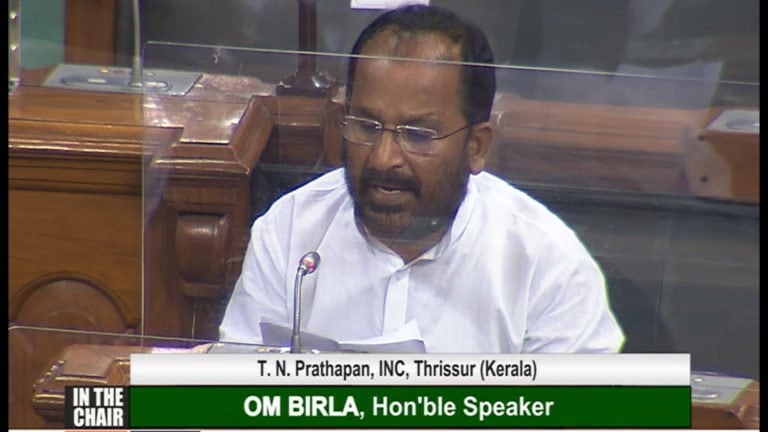
MP from Kerala, T N Prathapan, challenges Farm Laws in Supreme Court

Congress MP from Kerala, TN Prathapan, on Monday challenged in the Supreme Court the farm laws passed by the Centre as violative of the Constitution and urged the top court to strike them down.

The Farmers’ (Empowerment and Protection) Agreement of Price Assurance and Farm Services Bill, 2020, was signed by the President and became a law on Sunday. The law allows cash and carry buyers to buy farm produce from the farm gates.

It proposes to dismantle the existing Agriculture Produce Marketing Committee (APMC) which has so far been safeguarding farmers from exploitation by large retailers and ensuring that retail prices do not reach excessively high levels.

Prathapan’s petition argues that the law is not a progressive piece of legislation.

Implementing it in its current form may spell disaster for the farming community by opening up a parallel, unregulated market which will facilitate their

exploitation by concentrating power in the hands of a few individuals, corporates and money-lenders, it said.

The law is also against the basic structure of the Constitution as it forces farmers to approach the sub-divisional magistrate in case of a dispute and not a court of law. The farmers have to approach the already overburdened bureaucracy for any solution, his petition pointed out.

“…unchecked hoarding will give exporters, processors and traders the power to regulate the prices of the produce as and when they need, creating artificial demand and controlling the price in the market at will.”

Without the APMCs’ protective arm around the farmers, the market would ultimately fall prey to the greed of MNCs which are profit-oriented and could not care less about the poverty-stricken farmers, it said. Instead, the petition suggested strengthening the existing APMC.

The APMC prevented exploitation of farmers by providing minimum support price which guaranteed that no farmer went empty-handed. Indian agriculture was characterised by small fragmented land holdings and was at the mercy of the vagaries of Nature such as dependence on weather, uncertainties in production and an unpredictable market.

These challenges cannot be addressed by way of monetisation of farmers’ produce to increase their income, it said.

This is not the first time that

that a federal law has been challenged in the Supreme Court after the BJP came to power at the Centre. Some states had challenged the NRC/CAA superstructure and later the Centre’s decision to auction coal mines for commercial mining.

Pratapan, MP from Thrissur constituency, argued that he was a farmer and understood the challenges posed by the pandemic. He sought court intervention to do away with several sections of the law which curtail the farmers’ right to go to court in case of a dispute and sought the creation of farmers’ tribunals to adjudicate such disputes.

Delhi Police arrests Umar Khalid on his alleged role in Delhi riots

Former JNU student Umar Khalid was arrested late on Sunday for his alleged role in the communal violence that broke out in North East Delhi over the Citizenship Amendment Act in February, PTI reported.

The Delhi Police’s Special Cell arrested Khalid under the Unlawful Activities (Prevention) Act after nearly 11 hours of questioning. Khalid has been accused of being one of the main conspirators involved in the violence, a senior unidentified police officer told The Hindu.

Khalid will be produced before a court in Delhi on Monday. Unidentified police officials told The Indian Express that they are likely to file a charge sheet against him in the next few days

Activist group United Against Hate, of which Khalid is a member, said he was arrested as a “conspirator” in the violence. “The fairy tale narrative that DP [Delhi Police] has been spinning and criminalising protests in the garb of investigating riots, finds yet another victim,” the group said in a statement, according to NDTV.

Earlier this month, the Delhi Police’s Crime Branch had questioned the former JNU student.

Khalid’s name had appeared in the chargesheet submitted by the police against suspended AAP councillor Tahir Hussain. The chargesheet stated that on January 8, Hussain met Khalid and United Against Hate co-founder Khalid Saifi at Delhi’s Shaheen Bagh during a protest against the Citizenship Amendment Act, where “Umar Khalid told him to be prepared for something big/riots at the time of the visit of US President [Donald Trump]”.

In April, the former JNU student was charged under the UAPA in another case related to the violence. He was accused of instigating the violence by allegedly making provocative speeches.

The former JNU student at the time had refuted the allegations against him and said he was being falsely implicated. “It is an upside down world that we are living in, in which these organisations and individuals that have worked for communal harmony are being implicated,” he had said.

Khalid’s arrest came a day after the police named Communist Party of India (Marxist) Secretary General Sitaram Yechury, economist Jayati Ghosh, Delhi University professor Apoorvanand, Swaraj Abhiyan leader Yogendra Yadav and documentary filmmaker Rahul Roy, as people who had “encouraged” the anti-Citizenship Amendment Act protestors as part of a plan.